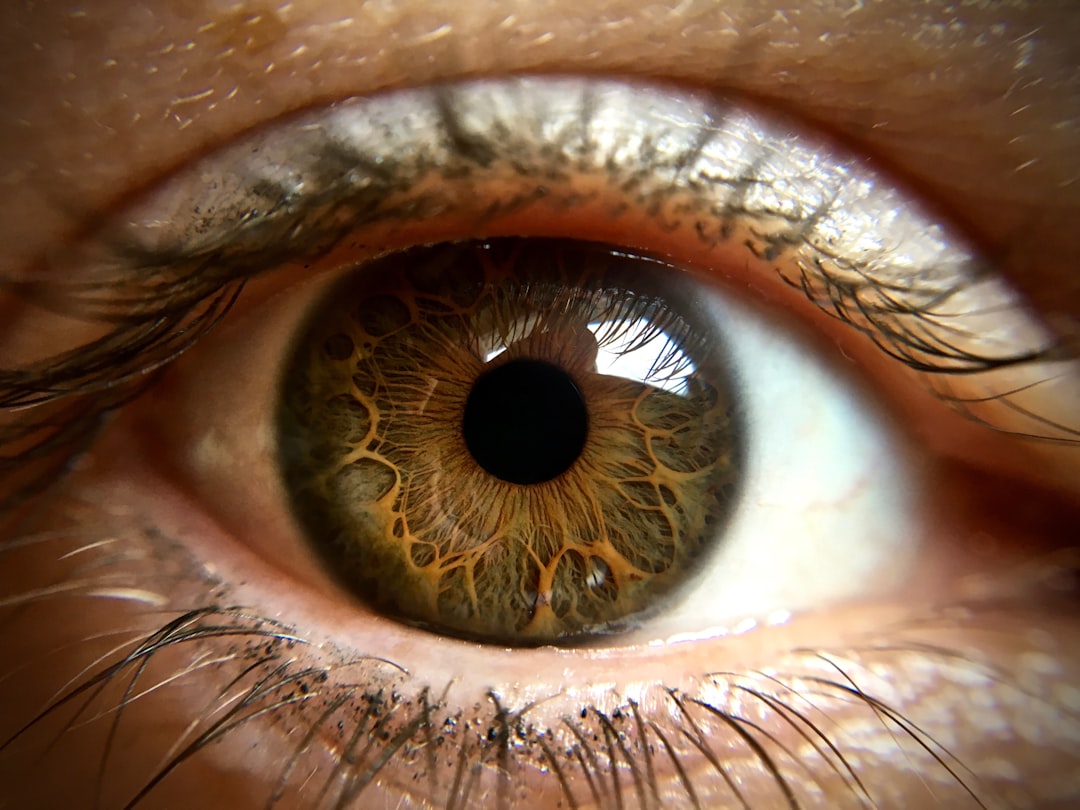
If you've taken a biology class, you know the vertebrate eye is weird. Unlike the eyes of octopuses or insects, our eyes have blood vessels and nerve fibers in front of the light-detecting photoreceptors—like building a camera with wiring blocking the lens. It creates a blind spot where the optic nerve exits. Invertebrate eyes don't have this problem. Their photoreceptors face the light directly.
Why would evolution design it backward?
A new hypothesis proposes something radical: our vertebrate ancestors lost their eyes entirely, then evolved new ones from scratch. And in doing so, they had to work with whatever neural architecture was available—which happened to wire things backward.
This is, to be clear, a hypothesis, not proven fact. But it's a compelling one because it explains structural oddities that otherwise seem like evolutionary mistakes.
The idea goes like this: early vertebrates descended from organisms with simple light-detecting organs. At some point in their evolutionary history—perhaps when adapting to deep water or underground environments—those ancestral eyes degenerated and were lost. Later lineages that returned to light-rich environments evolved eyes again, but they couldn't simply rewind evolution. They had to build new visual systems using the developmental toolkit available at the time.
The result? Eyes that work brilliantly but have inverted retinas—photoreceptors facing away from light, with all the neural plumbing in front. It's a bit like renovating a house but having to route all the electrical wiring through the living room because that's where the breaker box ended up.
Evolutionary biologists have long noted that vertebrate eyes, while remarkably sophisticated, show signs of what Stephen Jay Gould called "jury-rigged" design—solutions that work well but clearly evolved through modification of existing structures rather than from an optimal blueprint.
This hypothesis isn't new speculation—it's based on comparative anatomy, developmental biology, and genetic evidence showing how eye formation genes are expressed differently in vertebrates versus invertebrates. But proving that ancient vertebrates actually went through a blind phase would require fossil evidence or molecular clock studies that can pinpoint when eye genes were lost and regained.
For now, it remains an elegant explanation for why our eyes are structurally strange. And it's a reminder that evolution isn't an engineer working from clean blueprints. It's a tinkerer, modifying whatever works at the moment, even if the result is a camera with the wiring in front of the lens.