
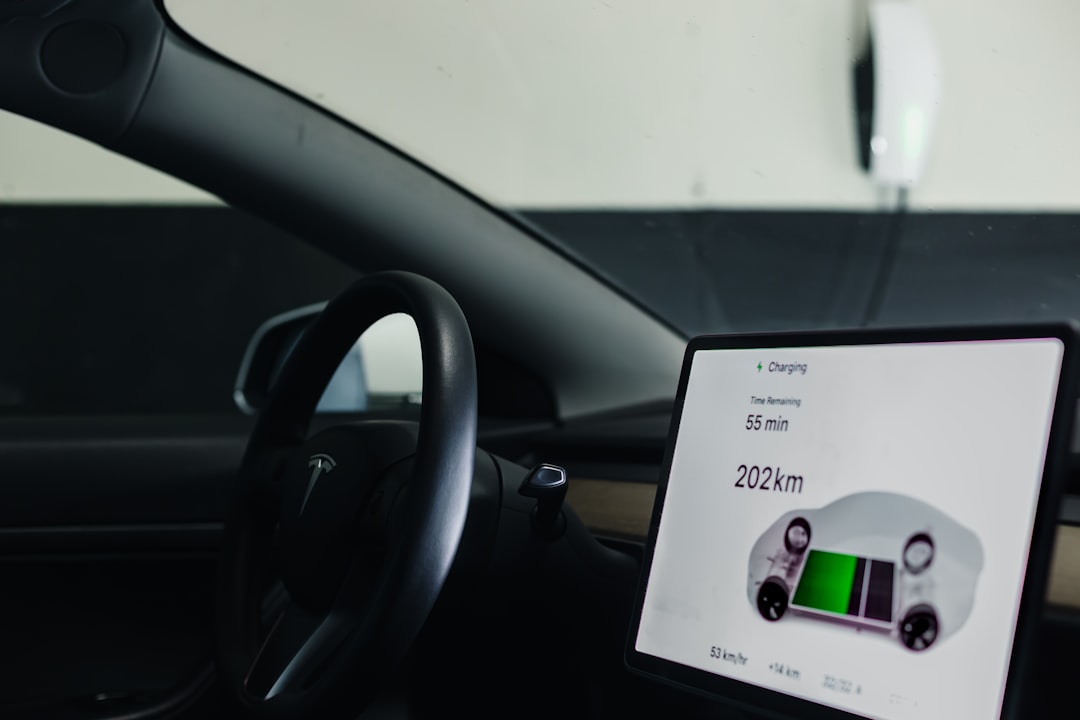
China's BYD has unveiled a battery technology delivering over 500 miles of range on a single charge, achieving competitive parity with gasoline engines and eliminating a primary barrier to mass electric vehicle adoption, according to the company's announcement.
The breakthrough addresses "range anxiety"—the persistent consumer concern that has slowed EV adoption despite environmental benefits and lower operating costs. With 500-mile capability, electric vehicles now match or exceed the practical range of most gasoline-powered cars, removing the psychological barrier that has kept many buyers hesitant.
BYD's achievement reflects China's dominance in battery technology and electric vehicle manufacturing. The company has invested heavily in battery chemistry research, manufacturing scale, and vertical integration that allows rapid innovation from laboratory to production line.
In climate policy, as across environmental challenges, urgency must meet solutions—science demands action, but despair achieves nothing. BYD's battery demonstrates that technological progress can eliminate barriers that once seemed intractable.
The battery uses advanced lithium iron phosphate (LFP) chemistry combined with improved energy density and thermal management. LFP batteries offer safety advantages over other lithium-ion chemistries and use more abundant materials, reducing supply chain vulnerabilities and environmental impacts from mining.
Range improvements come alongside cost reductions. BYD's manufacturing scale allows battery costs that make electric vehicles price-competitive with comparable gasoline models—a threshold that accelerates mass-market adoption. As battery costs fall further, EVs will become cheaper than gasoline vehicles even before considering fuel savings.
The technology arrives as global EV adoption accelerates. Electric vehicle sales exceeded 14 million units in 2025, representing roughly 18% of global auto sales. Analysts project that EVs with 500-mile range at competitive prices could push that figure above 30% within three years.
China's leadership in battery technology reflects strategic industrial policy that prioritized green technology investment when Western automakers remained committed to internal combustion engines. BYD now ranks among the world's largest EV manufacturers, competing directly with Tesla in key markets.
The 500-mile range also addresses charging infrastructure gaps. While fast-charging networks continue expanding, longer range reduces charging frequency—critical for consumers in areas with limited charging access and for long-distance travel. Drivers can operate for days or weeks between charges for typical commuting patterns.
Environmental benefits extend beyond zero tailpipe emissions. The LFP chemistry uses iron and phosphate rather than cobalt and nickel, reducing mining impacts associated with battery production. Iron represents one of Earth's most abundant elements; phosphate mining, while not impact-free, creates fewer environmental and human rights concerns than cobalt extraction.
Battery durability has also improved. BYD reports the new batteries maintain over 80% capacity after 3,000 charge cycles—sufficient for more than 1.5 million miles of driving, far exceeding typical vehicle lifespans. This longevity addresses concerns about battery degradation and replacement costs.
The breakthrough creates competitive pressure across the global auto industry. Western and Japanese automakers must accelerate their own battery development or risk losing market share to Chinese manufacturers who have achieved both superior range and lower costs.
Energy analysts note that widespread EV adoption transforms electricity grids. Millions of vehicle batteries can provide grid storage, smoothing renewable energy intermittency and reducing need for fossil fuel backup power. Vehicle-to-grid technology allows EVs to become mobile power plants, supporting grid stability during peak demand.
Climate scientists emphasize that transportation electrification remains critical to emissions reduction targets. Transportation accounts for roughly one-quarter of global greenhouse gas emissions, with passenger vehicles representing the largest share. Replacing gasoline engines with EVs powered by renewable electricity can dramatically reduce this footprint.
Challenges remain: charging infrastructure must expand, electricity grids require upgrades to handle increased demand, and battery recycling systems need development to manage end-of-life batteries sustainably. Yet these represent solvable engineering problems rather than fundamental barriers.
BYD's 500-mile battery demonstrates that the EV transition has moved beyond environmental idealism to market competitiveness. When electric vehicles offer superior range, lower operating costs, better performance, and reduced environmental impact, adoption becomes economically rational rather than sacrifice.
China's green technology leadership also creates geopolitical implications. As Western nations recognize climate action necessity, dependence on Chinese battery technology becomes a strategic consideration—spurring domestic manufacturing investments in the United States and Europe to develop competing capabilities.