Satellites orbiting hundreds of kilometers above Earth are now detecting millimeter-scale movements in bridges that traditional inspections routinely miss, offering continuous monitoring for aging infrastructure worldwide.
A groundbreaking study published in Nature Communications demonstrates that space-based radar technology can monitor structural health across more than 60 percent of the world's long-span bridges—including many of the 220,000 bridges in the United States alone that engineers have flagged as structurally deficient.
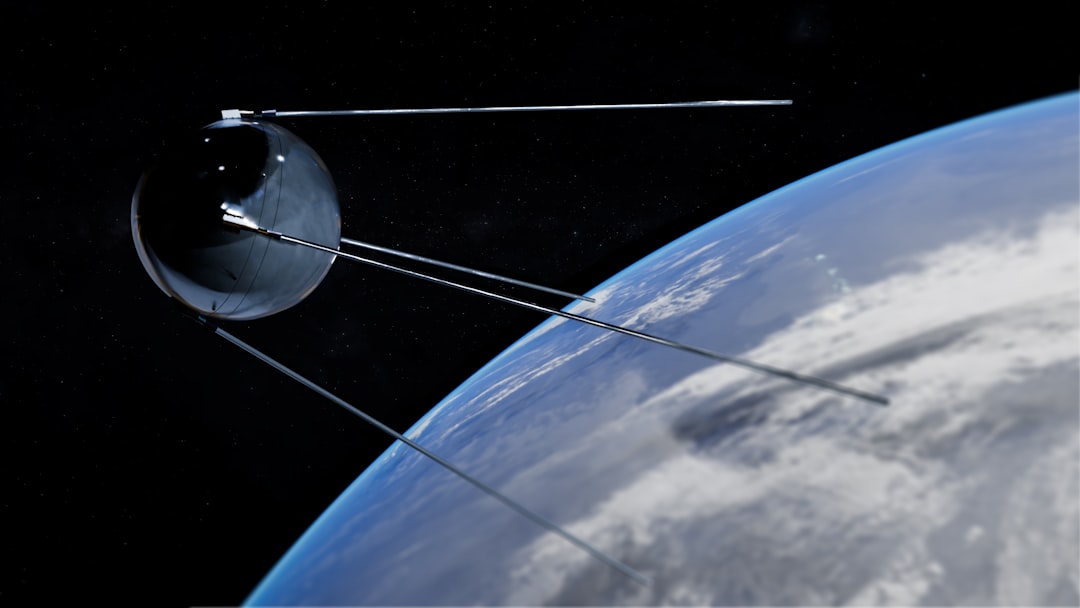
The research team, led by Pietro Milillo of the University of Houston and colleagues from Delft University of Technology and the University of Bath, analyzed 744 bridges globally using Multi-Temporal Interferometric Synthetic Aperture Radar technology. The satellites—including the European Space Agency's Sentinel-1 and NASA's recently launched NISAR mission—capture movements as subtle as a few millimeters by analyzing radar reflections from bridge surfaces.
"MT-InSAR allows for more frequent deformation measurements, unlike traditional inspections, which typically occur only a few times per year," Milillo explained. The technology identifies "persistent scatterers"—stable points on bridge structures that reflect radar signals consistently—enabling engineers to detect unusual movement patterns that signal developing structural problems.
The findings reveal North American bridges in the poorest condition globally, followed by those in Africa. Many U.S. bridges were constructed during the highway boom of the 1960s and are now approaching their design-life limits. When researchers incorporated satellite monitoring data into risk assessments, high-risk classifications dropped by approximately one-third—demonstrating that continuous space-based surveillance provides far more accurate structural health information than periodic visual inspections.
The technology's greatest potential lies in regions currently lacking monitoring infrastructure. In Africa and Oceania, where ground-based inspection programs remain underdeveloped, satellite monitoring could provide the first systematic oversight of critical transportation links. The approach scales effortlessly across borders and terrain, monitoring remote bridges as easily as urban infrastructure.
In space exploration, as across technological frontiers, engineering constraints meet human ambition—and occasionally, we achieve the impossible. What began as technology for planetary surface mapping now saves lives by preventing bridge failures before they occur.
The system works by comparing radar images captured during successive satellite passes. As a bridge gradually deforms under stress or deterioration, these tiny movements accumulate in the radar data. Algorithms detect when movement patterns deviate from normal thermal expansion and contraction, flagging bridges for detailed engineering assessment.
Traditional bridge inspections rely on visual assessments performed from walkways or vehicles, typically every two years in developed nations. Inspectors can miss internal deterioration, and the inspection frequency means problems may worsen significantly between visits. Satellite monitoring provides data every few days, catching accelerating deterioration in real time.
The research demonstrates that roughly 50 percent of currently high-risk bridges could benefit immediately from space-based monitoring supplements to ground inspections. For cash-strapped infrastructure agencies facing maintenance backlogs, satellite data helps prioritize limited resources toward bridges showing actual movement rather than those simply reaching arbitrary age thresholds.
The European Space Agency and NASA provide Sentinel-1 and NISAR data freely to researchers and government agencies, making the technology accessible even to nations with minimal space programs. Several commercial satellite operators now offer bridge monitoring as a subscription service, with automated alerts when movement exceeds safety thresholds.
As climate change increases extreme weather events and traffic volumes continue rising on aging infrastructure, the marriage of space technology and civil engineering offers a practical solution to a mounting crisis. The same satellites tracking ice sheets and forest loss are now watching the bridges we cross daily—silent sentinels detecting problems invisible to the human eye.