The American military withdrawal from Germany has sent shockwaves through Poland and the Baltic states, where officials are scrambling to understand the implications for NATO's eastern flank as tensions with Russia remain at their highest level since the Cold War.
The BBC reported that Germany described the U.S. troop drawdown as "foreseeable," but in Warsaw, Vilnius, and Tallinn, the announcement has triggered alarm among defense officials who view American boots on the ground as essential to deterring Russian aggression.
"For Poland, this is not an abstract geopolitical calculation—it is about our survival as a free nation," said a senior Polish defense official who spoke on condition of anonymity. "We remember 1939. We remember 1968. We know what happens when the West looks away."
In Poland, as across Central Europe, history is never far from the surface—and neither is the memory of occupation.
The Polish government has invested billions of zloty in defense infrastructure designed to host American forces, from upgraded air bases to ammunition depots. The presence of U.S. troops on Polish soil—currently around 10,000 soldiers on rotation—has been viewed as a tripwire guarantee that any Russian attack would automatically draw in American forces.
Now that guarantee appears uncertain. Germany has urged stronger European defense in response to the withdrawal announcement, but Polish officials note bitterly that Berlin has repeatedly blocked stronger NATO positioning in the east.
"The Germans talk about 'European strategic autonomy,' but what they mean is we should accept Russian influence while they cut gas deals," said Radosław Sikorski, Poland's Foreign Minister, in remarks to parliament on Friday. "Poland will not accept a return to spheres of influence."
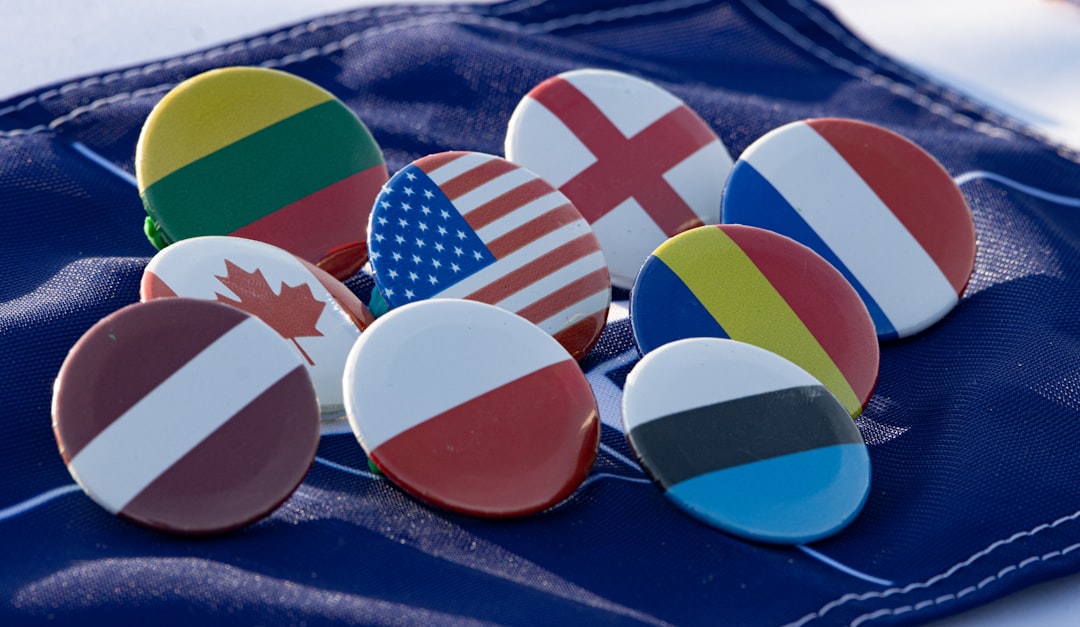
The Baltic states—Estonia, Latvia, and Lithuania—face even starker calculations. All three share borders with Russia or Belarus, and military analysts have long warned that Russian forces could sever the so-called Suwalki Gap—a 65-kilometer stretch of Polish-Lithuanian border—cutting off the Baltics from the rest of NATO within hours.
Lithuanian defense officials told reporters that the U.S. withdrawal "changes our threat assessment" and that Vilnius would seek emergency consultations with NATO headquarters in Brussels.
The timing could hardly be worse. Ukrainian President Volodymyr Zelenskyy warned this week of "unusual activity" from Belarus, raising concerns that Minsk could be preparing to open a new front in the war against Ukraine—a development that would bring fighting to NATO's doorstep.
For Poland, the Belarus border is already a flashpoint. In 2021, Minsk orchestrated a migrant crisis designed to destabilize Poland, pushing thousands of refugees toward the Polish border in what Warsaw called "hybrid warfare." More recently, Polish authorities have reported increased drone incursions and electronic warfare jamming along the frontier.
The American withdrawal announcement has also exposed deep divisions within the European Union over defense burden-sharing. While France has long advocated for European military autonomy, eastern European members view such talk as naive.
"The French have nuclear weapons and the English Channel," noted a Polish parliamentarian from the ruling coalition. "We have memories and a 535-kilometer border with a hostile regime. These are not equivalent security situations."
Poland has already committed to spending 4% of GDP on defense—far above the NATO target of 2%—and has ordered American-made F-35 fighters, Patriot missile batteries, and HIMARS rocket systems worth tens of billions of dollars. Warsaw has also signed agreements to permanently base more than 10,000 U.S. troops on Polish soil, though those plans now appear in jeopardy.
Defense analysts warn that the withdrawal could embolden Russia to test NATO's resolve, particularly in the Baltic region where Russian forces already conduct aggressive military exercises near the borders of member states.
"Putin understands one language: strength," said Alia Shawkat, a security analyst at the Warsaw Institute. "If he perceives weakness or division within NATO, he will exploit it. That is the lesson of Georgia, of Crimea, of eastern Ukraine."
The Polish government has requested urgent clarification from Washington about the scope and timeline of the withdrawal, as well as what security guarantees will replace the physical presence of American troops. Thus far, those answers have not been forthcoming.
For many Poles, the episode reinforces a deep-seated belief that their country sits on the fault line of European security—valued by the West when convenient, but ultimately expendable when great power politics shift. It is a historical anxiety that runs deep, shaped by the memory of the Molotov-Ribbentrop Pact that divided Poland between Nazi Germany and Soviet Russia in 1939.
"We have learned from history that we cannot rely on others for our security," said the Polish defense official. "Poland will defend itself. We have no choice."