NASA is advancing development of a next-generation space telescope specifically designed to detect potentially hazardous asteroids large enough to devastate metropolitan areas—addressing a critical gap in planetary defense capabilities that currently leaves tens of thousands of dangerous near-Earth objects undetected.
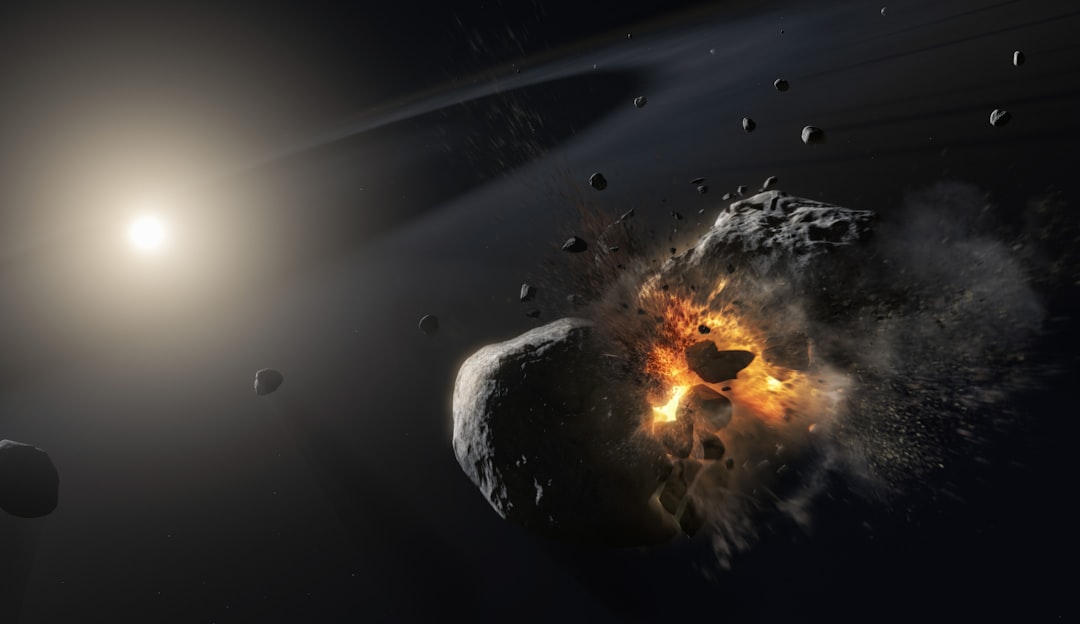
The telescope, part of NASA's NEO Surveyor mission, represents the agency's most ambitious planetary defense initiative to date. The system is designed to identify asteroids measuring 140 meters or larger—objects capable of regional destruction that current ground-based surveys struggle to detect, particularly when their orbits keep them close to the Sun's glare.
In space exploration, as across technological frontiers, engineering constraints meet human ambition—and occasionally, we achieve the impossible. The telescope will operate at an infrared wavelength optimized for detecting the heat signatures of asteroids against the cold background of space, a technique far superior to optical observation for finding dark objects in bright solar environments.
Current detection efforts have identified only an estimated 40% of near-Earth asteroids in the 140-meter size range—objects that could cause catastrophic regional damage if they struck populated areas. An impact from such an asteroid would release energy equivalent to hundreds of megatons of TNT, potentially destroying an entire city and its surrounding region.
NEO Surveyor's infrared sensor system will scan the inner solar system continuously, building a comprehensive catalog of potentially hazardous objects over its five-year primary mission. The telescope's unique orbit at the L1 Lagrange point—approximately 1.5 million kilometers from Earth in the direction of the Sun—provides an optimal vantage point for asteroid detection.
"The mission will find asteroids and comets that could pose a hazard to Earth, but also those that might be destinations for future exploration," NASA officials stated in mission documentation. The dual purpose reflects NASA's broader vision of not just defending Earth but also identifying potential resources for future space missions.
The timing proves critical as asteroid detection and deflection technologies mature. NASA's successful DART mission in 2022 demonstrated humanity's ability to alter an asteroid's trajectory through kinetic impact—but deflection requires early warning, ideally decades before a potential collision. NEO Surveyor aims to provide that crucial detection timeline.
Development faces budgetary challenges typical of ambitious NASA programs. The mission's cost estimates have fluctuated as engineering requirements solidified, but the planetary defense community views the capability as essential. Ground-based telescopes, despite significant improvements, cannot match the detection efficiency of a dedicated infrared space observatory.
The telescope incorporates advanced detector arrays cooled to cryogenic temperatures, enabling detection of extremely faint infrared signatures. Engineers have designed the system to distinguish between asteroids and background stars by detecting the slight motion of near-Earth objects against the fixed stellar background.
Once operational, NEO Surveyor will work in coordination with ground-based observatories to refine orbital calculations and assess impact probabilities. The integrated planetary defense network represents a significant evolution from the ad-hoc detection efforts of previous decades, moving humanity toward comprehensive protection from one of nature's most unpredictable threats.