
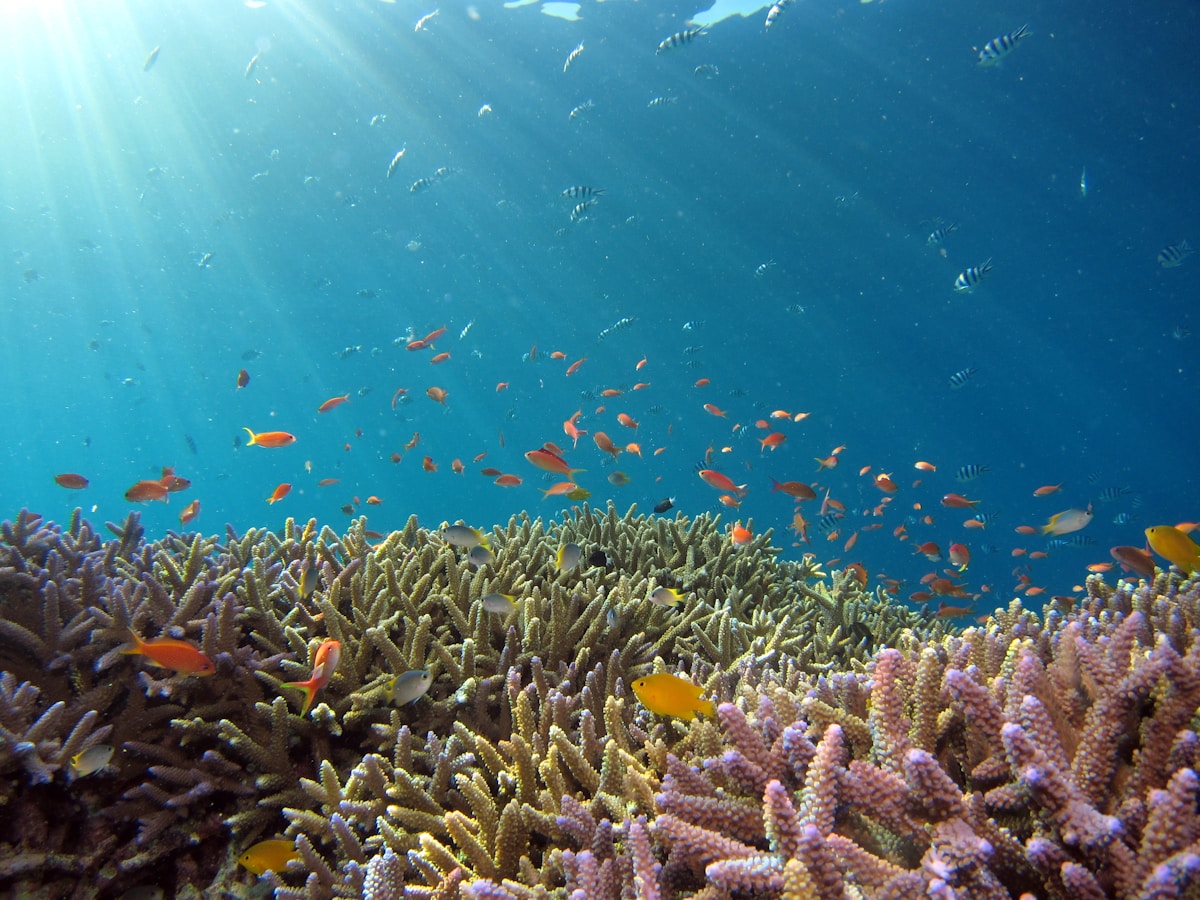
Over half the world's coral reefs bleached during a single prolonged ocean heat wave, marking one of the most devastating events ever recorded for these vital marine ecosystems that harbor 25% of all ocean species.
The 2014-2017 heat wave caused moderate or severe bleaching in more than 50% of coral reefs globally, according to data analyzed from NOAA's Coral Reef Watch program. Perhaps more alarmingly, 15% of reefs worldwide experienced moderate or greater mortality—meaning they didn't just bleach white, they died.
"When you see one of these beautiful ecosystems with so much diversity and so much going on, and you see it die before your very eyes, it's just heartbreaking," said C. Mark Eakin, former head of Coral Reef Watch at NOAA, in an interview with Yale Climate Connections.
Coral bleaching occurs when rising ocean temperatures force corals to expel the colorful algae living symbiotically within their tissues. These microscopic algae, called zooxanthellae, provide corals with up to 90% of their energy through photosynthesis. Without them, corals turn ghostly white and face starvation. Some bleached corals can recover if waters cool quickly enough, but repeated or prolonged heat stress proves fatal.
The scale of this three-year event dwarfs previous bleaching episodes. From the Great Barrier Reef off Australia to reefs across the Caribbean, Indian Ocean, and Pacific, warming waters transformed vibrant underwater cities into pale graveyards. The timing couldn't be worse: coral reefs already faced mounting pressures from ocean acidification, pollution, and overfishing.
What's truly at stake extends far beyond the corals themselves. These underwater rainforests support an estimated quarter of all marine species despite covering less than 1% of the ocean floor. Fish, sea turtles, sharks, mollusks, and countless invertebrates depend on reef structures for food, shelter, and breeding grounds. When reefs collapse, entire marine food webs unravel.
The human costs ripple outward too. Some 500 million people worldwide rely on coral reefs for food security, coastal protection, and livelihoods through fishing and tourism. The economic value of reef ecosystems runs into hundreds of billions of dollars annually.
Yet Eakin emphasizes that hand-wringing won't save reefs: "The most important thing we can do right now is to address climate change. If we don't do that, the rest of it is going to be futile."
That sobering assessment doesn't mean conservation efforts hold no value. Scientists and communities worldwide have launched coral restoration initiatives—growing heat-resistant coral varieties in nurseries, transplanting fragments to degraded reefs, and establishing marine protected areas. Some reefs have shown remarkable resilience when local stressors like pollution and overfishing are reduced, even as global temperatures rise.
In Florida, the Coral Restoration Foundation has outplanted over 200,000 corals across degraded reefs. In Indonesia and the Philippines, communities have established fish sanctuaries that allow reef ecosystems to rebuild. These efforts demonstrate that while climate change remains the primary threat, protecting reefs from local damage buys precious time for them to adapt.
Researchers are also identifying "super corals"—genetic variants that show greater heat tolerance. By understanding and potentially propagating these resilient lineages, scientists hope to help reefs survive the warming decades ahead.
In nature, as across ecosystems, every species plays a role—and humanity's choices determine whether the web of life flourishes or frays. Coral reefs evolved over millions of years into Earth's most biodiverse marine habitats. They weathered ice ages and sea level changes. But the speed of current ocean warming outpaces anything in their evolutionary history.
The question isn't whether we can prevent all coral bleaching—that ship has sailed. It's whether we'll act decisively enough on climate change to prevent the wholesale collapse of reef ecosystems, and whether we'll protect reefs sufficiently from local threats to give them fighting chance.
Every tenth of a degree of warming matters. Every marine protected area counts. Every reduction in pollution helps. The three-year bleaching event laid bare the fragility of coral reefs in our warming world, but also the urgent window we still have to preserve them for the countless species—including our own—that depend on their survival.