Volunteer astronomers participating in NASA's Backyard Worlds: Planet 9 project have identified over 3,000 previously unknown brown dwarfs—essentially doubling the known population of these enigmatic objects that occupy the murky boundary between planets and stars, in a remarkable demonstration of citizen science advancing professional research.
The discoveries detailed in a recent publication emerged from approximately 200,000 volunteers examining infrared images from NASA's retired Wide-field Infrared Survey Explorer (WISE) and its reactivation mission NEOWISE-R. The participants searched for moving objects by comparing images taken over a 16-year period, with some volunteers creating their own search tools and data analysis software.
In space exploration, as across technological frontiers, engineering constraints meet human ambition—and occasionally, we achieve the impossible. The project demonstrates how distributed human pattern recognition can complement automated algorithms, particularly for identifying subtle movements against complex backgrounds.
"I truly appreciate the recognition for all of us who collaborated, in some way, on this effort," said Walter Ruben Robledo, an amateur astronomer from Argentina who contributed to the discoveries.
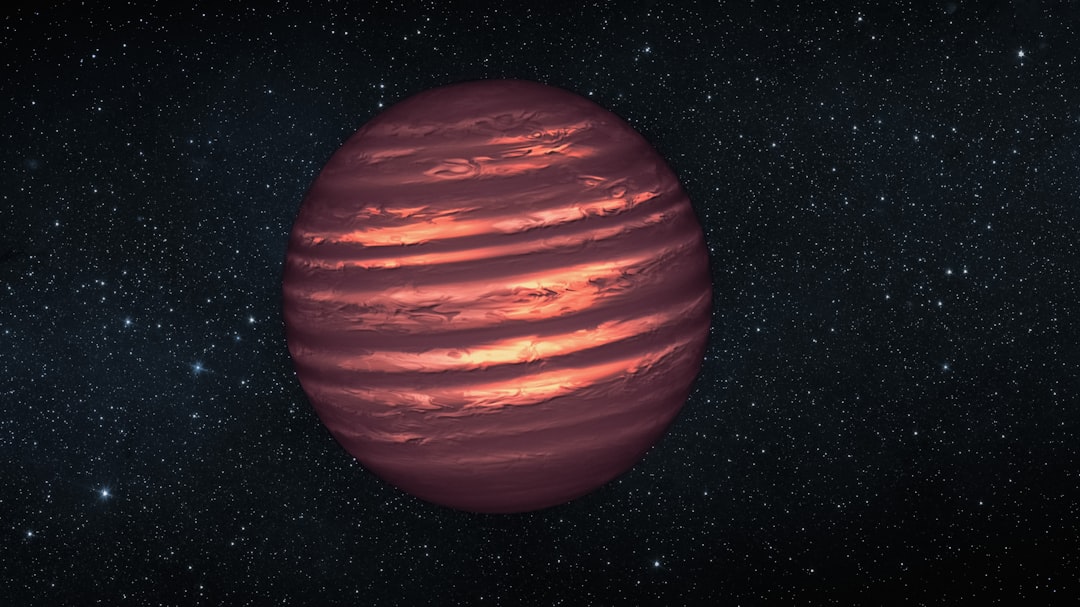
Brown dwarfs are balls of gas approximately Jupiter-sized but with masses between planets and stars—too small to sustain the hydrogen fusion that powers true stars, yet too massive to be considered planets. They represent a crucial population for understanding stellar formation limits and the transition between planetary and stellar physics. Current estimates suggest one brown dwarf exists for every three to four stars near our Sun.
The detection method exploited a fundamental characteristic of nearby objects: apparent motion against the fixed background of distant stars. By examining images spanning 16 years, volunteers could identify objects that shifted position—a technique called proper motion detection. Brown dwarfs, being relatively close to Earth, display measurable movement across the sky over such timescales.
The project utilized the Zooniverse citizen science platform, which presents volunteers with image sets and simple classification tasks. However, many participants went far beyond basic classification, developing sophisticated analysis techniques and custom software tools. This evolution from data classification to active tool development represents a maturing citizen science model.
The scale of volunteer contribution exceeded typical citizen science participation. Of the research paper's 75 authors, 61 are volunteers—an extraordinary representation reflecting genuine intellectual contribution beyond simple data processing. The acknowledgment represents a shift in how professional astronomy values public participation.
"When I received the news about the co-authorship, I thought: Yes, dreams do come true," said Mayahuel Torres Guerrero from Mexico City.
The newly discovered brown dwarfs will enable refined statistical analyses of this population's properties, including temperature distributions, kinematics, and spatial density throughout the solar neighborhood. These parameters help constrain stellar formation theories and the initial mass function—the distribution of masses produced during star formation episodes.
Brown dwarf discoveries also advance the search for nearby planetary systems. Many brown dwarfs host companions, including planetary-mass objects. The expanded catalog provides new targets for high-resolution imaging and spectroscopic studies that might reveal previously hidden companions or unusual atmospheric compositions.
The WISE and NEOWISE-R missions proved ideal for brown dwarf detection because these objects emit primarily in infrared wavelengths. Unlike stars, which radiate visible light from fusion reactions, brown dwarfs glow from residual heat slowly leaking from their formation—a much cooler process detectable only at infrared wavelengths.
The Backyard Worlds project continues accepting volunteers, with the expanded brown dwarf catalog serving as both scientific achievement and recruitment tool. As NASA's James Webb Space Telescope provides detailed follow-up observations of the most interesting candidates, the collaboration between professional astronomers and dedicated amateurs grows increasingly productive.
The model demonstrates a sustainable approach to processing astronomical datasets too large or complex for automated analysis alone. As sky surveys produce ever-larger data volumes, human volunteers trained in pattern recognition may become essential partners in extracting maximum scientific value—transforming passive public engagement into active scientific collaboration.