NASA's forthcoming Roman Space Telescope will employ an innovative gravitational detection technique to identify isolated neutron stars—the dense remnants of stellar collapse—transforming astronomers' ability to study some of the most extreme objects in the universe through a method that weighs them without ever seeing them directly.
The telescope will detect neutron stars through astrometric microlensing, measuring how a neutron star's intense gravity bends and shifts light from background stars—a technique that enables direct mass measurements of objects otherwise invisible to conventional observation. Despite estimates suggesting tens of millions to hundreds of millions of neutron stars exist in the Milky Way, astronomers have detected only a few thousand.
In space exploration, as across technological frontiers, engineering constraints meet human ambition—and occasionally, we achieve the impossible. Roman's unprecedented combination of photometric and astrometric precision will enable detection of gravitational effects far too subtle for previous instruments.
"By measuring that tiny deflection on the sky, we can directly weigh something that is otherwise unseen," said Peter McGill from Lawrence Livermore National Laboratory.
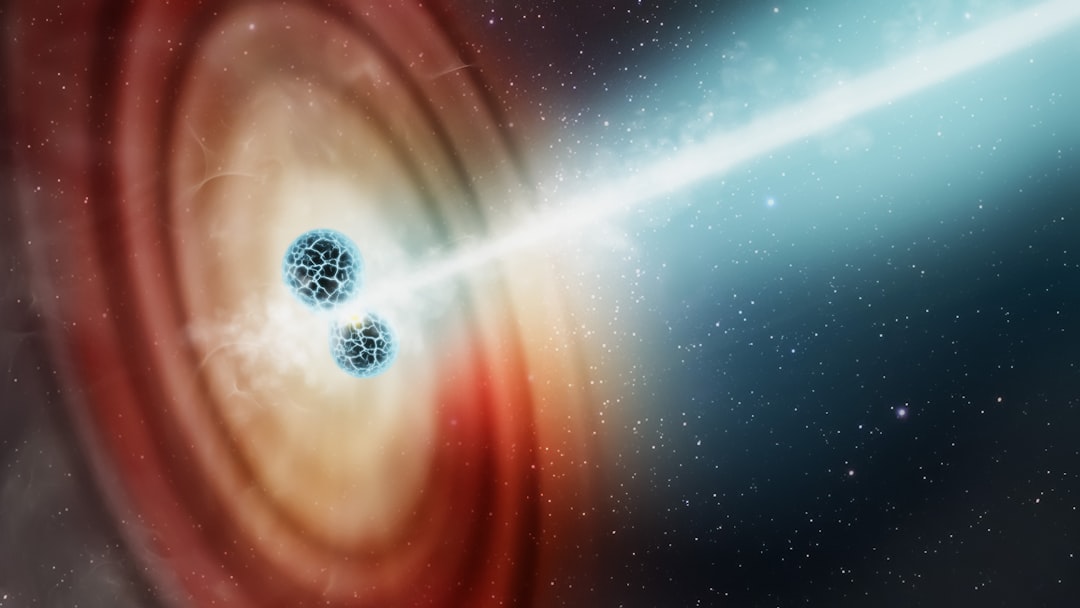
Neutron stars represent one of nature's most extreme states of matter—the collapsed cores of massive stars compressed to such density that a teaspoon would weigh billions of tons on Earth. When visible, they appear as pulsars emitting radiation beams, or as X-ray sources accreting matter from companion stars. But most neutron stars are isolated and dark, making them effectively invisible despite their tremendous mass.
The astrometric microlensing technique exploits Einstein's general relativity. When a massive object passes between Earth and a distant star, its gravity acts as a lens, brightening the background star and causing a measurable shift in its apparent position. Previous gravitational lensing surveys focused primarily on brightness changes, but Roman's precision astrometry will measure positional shifts accurate to fractions of a pixel.
This capability addresses fundamental questions in stellar evolution. The mass distribution of neutron stars reveals details about supernova explosions, including the mysterious "kicks" that send newly formed neutron stars speeding through the galaxy at hundreds of kilometers per second. Understanding this process requires a large statistical sample—exactly what Roman promises to deliver.
The telescope's Galactic Bulge Time Domain Survey will monitor millions of stars simultaneously over its mission lifetime, creating unprecedented opportunities for detecting microlensing events. Unlike dedicated planet-hunting surveys, this program will be sensitive to massive objects, making it ideal for finding neutron stars and distinguishing them from black holes through precise mass measurements.
The mass boundary between neutron stars and black holes remains one of astrophysics' enduring questions. Theory suggests neutron stars have a maximum mass—beyond which they must collapse into black holes—but observations have not definitively determined this limit. Roman's survey will provide the first comprehensive census of isolated compact objects, potentially revealing whether a clear mass gap exists.
Beyond individual discoveries, the mission will illuminate stellar evolution pathways. Different types of massive stars should produce different neutron star populations, and Roman's survey will test whether observations match theoretical predictions. Discrepancies would signal gaps in our understanding of how massive stars live and die.
The telescope, scheduled for launch in the late 2020s, will operate from a location approximately 1.5 million kilometers from Earth, providing stable observation conditions for its wide-field instruments. While often described in context of dark energy and exoplanet research, the neutron star survey demonstrates Roman's versatility—addressing questions across astrophysics through a single powerful platform.