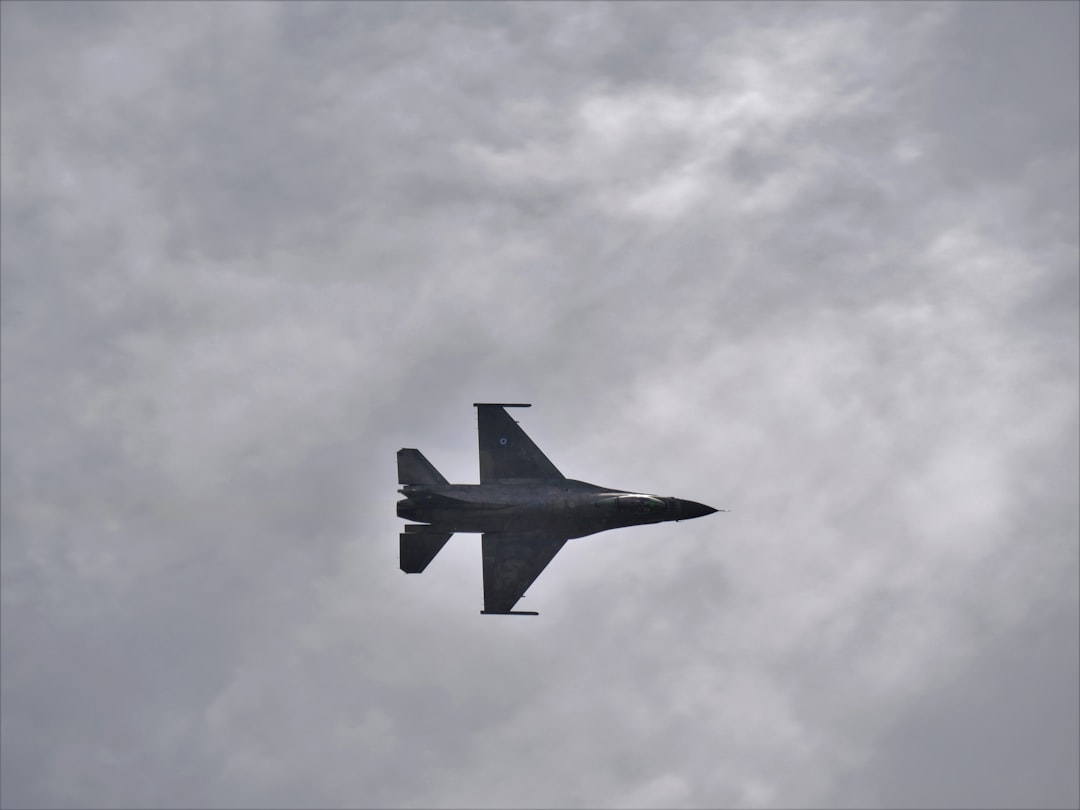

The so-called "special relationship" between London and Washington has rarely looked more threadbare than it did this week, when American forces launched strikes against Iranian targets without bothering to inform their closest ally beforehand. According to sources familiar with the matter, the United Kingdom received no advance details of the operation—a breach of protocol that has left Westminster reeling and raised uncomfortable questions about Britain's place in the world post-Brexit.
As they say in Westminster, "the constitution is what happens"—precedent matters more than law. And the precedent being set here is troubling indeed for a government that has staked much of its foreign policy credibility on maintaining close ties with Washington, regardless of who occupies the Oval Office.
<h2>A Familiar Pattern of Exclusion</h2>
The failure to consult Britain before military action is not without historical parallel. Students of postwar history will recall the Suez Crisis of 1956, when American opposition scuppered Anglo-French intervention in Egypt and laid bare the limits of British power. More recently, the chaotic withdrawal from Afghanistan proceeded with minimal British input, despite two decades of UK military commitment.
But this latest incident feels different, coming as it does against the backdrop of escalating tensions in the Middle East and Britain's diminished diplomatic heft following Brexit. The European Union, whatever its flaws, provided London with a seat at multiple top tables. Outside that framework, Britain increasingly finds itself a supplicant rather than a partner.
Prime Minister Keir Starmer faces an impossible position. Public reaction online suggests a nation divided between those who believe Britain should support American action regardless—the "special relationship" reflex remains strong—and those who view the lack of consultation as proof that Washington regards London as little more than a convenient junior partner to be informed after the fact.
<h2>Westminster's Uncomfortable Silence</h2>
The Parliamentary response has been revealing in its awkwardness. Starmer must balance Labour's traditional wariness of American military adventurism with the pragmatic need to maintain working relations with Washington. Opposition Leader Kemi Badenoch's attempts to capitalize on the situation have been hampered by her party's own decades-long cheerleading for uncritical Atlanticism.
Online observers have been rather more forthright. Discussion across UK political forums reveals considerable anger at the perceived slight, with some commenters noting the exquisite irony of Britain being sidelined from a conflict in a region where British colonial meddling created many of the current tensions. "We're an ancient and proud nation," runs one common refrain, echoing broader anxieties about national decline.
The Green Party's response—opposing what it terms "illegal bombing" while supporting the Iranian people against their regime—has provoked its own controversies, not least allegations that the party's deputy leader attended pro-regime rallies. But the Greens are at least offering a coherent position, which is more than can be said for the major parties currently tying themselves in knots.
<h2>The Post-Brexit Reality</h2>
For all the rhetoric about "Global Britain" that accompanied Brexit, the reality has been a steady erosion of influence. The European Union was consulted by Washington through established channels; Britain, operating alone, was not. This is not the "taking back control" that voters were promised.
The failure to consult also exposes the hollowness of recent efforts to position Britain as a key player in Indo-Pacific security arrangements. If Washington won't inform London before striking Iran—a country where Britain has substantial historical ties and current interests—what value does American policymaking place on British input regarding China or North Korea?
There are practical implications beyond wounded pride. Britain maintains a significant naval presence in the Persian Gulf, has thousands of nationals in the region requiring potential evacuation, and faces the economic consequences of any disruption to energy supplies. A government chartered plane intended to bring British citizens home from the region reportedly failed to take off—a fitting metaphor for Britain's current predicament.
<h2>The Road Ahead</h2>
Westminster insiders suggest that Downing Street is privately furious but publicly constrained. To protest too loudly risks further alienating Washington; to remain silent invites accusations of supine submission. Starmer's government, still finding its feet in foreign policy, must navigate between these unpalatable options.
The incident also raises questions about intelligence sharing—the one area where the Anglo-American relationship has traditionally remained robust, conducted through the "Five Eyes" arrangement that includes Canada, Australia, and New Zealand. If operational military planning is now excluded from even broad-brush consultation, how long before intelligence cooperation follows suit?
Some backbenchers, freed from the constraints of collective responsibility, are beginning to voice what many in Westminster think privately: that the "special relationship" has become a one-way street, with Britain providing diplomatic cover and military support for American actions while receiving little in return. The Government's challenge will be to find a path that preserves necessary cooperation without descending into the reflexive subordination that has characterized too much British foreign policy since 1945.
As Britain watches events unfold in the Middle East from the sidelines, the lesson is clear: sovereignty, in the modern world, means little without the power to exercise it. Brexit promised greater autonomy; instead, Britain finds itself more dependent than ever on partners who increasingly treat it as an afterthought. The constitutional precedent being established is that of irrelevance—and precedent, as Westminster knows, has a way of becoming permanent.