
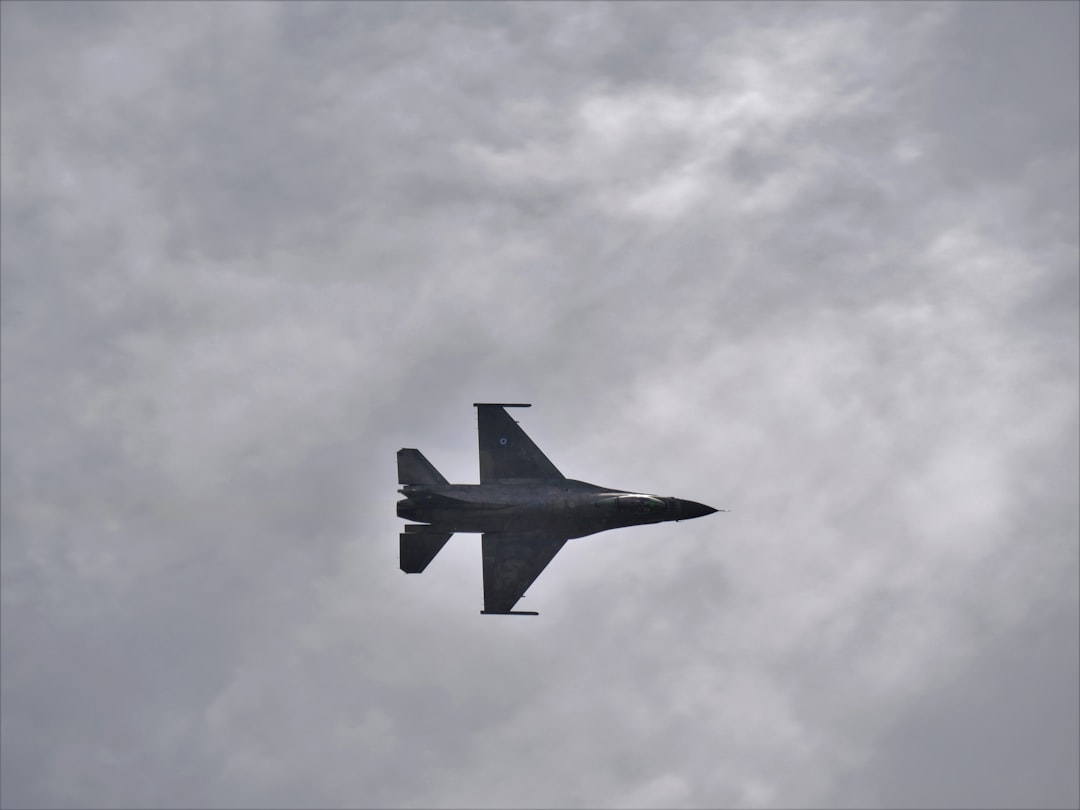
Ukraine's newly delivered F-16 fighters operated without American-made air-to-air missiles for extended periods due to US supply restrictions, severely limiting their combat effectiveness during a critical phase of the war, according to an investigation by Reuters.
The revelation exposes a significant gap between Western military commitments and actual support, raising fundamental questions about whether allies are providing Ukraine with the tools needed to succeed or merely creating the appearance of assistance while withholding capabilities that might prove decisive.
According to the Reuters report, Ukrainian F-16s flew defensive patrols and training missions for several weeks after delivery without being equipped with AIM-120 AMRAAM missiles, the primary beyond-visual-range air-to-air weapon the aircraft was designed to employ. Without these missiles, the F-16s were essentially grounded for offensive air superiority missions, unable to engage Russian aircraft on equal terms.
To understand today's headlines, we must look at yesterday's decisions. The F-16 transfer to Ukraine represented a major policy shift by Western allies, who initially resisted providing advanced combat aircraft. Kyiv argued that fourth-generation fighters were essential to contest Russian air superiority and protect ground forces from aerial attack. After extensive lobbying, several European nations agreed to provide F-16s from their inventories.
However, the aircraft themselves constitute only part of the capability. Modern fighters depend on sophisticated munitions, particularly long-range air-to-air missiles, to perform their intended missions. The AIM-120 AMRAAM allows F-16 pilots to engage enemy aircraft at ranges exceeding 100 kilometers, providing crucial standoff capability against Russian jets equipped with comparable weapons.
The decision to withhold or delay missile deliveries appears to have stemmed from concerns about escalation and fears that advanced American weapons might fall into Russian hands if aircraft were shot down over enemy-controlled territory. However, critics argue these concerns effectively neutered the F-16s, rendering them incapable of their primary mission.
Ukrainian officials, speaking to Reuters on condition of anonymity, expressed frustration with the ammunition restrictions. One senior officer described receiving F-16s without adequate missiles as equivalent to "being given a gun without bullets." The officer noted that pilots faced impossible choices: fly combat missions essentially unarmed, or remain grounded while Russian aircraft operated with impunity.
The munitions shortage appears to have been partially resolved in recent weeks, with deliveries of AIM-120 missiles finally arriving in sufficient quantities to equip operational squadrons. However, the weeks-long gap meant that Ukraine could not fully employ its F-16 fleet during a period when Russian aerospace forces conducted intensive bombing campaigns against Ukrainian cities and infrastructure.
The incident reflects broader patterns in Western military assistance to Ukraine. Throughout the conflict, allied support has consistently arrived with restrictions and delays that limited its effectiveness. HIMARS rocket systems came with range limitations, Abrams tanks arrived in reduced numbers without the most advanced armor, and Patriot air defense batteries were provided in quantities insufficient to protect all major population centers.
European officials have privately acknowledged the contradictions inherent in the support strategy. One senior European defense ministry official told Reuters that allied nations want Ukraine to "survive but not necessarily win," fearing that either Ukrainian defeat or decisive Ukrainian victory could destabilize the broader European security order. This approach results in calibrated assistance designed to prevent Ukrainian collapse while avoiding developments that might trigger Russian escalation.
Ukrainian President Volodymyr Zelenskyy has repeatedly criticized what he describes as "half-measures" by Western partners. In January remarks, he argued that delayed and restricted military assistance costs Ukrainian lives while ultimately failing to achieve the stated goal of avoiding escalation, as Russia escalates regardless of Western caution.
The F-16 munitions shortage also raises questions about military readiness and supply chain planning. If allied nations intended to provide F-16s to Ukraine, the ammunition should have been positioned for immediate operational use upon aircraft delivery. The fact that it was not suggests either poor coordination between allied defense ministries or deliberate policy decisions to limit Ukrainian capabilities.
American officials declined to comment specifically on missile deliveries, citing operational security concerns. Pentagon spokespersons emphasized that the United States has provided "unprecedented levels of military assistance" to Ukraine and continues working with allies to meet Ukrainian defense needs.
The revelation comes as the war enters its fifth year with neither side achieving decisive advantage. Russia controls approximately 18 percent of Ukrainian territory but has failed to break Ukrainian resistance or achieve its original war aims. Ukraine has successfully defended most of its territory and demonstrated impressive operational capability, but lacks the resources to expel Russian forces entirely.
For Ukraine, the F-16 munitions shortage represents a frustrating example of Western support falling short of what military necessity demands. For Russia, it demonstrates that Western assistance, while substantial, remains constrained by political considerations that limit its effectiveness. And for observers of the conflict, it raises troubling questions about whether the West's approach to supporting Ukraine is designed to help Kyiv achieve victory or merely to manage the conflict indefinitely.