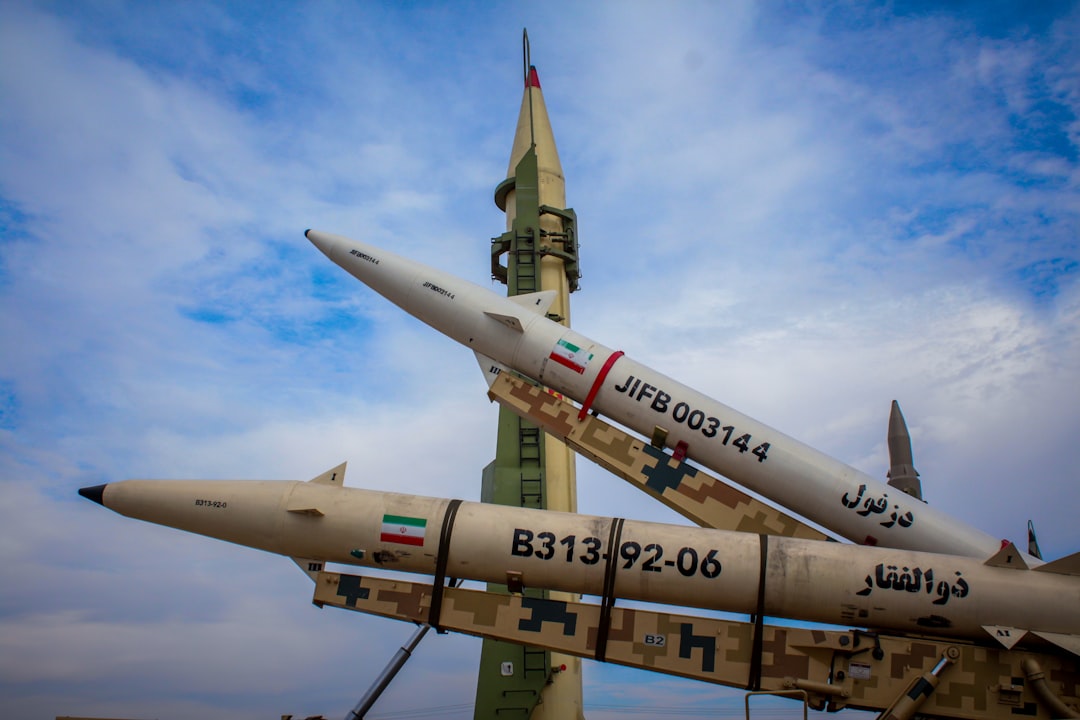

A US senator is advocating for transferring Tomahawk cruise missiles to Ukraine, marking a significant escalation in the debate over long-range strike capabilities as Kyiv seeks to target Russian military infrastructure deep behind enemy lines.
The proposal, reported by United24 Media, comes as Ukraine continues to demonstrate effective use of domestically produced systems while arguing that strategic targets in Russia remain beyond reach.
Tomahawk missiles, with ranges exceeding 1,600 kilometers, would fundamentally alter Ukraine's strategic calculus. Current Western-supplied systems—including ATACMS missiles and Storm Shadow cruise missiles—have ranges of approximately 300 kilometers, limiting strikes to occupied territories and border regions.
"The question isn't whether Ukraine can use these weapons responsibly—they've proven that repeatedly," explained defense analyst Michael Kofman of the Carnegie Endowment. "It's whether Washington is willing to enable strikes on Russian military production facilities, command centers, and airbases that launch daily attacks on Ukrainian civilians."
The strategic logic is compelling. Russia operates aircraft from airbases in Engels, Saratov Oblast, launching cruise missiles at Ukrainian cities. Ammunition depots in Rostov and Voronezh feed the artillery that pounds frontline positions. Defense production facilities across Russia manufacture the drones and missiles that target Ukraine's energy infrastructure.
Currently, these facilities operate with impunity. Ukraine has developed long-range drones capable of reaching deep into Russian territory, scoring notable successes against refineries and military facilities. But drones lack the payload and penetration capability of cruise missiles.
In Ukraine, as across nations defending their sovereignty, resilience is not just survival—it's determination to build a better future. This determination extends to developing indigenous capabilities when allies hesitate. The Wild Hornets STING interceptor system exemplifies this approach.
Overnight Monday, Ukraine's 3rd Army Corps demonstrated the STING's effectiveness, downing 33 Shahed-type drones—nearly half using these domestically produced interceptors. The system employs a layered defense strategy, stopping drones before they reach urban centers.
"STING represents a different philosophy," noted military analyst Mykola Bielieskov. "We can't match Russia's production capacity missile-for-missile. But we can create cost-effective solutions that make their attacks prohibitively expensive and ineffective."
The STING program also addresses a critical vulnerability: dependency on Western supply chains. While Ukraine remains deeply grateful for allied support—particularly advanced systems like Patriot and IRIS-T—indigenous production ensures continuity regardless of political shifts in allied capitals.
This self-reliance imperative makes the Tomahawk debate particularly significant. If provided, the missiles would likely be deployed sparingly, targeting high-value strategic assets that justify the political risk. Ukraine understands that each use of Western-supplied long-range weapons carries diplomatic consequences.
"We're not interested in striking Russian cities or terrorizing civilians—that's Moscow's approach," emphasized Mykhailo Podolyak, advisor to Ukraine's presidential office. "We target military infrastructure that enables attacks on our civilians. There's a fundamental moral distinction."
The senator's proposal faces significant obstacles. The Biden administration previously rejected Ukraine's request for Tomahawks, reportedly included in Volodymyr Zelenskyy's "victory plan." Concerns about escalation—particularly Russia's nuclear threats—have consistently limited Western weapons transfers.
But the escalation calculus has shifted repeatedly throughout the war. Systems once deemed too provocative—HIMARS, tanks, F-16s—are now standard components of Ukraine's arsenal. Russia's red lines have proven flexible, adjusted when Moscow recognizes that Western resolve won't bend to nuclear bluster.
The debate also reflects broader questions about war aims. If the goal is enabling Ukraine to negotiate from strength, long-range strike capability becomes essential. Russia will only engage seriously when military pressure creates genuine incentives for compromise.
For Ukrainian soldiers on the frontlines, these debates feel frustratingly distant. They face daily artillery barrages launched from Russian territory, beyond their ability to suppress. They watch missiles launched from deep in Russia devastate their cities, knowing the launch sites remain untouchable.
"Give us the tools, and we'll finish the job," said Lieutenant Colonel Andriy Kovtun, an artillery commander in Donetsk Oblast. "Every day we can't strike their logistics hubs and airbases, they kill more of our people. This isn't about escalation—it's about self-defense."
Whether Tomahawks ultimately reach Ukraine remains uncertain. But the senator's advocacy signals growing recognition that strategic stalemate serves Russia's interests. Ukraine doesn't seek indefinite war—it seeks the capability to make continued aggression untenable for Moscow.