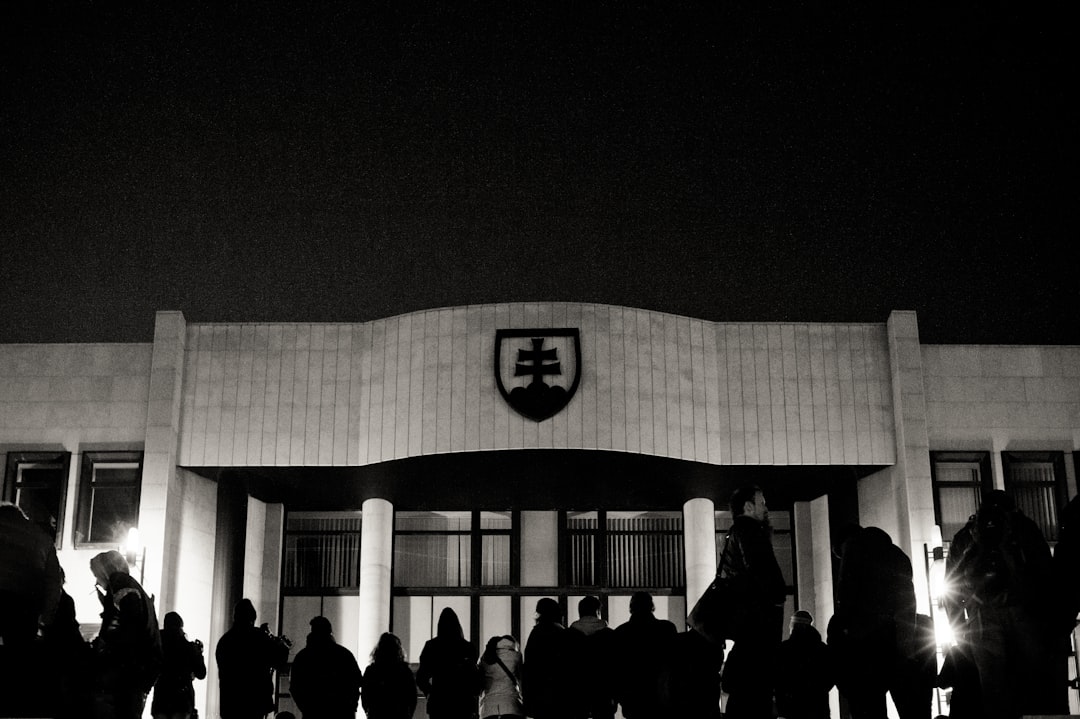

Thousands of Serbian students and citizens marched through Belgrade on Saturday in the largest demonstration since the Novi Sad railway station tragedy, marking a critical moment in the country's civil society mobilization. The procession moved from Belgrade University's rectorate through the city center to the Presidency building, representing the broadest public challenge to President Aleksandar Vučić's government in years.
The march, documented on social media, followed weeks of sustained student blockades at universities across Serbia. Students observed sixteen minutes of silence at 11:52 AM outside the Faculty of Law, honoring the victims of the Novi Sad station collapse that killed fifteen people last November.
"Students are winning," read stickers being distributed along the march route, reflecting growing confidence among demonstrators that their sustained campaign is shifting public opinion. The slogan represents a departure from traditional opposition rhetoric, focusing on incremental victories rather than wholesale political transformation.
<h2>Movement Spreads Beyond Belgrade</h2>
What distinguishes this wave of protests from previous opposition efforts is its geographic and demographic reach. Student blockades have spread to Niš, Kragujevac, and even smaller cities like Vranje, where participants posted updates celebrating local participation. This expansion beyond the capital suggests the movement has tapped into broader frustrations with governance that transcend Belgrade's traditionally more liberal politics.
In the Balkans, as across post-conflict regions, the path forward requires acknowledging the past without being imprisoned by it. The student movement's careful focus on accountability for the Novi Sad tragedy—demanding transparency about construction permits and oversight failures—has allowed it to build support across traditional political divides.
The protests have notably avoided the nationalist rhetoric and opposition party branding that characterized previous demonstrations against Vučić's government. Student organizers have maintained strict political independence, refusing to align with established opposition parties or accept their organizational support.
<h2>Government Response Intensifies Tensions</h2>
President Vučić has alternated between dismissing the protests as politically motivated and issuing veiled warnings about maintaining order. In recent statements, he referenced unnamed individuals who "begged not to end up in the Danube," language that opposition figures characterized as normalizing threats against dissenters.
Political analyst Vlajić warned in comments to N1 that "the regime has wanted from the beginning to provoke a serious incident that would serve as justification for drastic measures." This assessment reflects widespread concern among students and civil society organizations that authorities may be seeking a pretext for a more forceful crackdown.
The sustained nature of the blockades—now in their sixth month—has created logistical challenges for universities and tested the resolve of both students and administrators. Some faculty members have supported the blockades, while others have called for dialogue and a return to normal operations.
<h2>Broader Implications for Serbian Politics</h2>
The movement represents the most significant challenge to Vučić's dominance of Serbian politics since he consolidated power nearly a decade ago. The president's control has relied on a combination of media dominance, economic patronage, and the fragmentation of opposition forces. The student movement's independence from traditional opposition structures has complicated the government's usual response tactics.
International observers, particularly within the European Union, are watching the protests closely as Serbia continues its accession negotiations. The EU has emphasized the importance of democratic norms and civil society participation, though critics argue Brussels has been too accommodating of democratic backsliding in candidate countries.
Saturday's march concluded peacefully at the Presidency building, where students delivered a set of demands focusing on transparency regarding the Novi Sad investigation and broader accountability reforms. Organizers announced plans for continued blockades and further demonstrations, signaling their intention to maintain pressure on the government.
For many participants, the protests represent more than a response to a single tragedy. They reflect accumulated frustration with corruption, lack of accountability, and the erosion of institutional independence that has characterized Serbian governance in recent years.
As the movement enters what may be a decisive phase, the question is whether sustained public pressure can force meaningful reforms or whether the government will succeed in waiting out the protests through a combination of minor concessions and fatigue. The answer will likely shape Serbian politics for years to come, potentially establishing a template for civil society mobilization throughout the Western Balkans.