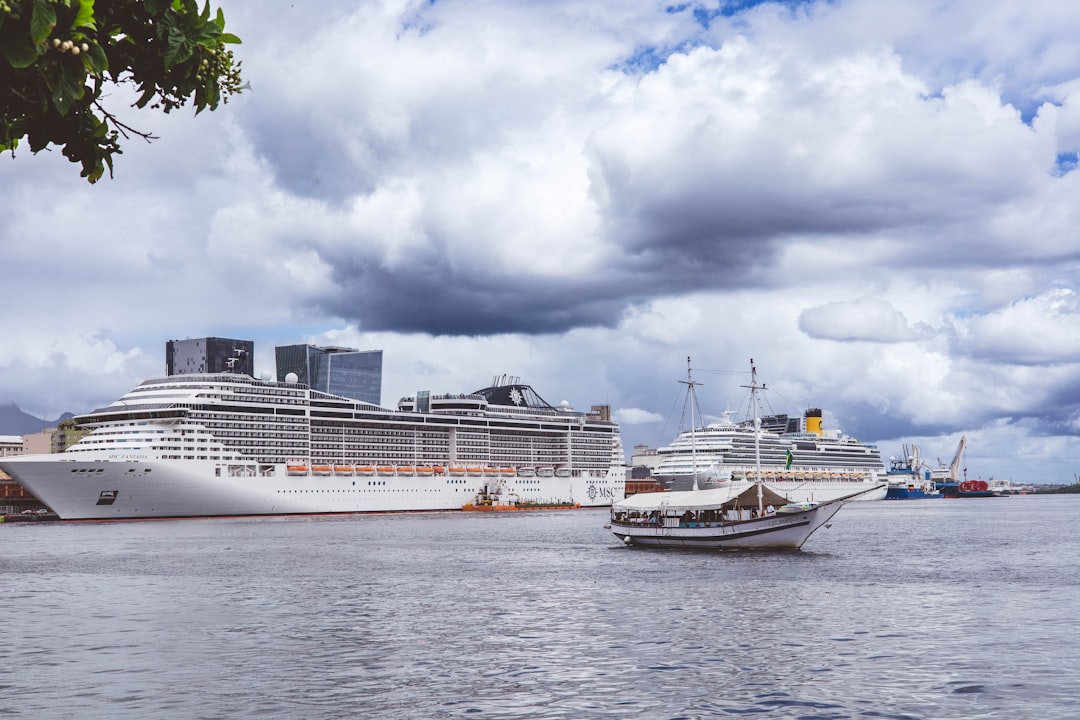
Health authorities across multiple continents are conducting an urgent international contact-tracing operation following a hantavirus outbreak linked to cruise ship MV Hondius that has killed three passengers and infected several others, prompting concerns about disease transmission in the era of global travel.
The outbreak, involving the Andean variant of hantavirus, has triggered coordinated responses from health agencies in at least 12 countries as they race to identify and monitor passengers who may have been exposed during the vessel's South Atlantic voyage, according to reports from The Cool Down.
Three people have died—a Dutch couple and one German national—with five confirmed cases and three additional suspected infections under investigation. The relatively small number of cases has triggered an outsized response because hantavirus, while rare, can be deadly, and the unusual transmission vector of a cruise ship has scattered potentially exposed individuals across the globe.
The Virus and Transmission
Hantavirus typically transmits to humans through contact with infected rodent droppings, urine, or saliva—usually by breathing in dust contaminated with the virus. The Andean variant identified in this outbreak can, in rare circumstances, transmit between humans, making person-to-person spread a concern that standard hantavirus precautions don't fully address.
World Health Organization Director-General Maria Van Kerkhove emphasized the distinct nature of this outbreak: "This is not coronavirus, this is a very different virus," she stated, seeking to prevent public confusion with COVID-19. The comment reflects lessons learned from pandemic communication—the importance of quickly distinguishing between different health threats to ensure appropriate, not excessive, public response.
Unlike COVID-19, which spreads easily through respiratory droplets in casual contact, human-to-human hantavirus transmission requires much closer or more sustained exposure. This fundamental difference means the outbreak is unlikely to spark exponential spread, even among those who were on the affected vessel.
The Vessel's Journey and Exposure Timeline
The MV Hondius, an expedition cruise ship designed for polar and remote region voyages, made multiple stops before health officials identified the virus. A critical disembarkation occurred on April 24 at St. Helena, a remote British overseas territory in the South Atlantic, where passengers from at least 12 countries left the ship.
The first confirmed case emerged in early May, prompting health officials to trace the exposure path backward. This delay between potential exposure and case identification is typical of hantavirus, which has an incubation period of one to six weeks. The extended timeframe complicates contact tracing as exposed individuals have had weeks to travel onward, interact with others, and disperse globally.
The ship's route likely included stops in remote regions where rodent populations might carry the virus. Expedition cruises often visit locations with limited infrastructure and high wildlife populations—environments where hantavirus reservoirs exist naturally.
International Coordination Challenges
Health authorities in the United States, Canada, Singapore, and multiple European nations are actively monitoring or testing exposed individuals. The coordination required—spanning different health systems, languages, privacy regulations, and jurisdictional authorities—illustrates both the capabilities and limitations of global health surveillance.
Some travelers are isolating asymptomatically as a precaution, following guidance from local health authorities. Others have been hospitalized for evaluation and treatment, though it remains unclear how many of these hospitalizations reflect actual suspected cases versus precautionary monitoring.
Dutch authorities, responding to the deaths of two of their citizens, are conducting daily health checks on crew members and passengers who had contact with infected travelers. This intensive surveillance reflects the seriousness with which health officials are treating potential transmission chains, even as they acknowledge the relatively low risk to most passengers.
Risk Assessment and Public Health Response
The U.S. Centers for Disease Control and Prevention has assessed the current risk to Americans as "extremely low," a determination based on the virus's limited transmissibility and the specific circumstances of exposure. This measured response contrasts sharply with early pandemic-era caution, reflecting both improved understanding of different pathogens and desire to avoid unnecessary public alarm.
However, the situation remains under close surveillance due to cruise travel's potential to spread exposures globally. A passenger who boarded the ship healthy, was exposed to the virus mid-voyage, and disembarked at St. Helena could travel onward to any destination worldwide before symptoms appeared—if they develop at all.
The incident highlights enduring vulnerabilities in global health security. While COVID-19 dramatically improved disease surveillance and contact tracing capabilities, those systems primarily focus on highly transmissible respiratory pathogens. Outbreaks of rare diseases spread through unusual vectors can still catch health authorities off-guard.
Hantavirus: Context and Characteristics
Hantavirus pulmonary syndrome, the form of disease caused by Andean and related hantavirus strains, carries a high fatality rate—historically around 36% in the Americas, according to CDC data. The virus causes severe respiratory illness that can progress rapidly, making early identification and treatment critical.
Unlike many viral diseases, there is no specific antiviral treatment for hantavirus. Care focuses on supportive measures—oxygen, fluid management, and in severe cases, mechanical ventilation. Patients who survive the acute phase typically recover fully, though the illness can be debilitating during its active period.
The Andean variant's rare capability for human-to-human transmission has been documented in previous outbreaks in South America, particularly Chile and Argentina. These transmission events typically involved close contact with severely ill patients or exposure to their bodily fluids—circumstances quite different from casual interaction on a cruise ship.
Cruise Industry Implications
The incident raises questions about disease prevention protocols on expedition cruise vessels that visit remote regions. Unlike large commercial cruise ships that primarily visit developed ports with established infrastructure, expedition vessels often bring passengers into environments where wildlife-borne diseases exist naturally.
Cruise operators will likely face pressure to enhance health screening, implement more rigorous sanitation protocols in areas where rodent contact is possible, and improve systems for rapid identification and isolation of potentially infectious diseases. The industry's response will be watched closely by health authorities and passengers alike.
For now, the immediate focus remains on identifying and monitoring potentially exposed individuals while providing appropriate care for those who have fallen ill. The relatively contained nature of the outbreak—despite its international scope—suggests that health authorities' coordination is proving effective at preventing broader spread.
As one epidemiologist noted, the incident serves as a reminder that in an era of global travel, health security depends not just on preventing common infectious diseases but also on maintaining vigilance for rare pathogens that can exploit modern transportation to spread far beyond their traditional ranges.