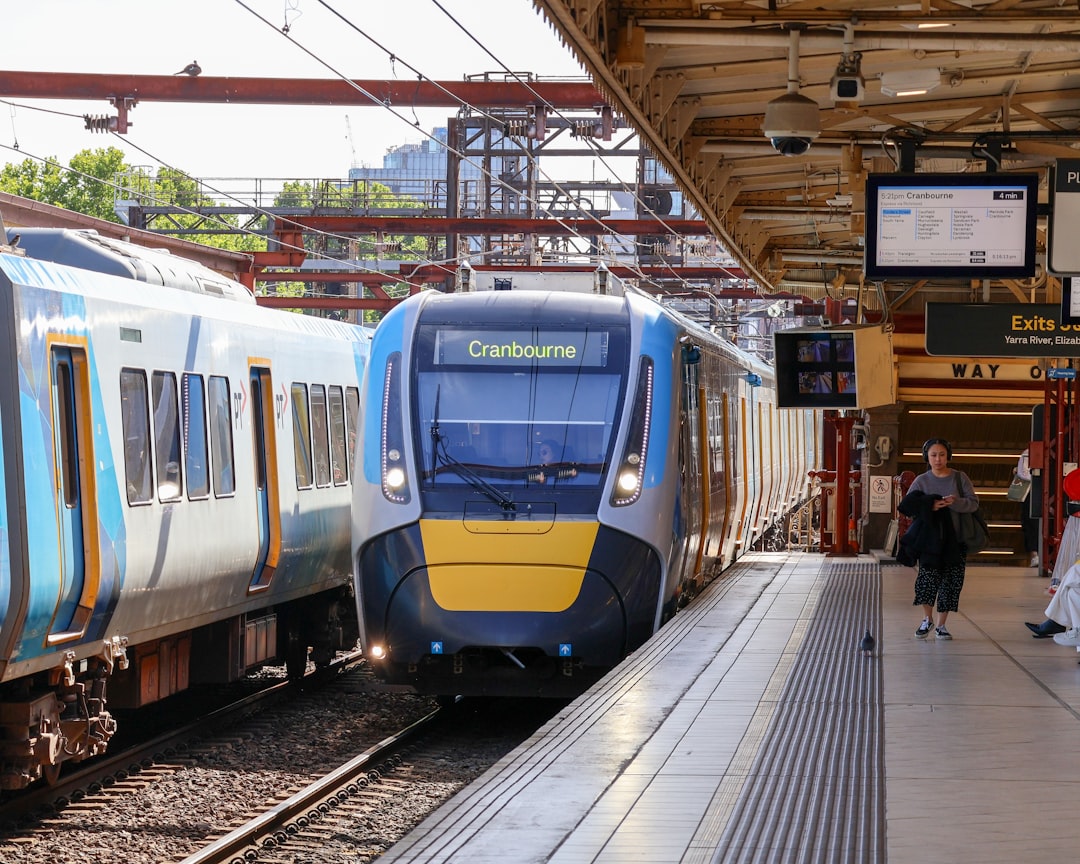
Victoria and Tasmania will offer free public transport throughout April while New South Wales and Western Australia keep collecting fares, exposing the stark inequities of Australia's federal crisis response.The divide emerged from yesterday's emergency National Cabinet meeting, where state premiers agreed on the need for fuel relief but couldn't align on how to deliver it.Victoria's Premier Jacinta Allan announced all metro trains, trams, and buses in Melbourne will be free from April 1-30. Tasmania quickly followed with free Metro Tasmania services across Hobart, Launceston, and Burnie.Meanwhile, NSW commuters — who already pay some of Australia's highest transport fares — get no relief. Same for Perth, Adelaide, and Brisbane riders.The equity problemThis creates a bizarre two-tier system. A Melbourne worker saves $150-200 in April on their monthly Myki pass. A Sydney worker on the same income pays full fare — roughly $200-250 monthly for equivalent commuting.Both face the same fuel price spike. Both pay federal taxes. But only some get state relief.NSW Premier Chris Minns defended the decision, citing the state's $7 billion budget deficit. Free public transport for a month would cost an estimated $150-200 million in foregone revenue — money NSW Treasury says the state can't afford after years of pandemic spending. Premier pointed to geography. is one of the world's most sprawled cities, and 's regional centres are too car-dependent for public transport to meaningfully reduce fuel demand.Both arguments have merit. But they also reveal how 's federation struggles when unified action is needed. can afford free transport partly because it runs one of 's most heavily used public transport networks. 's train, tram, and bus system carries — losing a month of fare revenue hurts, but the political goodwill may be worth it.Premier is also betting the move will reduce traffic congestion as drivers ditch cars for free trains. Less congestion means faster freight movement and lower business costs — potentially offsetting some of the lost revenue.'s calculation is different. The state's public transport system is tiny — Metro Tasmania carries only about . Offering free service costs maybe , a rounding error in state budgets. It's cheap politics.The real inequity isn't between states — it's between cities and the regions. Free trams don't help a truckie in or a nurse driving to work in .Regional and rural has virtually no public transport. These communities are entirely car-dependent and will wear the full brunt of fuel price spikes with zero state relief.The federal fuel excise cut helps everyone equally per litre, but regional Aussies drive further — to work, to shops, to medical appointments. A office worker might save on their 30km commute. A mine worker driving 100km each way saves but still spends vastly more on fuel.While bickers over who gets free trains, Pacific Island nations face the same fuel crisis with none of the fiscal capacity for relief., , — all import 100% of their fuel at prices now spiking faster than 's. Their governments can't cut excise (they need the revenue for basic services) and have no public transport alternatives to offer.If — a wealthy G20 nation — is struggling to coordinate crisis response, imagine the pressure on Pacific Island governments with GDP smaller than a single Australian state's annual budget.This is why 's offers of fuel subsidies and infrastructure investment land so well across the Pacific. When can't even get its own states aligned, why would Pacific leaders look to for reliable partnership?Free public transport is a band-aid. The real issue is shut down domestic refining capacity and now imports from . When global supply chains hiccup, Aussies pay the price — whether they drive or catch the train.State premiers should be demanding the federal government rebuild refining capacity and secure long-term supply contracts. Instead, they're squabbling over who pays for free tram rides.Mate, if can't unify over something as basic as fuel security, we're not ready for the bigger challenges coming — and there's a whole region of Pacific nations taking notes.
|