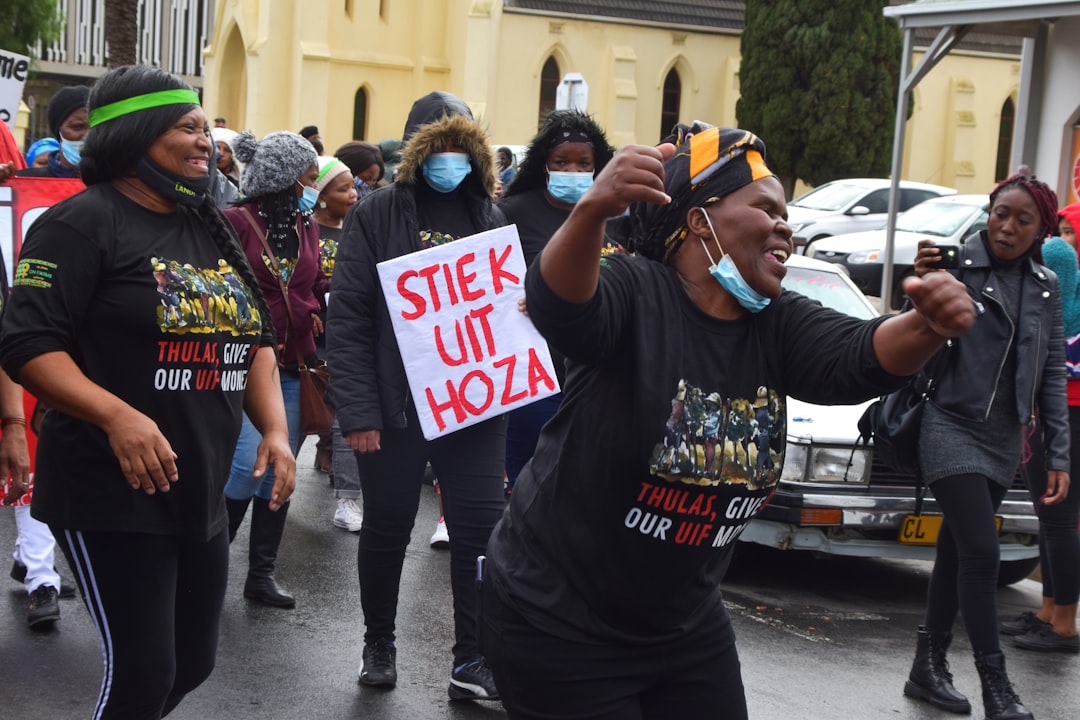
Breaking: South Africa faces renewed xenophobic tensions as activist Ngizwe Mchunu announces plans to extend anti-immigrant operations to Gauteng province from April 27-29, raising urgent questions about differential law enforcement and the protection of African immigrants.
Mchunu, who has led what observers describe as vigilante actions against foreign nationals in Durban, told media he intends to target "undocumented immigrants" in Gauteng—South Africa's economic heartland, home to Johannesburg and Pretoria. Videos circulating on social media appear to show physical attacks and intimidation against African immigrants, though these have not been independently verified.
The announcement has sparked fierce debate about why Mchunu has not faced the same level of prosecution pressure as other controversial political figures. Critics note the stark contrast with the intense legal scrutiny facing Julius Malema, leader of the Economic Freedom Fighters, who faces significant prison time on firearms charges.
"Why does there seem to be less public pressure for Ngizwe Mchunu to be arrested or prosecuted?" asked one South Africa resident in a widely-discussed social media post. "People involved in these actions are not law enforcement officers, so they have no legal authority to stop people, demand documents, or police immigration status."
The question highlights a troubling pattern in South Africa's law enforcement: differential prosecution based on political considerations or public pressure campaigns. Civil rights groups like AfriForum, vocal in demanding prosecution of Malema, have been conspicuously silent about Mchunu's activities.
Xenophobic violence has plagued South Africa for decades, with major outbreaks in 2008, 2015, and 2019 claiming dozens of lives. The attacks primarily target immigrants from other African countries—Zimbabwe, Nigeria, Ethiopia, Somalia, and Mozambique—who are scapegoated for unemployment and crime despite evidence that immigration has minimal impact on job availability for South African citizens.
The violence reflects deeper contradictions in South Africa's post-apartheid identity. The country's liberation struggle received crucial support from neighboring states, yet many South Africans harbor resentment toward fellow Africans. Pan-African solidarity, a cornerstone of the anti-apartheid movement, clashes with economic anxiety in a nation where unemployment exceeds 30 percent.
Mchunu's planned Gauteng operation raises particular alarm because the province hosts South Africa's largest immigrant communities. Areas like Hillbrow in Johannesburg and parts of Pretoria have diverse African populations who contribute to the economy as entrepreneurs, workers, and consumers.
Legal experts emphasize that civilians have no authority to demand immigration documents or detain suspected undocumented immigrants. Such powers rest exclusively with the Department of Home Affairs and police. Vigilante "immigration enforcement" amounts to assault, false imprisonment, and potentially hate crimes under South Africa's Constitution.
Yet prosecutions for xenophobic violence have been rare. The 2008 attacks, which killed more than 60 people and displaced thousands, resulted in few convictions. Subsequent outbreaks similarly saw minimal legal consequences for perpetrators, creating a climate of impunity.
Human rights organizations have called on the National Prosecuting Authority to act preemptively against Mchunu's announced plans. "This is not about immigration policy," said one civil society leader. "This is about preventing violence against vulnerable people and upholding the rule of law."
The Government of National Unity, formed after 2024 elections, faces its first major test on xenophobic violence. The coalition includes parties with different stances on immigration, from the Democratic Alliance's relatively liberal position to smaller parties that have exploited anti-immigrant sentiment for political gain.
In South Africa, as across post-conflict societies, the journey from apartheid to true equality requires generations—and constant vigilance. The differential treatment of political figures like Malema versus activists like Mchunu suggests that vigilance is failing, and that South Africa's commitment to equal justice remains incomplete.
As the April 27-29 deadline approaches, civil society groups, immigrant communities, and human rights lawyers are mobilizing to prevent violence and demand equal application of the law. Whether South Africa's institutions respond effectively will reveal much about the nation's democratic health three decades after apartheid's end.