The U.S. Space Force is dramatically expanding its heavy-lift launch requirements, projecting a 50% increase in the most demanding national security missions—a surge that intensifies pressure on the commercial launch industry while potentially delivering billions in new contracts to SpaceX, United Launch Alliance, and Blue Origin.
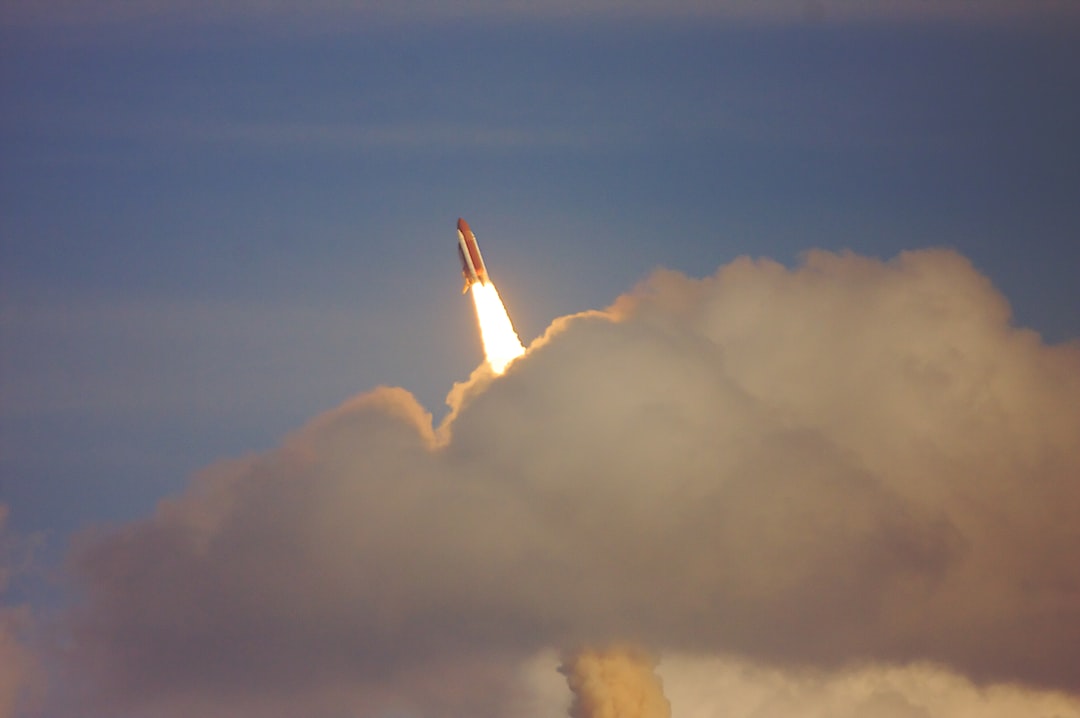
Space Systems Command revealed plans to add 25 "high-energy" launches to the National Security Space Launch Phase 3 program's Lane 2 segment between fiscal years 2027 and 2029. The original five-year plan encompassed 54 missions; the expansion breaks down as six additional launches in 2027, nine in 2028, and ten in 2029—missions characterized as "critical to national security" with the "highest priority for mission success and low risk posture."
Representative payloads include 8,000-pound satellites positioned in geosynchronous orbit and 20,000-pound spacecraft bound for medium Earth orbit, according to Space Systems Command's recent notice. Multi-manifest missions deploying multiple high-value satellites aboard single vehicles are also planned—missions requiring both substantial lift capacity and exceptional reliability.
The financial implications are staggering. The Pentagon's fiscal 2027 budget request allocates approximately $5 billion for 31 national security launches—more than doubling the roughly $2 billion enacted for 2026. This represents one of the sharpest single-year increases in military space spending in recent history.
In space exploration, as across technological frontiers, engineering constraints meet human ambition—and occasionally, we achieve the impossible. The expansion reflects not just growing launch demand but fundamental shifts in how America's military space architecture operates, with larger satellite constellations, more frequent refresh cycles, and increasing reliance on space-based capabilities for communications, navigation, reconnaissance, and early warning.
Currently, only SpaceX and United Launch Alliance possess certification for Lane 2 operations—the designation reserved for the military's most critical payloads. SpaceX actively flies national security missions on its Falcon Heavy rocket, providing proven operational capability. ULA's newly developed Vulcan Centaur rocket, however, remains temporarily grounded while technicians investigate a solid-rocket booster anomaly detected during recent flights.
The timing creates distinct competitive advantages. SpaceX's operational readiness positions the company to capture a substantial portion of near-term missions, particularly the 2027 launches. ULA must resolve its booster issues and ramp up Vulcan production to compete effectively for the 2028-2029 timeframe—a challenging timeline given the vehicle's limited flight history.
Blue Origin's New Glenn rocket adds complexity to the competitive landscape. The heavy-lift vehicle is pursuing Lane 2 certification but encountered setbacks during recent testing. If Blue Origin achieves certification in time, it could compete for later missions in the expanded program, potentially breaking the SpaceX-ULA duopoly that has characterized national security launches for years.
Space Systems Command indicated it does not plan to expand the certified provider pool for Lane 2 beyond the current framework, though the procurement notice allows additional companies to demonstrate capability by May 5 if feasible. This suggests the military prefers working with established providers rather than introducing new certification processes mid-program.
The surge reflects broader trends in military space operations. Satellite constellations are growing larger and more distributed, reducing vulnerability to anti-satellite weapons through proliferation. Communications networks are migrating from a few large geosynchronous satellites to hundreds or thousands of smaller spacecraft in lower orbits. Intelligence, surveillance, and reconnaissance capabilities increasingly rely on rapid satellite replacement to maintain technological superiority.
For the commercial launch industry, the expansion validates heavy-lift vehicle development investments. Companies that committed billions to developing Falcon Heavy, Vulcan, and New Glenn are seeing demand materialize not just from civil and commercial customers but from the military sector that historically provided anchor contracts for American launch capabilities. The missions also generate revenue stability that enables further private investment in next-generation systems.
The demand surge ultimately demonstrates that national security increasingly depends on commercial space providers—a dramatic shift from the government-developed launch systems that dominated military space operations for decades. The outcome will likely determine not just which companies prosper but how America's military space architecture evolves through the next decade.