The four astronauts of Artemis II splashed down safely in the Pacific Ocean on April 10 after humanity's first crewed journey beyond Earth orbit in over half a century, marking a watershed moment for deep-space exploration and validating critical systems for future lunar landings.
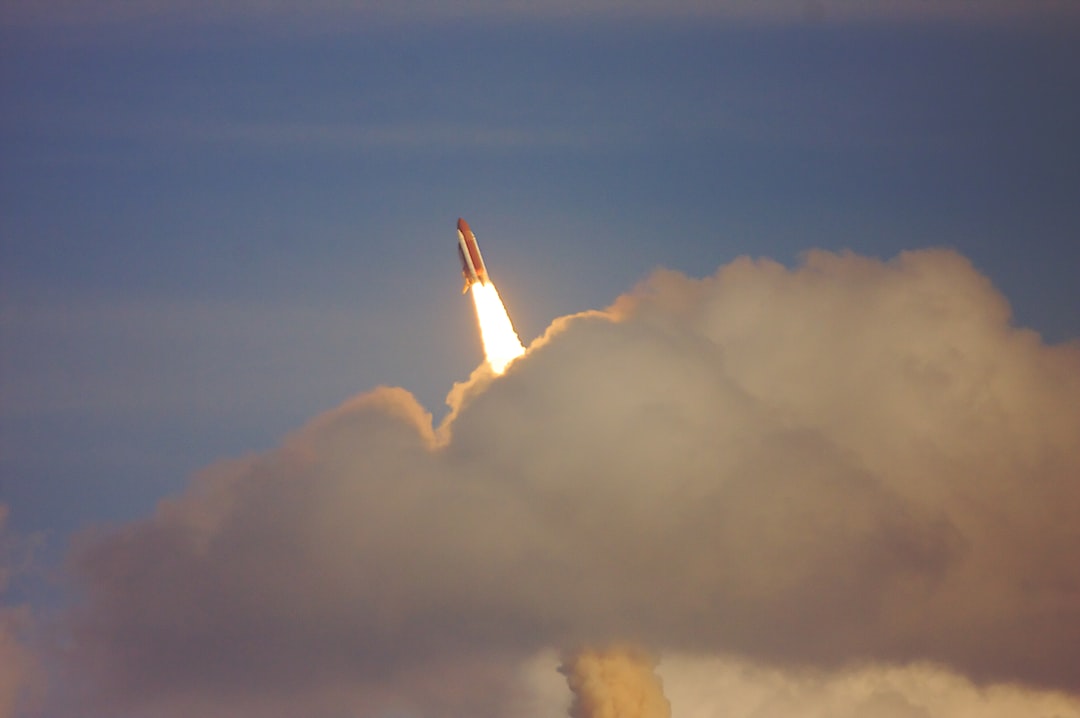
The crew returned to Earth after a 9-day, 1-hour, and 32-minute mission that began with a thunderous launch aboard NASA's Space Launch System on April 1. The mission sent humans farther from Earth than anyone has traveled since the final Apollo mission in 1972—a distance that restored America's capability to conduct crewed deep-space operations after decades focused exclusively on low-Earth orbit.
The Orion spacecraft's heat shield performance represents perhaps the mission's most critical engineering validation. Reentering Earth's atmosphere at approximately 24,000 miles per hour, the capsule endured temperatures reaching 5,000 degrees Fahrenheit—nearly half the surface temperature of the Sun. This successful thermal protection demonstration was essential, as it proves the spacecraft can safely return crews from lunar distances where reentry velocities far exceed those from the International Space Station.
In space exploration, as across technological frontiers, engineering constraints meet human ambition—and occasionally, we achieve the impossible. The Artemis II mission accomplishes exactly that: it resurrects capabilities that NASA deliberately discontinued and must now rebuild from institutional memory, modern materials science, and updated safety standards.
The crew conducted multiple science investigations during their lunar flyby, studying radiation exposure levels in deep space and microgravity's effects on human physiology. These findings will directly inform mission planning for Artemis III, currently scheduled to place astronauts on the lunar surface for the first time since 1972. Unlike Apollo's equatorial landing sites, Artemis III targets the Moon's south polar region, where permanently shadowed craters may harbor water ice—a resource critical for sustained lunar presence.
The mission also validated NASA's new operational paradigm. While Apollo was entirely government-developed and operated, Artemis blends NASA's Orion spacecraft and SLS rocket with commercial partners providing logistics, lunar lander services, and ground support. SpaceX will provide the Starship lunar lander for Artemis III, representing unprecedented reliance on commercial providers for critical mission segments.
The successful completion of Artemis II removes a major uncertainty from NASA's timeline. The agency can now proceed with final preparations for the first crewed landing, including completion of SpaceX's Starship Human Landing System and the construction of lunar surface habitats. The mission also establishes operational protocols for the Lunar Gateway, a planned space station in lunar orbit that will serve as a staging point for surface missions.
Perhaps most significantly, Artemis II proves that the United States can again send humans beyond low-Earth orbit—a capability that opens pathways not only to sustained lunar exploration but eventually to Mars. The thermal protection, life support, navigation, and communication systems validated during this mission are foundational technologies for any crewed journey to the Red Planet.
The mission's completion positions NASA to achieve what Apollo never attempted: sustained human presence beyond Earth orbit. Where Apollo featured brief surface visits followed by decades of absence, Artemis aims for permanent infrastructure supporting continuous scientific research, resource utilization, and eventually, missions to Mars that may define the next chapter of human exploration.