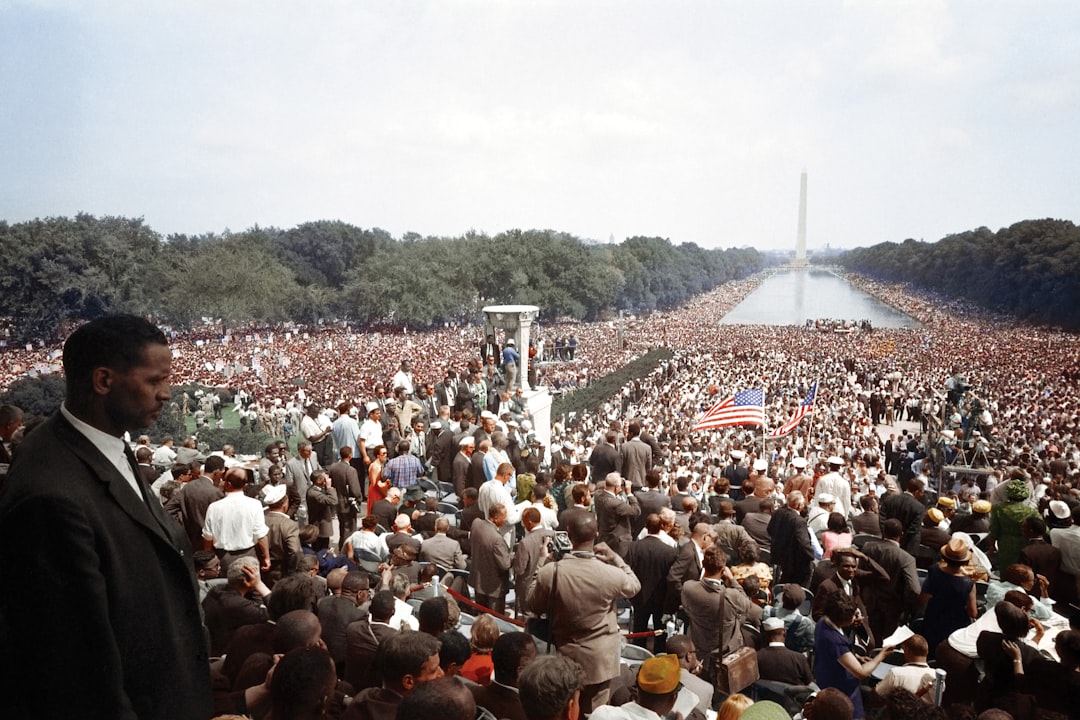
On the Edmund Pettus Bridge in Selma, Alabama, a young Jesse Jackson stood alongside Martin Luther King Jr. as state troopers bore down on marchers in the spring of 1965. Six decades later, his death at 84 closes a chapter of American history that began in the bloodied soil of the civil rights movement and ended with a nation he helped transform — though never without controversy.
Jackson died on February 17, 2026, according to his family. He had lived with Parkinson’s disease for more than a decade, a diagnosis he disclosed publicly in 2017 after years of managing the condition from the public eye. No cause of death was immediately released.
The son of a South Carolina sharecropper, Jackson rose from poverty to become perhaps the most consequential Black political figure of his generation. He was ordained a Baptist minister, joined the Southern Christian Leadership Conference under King, and in the years after King’s 1968 assassination in Memphis, Tennessee — Jackson was present at the Lorraine Motel that day — became the movement’s most recognizable living voice.
He founded Operation PUSH (People United to Save Humanity) in 1971 and later the National Rainbow Coalition, organizations that pushed corporations to hire Black workers and pushed Democratic Party leaders to take economic justice seriously. Long before the phrase became common currency in American politics, Jackson was talking about the intersection of race and economic inequality — at factory gates in Gary, Indiana, on picket lines in Chicago, in front of audiences that ranged from Black church congregations to labor halls to the United Nations.
But it was his two runs for the presidency that cemented his place in American political history. In 1984, Jackson entered the Democratic primary and shocked party insiders by winning contests in South Carolina, Virginia, and several Southern states, amassing more than 3.5 million votes. Four years later, his second campaign was even more formidable: he won 13 primaries and caucuses, collected 6.9 million votes, and walked into the 1988 Democratic National Convention as the runner-up to Michael Dukakis. His convention speech that year — "Keep hope alive" — remains one of the most celebrated pieces of American political oratory, a thundering meditation on the arc of his own family’s journey from poverty to the precipice of genuine power.
Those campaigns did something no amount of editorial commentary could fully capture: they built the organizational infrastructure, the donor networks, and the voter mobilization machinery that made a Black presidential candidacy imaginable. When Barack Obama accepted the Democratic nomination in Denver in 2008, cameras caught Jackson in the crowd, weeping. The moment was freighted with complicated emotion. Their relationship had long been tense — Jackson had been caught on an open microphone in 2008 saying he wanted to castrate Obama for "talking down to Black people." It was a wound that never fully healed publicly, even as Jackson campaigned for Obama’s election.
The complicated legacy is inseparable from the man. In 1984, during a conversation with a reporter that he believed was private, Jackson referred to New York City as "Hymietown," using an antisemitic slur. The remark nearly destroyed his campaign and haunted him for decades. He apologized, but the damage to his relationship with the American Jewish community was lasting. Critics also raised questions about the finances of his organizations over the years, and a 2001 revelation that he had fathered a child outside his marriage to Jacqueline Jackson further complicated his moral authority.
None of it erased what he had built. Jackson negotiated the release of hostages in Syria, Cuba, and Yugoslavia — American prisoners and downed pilots freed through his personal diplomacy when official channels had stalled. He registered millions of new voters across the South in registration drives that reshaped the Democratic electorate. He ran as a write-in candidate, a protest candidate, a credible candidate — and each time he ran, he pulled the party’s conversation closer to the communities it too often overlooked.
"As Americans like to say, ‘all politics is local’ — even in the nation’s capital," Jackson told this correspondent in a 2009 interview at his Chicago offices. "But the question is always: local to whom? Local to the folks in the front pew, or local to the folks who never get a seat in the church at all?"
He is survived by his wife Jacqueline Jackson, five children including civil rights attorney Jonathan Jackson, and his son Jesse Jackson Jr., the former Illinois congressman who served time in federal prison for misusing campaign funds — another chapter in the complicated family story.
The flags at the Illinois State Capitol in Springfield were ordered to half-staff. Tributes poured in from across the political spectrum, from President Biden’s White House to civil rights organizations to leaders of the Congressional Black Caucus. Even those who had clashed with him publicly acknowledged the scope of what he had accomplished.
Jesse Louis Jackson was born October 8, 1941, in Greenville, South Carolina. He walked across the Edmund Pettus Bridge. He stood in the kitchen of the Lorraine Motel. He kept hope alive. He died at 84, an American original whose shadow will fall across this country’s politics for generations to come.