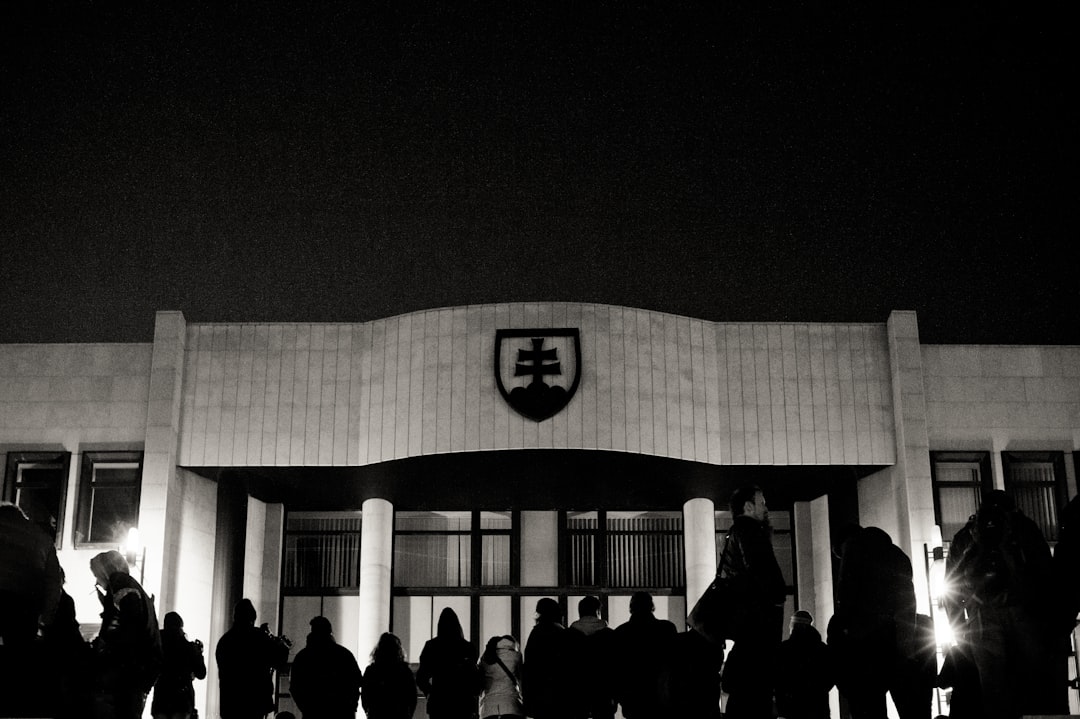

Péter Magyar took the oath of office as Hungary's new Prime Minister on May 9, marking the end of Viktor Orbán's 16-year tenure and triggering jubilant celebrations across Budapest. Hundreds of thousands gathered at Parliament to witness what many supporters compared to the 1956 uprising—"a bloodless revolution."
In his first speech as Prime Minister, Magyar declared: "I will serve my country, not rule over it," signaling what appears to be a sharp departure from the Orbán era's approach to governance. The remark drew sustained applause from the massive crowd assembled along the Danube riverfront.
<h2>Historic Scenes in Budapest</h2>
The inauguration ceremony featured unprecedented scenes of celebration. The event included performances by the Sükösdi Tamburazenekar, with Roma children singing the Cigány Himnusz (Roma Anthem) in Parliament's main hall—a symbolic gesture that stands in stark contrast to the previous government's approach to minority communities. Hungarian media noted that Magyar plans to appoint Hungary's first blind minister, signaling an emphasis on inclusion.
Swedish state television captured images of internet personality "Hide the Pain Harold" (András Arató, a Hungarian national) celebrating among the crowds—a moment that quickly went viral and underscored the widespread public enthusiasm for the transition.
Following the official ceremony, the TISZA Party organized a massive celebration on Kossuth Square that stretched to the Danube embankment, featuring music, dancing, and what attendees described as an atmosphere of national catharsis. One minister's impromptu dance reportedly energized the crowd to such an extent that social media posts joked about miraculous healings.
<h2>The End of an Era</h2>
Orbán's departure from power represents a seismic shift in Hungarian politics. His government had increasingly positioned itself as a challenger to Brussels, frequently blocking EU sanctions and championing what it termed "national sovereignty" against perceived Brussels overreach. The relationship between Budapest and EU institutions had grown increasingly strained over rule-of-law concerns and access to EU funds.
The symbolic weight of the transition was not lost on observers. Magyar stood on the same balcony from which Imre Nagy delivered his historic speech during the 1956 uprising against Soviet control. In Hungary, as across the region, national sovereignty and European integration exist in constant tension—and Magyar inherits both the promise and complexity of navigating this balance.
The parliamentary session itself revealed the magnitude of the political shift. For the first time since the transition to democracy, Parliament convened without either Orbán or Ferenc Gyurcsány present—two figures who had dominated Hungarian politics for decades. Members of the far-right Mi Hazánk party walked out during Magyar's address, while remaining Fidesz representatives sat in silence, a reversal of their own tactics during previous administrations.
<h2>Questions About What Comes Next</h2>
While celebration dominated the day, significant questions remain about Magyar's ability to govern effectively and manage Hungary's complex relationships both domestically and internationally.
The government faces immediate challenges including EU relations, economic policy, and institutional reform. Hungary's relationship with Brussels, particularly regarding rule-of-law mechanisms and access to recovery funds, will require careful navigation. Magyar's emphasis on serving rather than ruling suggests a different approach, but the practical implementation remains to be seen.
Domestically, Magyar inherits a deeply polarized society. Social media posts from the day revealed continuing divisions, with some citizens from Fidesz-supporting families refusing to acknowledge the transition's legitimacy. One widely-shared post described parents who remained convinced Magyar had been "bought by Brussels" and refused to speak with neighbors who supported the change.
The new government has already taken symbolic steps toward reconciliation. The official Hungarian Government Facebook page, which had blocked thousands of critics during the Orbán years, reportedly granted "amnesty" to previously banned users, allowing them to comment once again.
<h2>International Implications</h2>
Magyar's ascension carries significant implications for the Visegrad Group and EU dynamics. With Slovakia's Robert Fico recently calling himself the EU's "black sheep" during a Moscow visit, Hungary's potential pivot toward closer EU cooperation could reshape Central European alliances.
European leaders will be watching closely to see whether Magyar can deliver on implied promises of improved EU relations while maintaining the domestic support that brought him to power. The balancing act between satisfying voters who want change and managing international expectations will define his early tenure.
Opposition analyst Tóta W. Árpád captured the mood among Magyar's supporters: "We are healing from cancer. We're celebrating our second birthday. This is when we typically pledge to change our lifestyle. Let's see if an entire nation is capable of this."
For now, Hungary awakes to a new political reality—one that few thought possible just months ago. Whether this historic transition leads to substantive change or simply a different style of governance remains the central question facing both Magyar and the millions who celebrated in the streets.