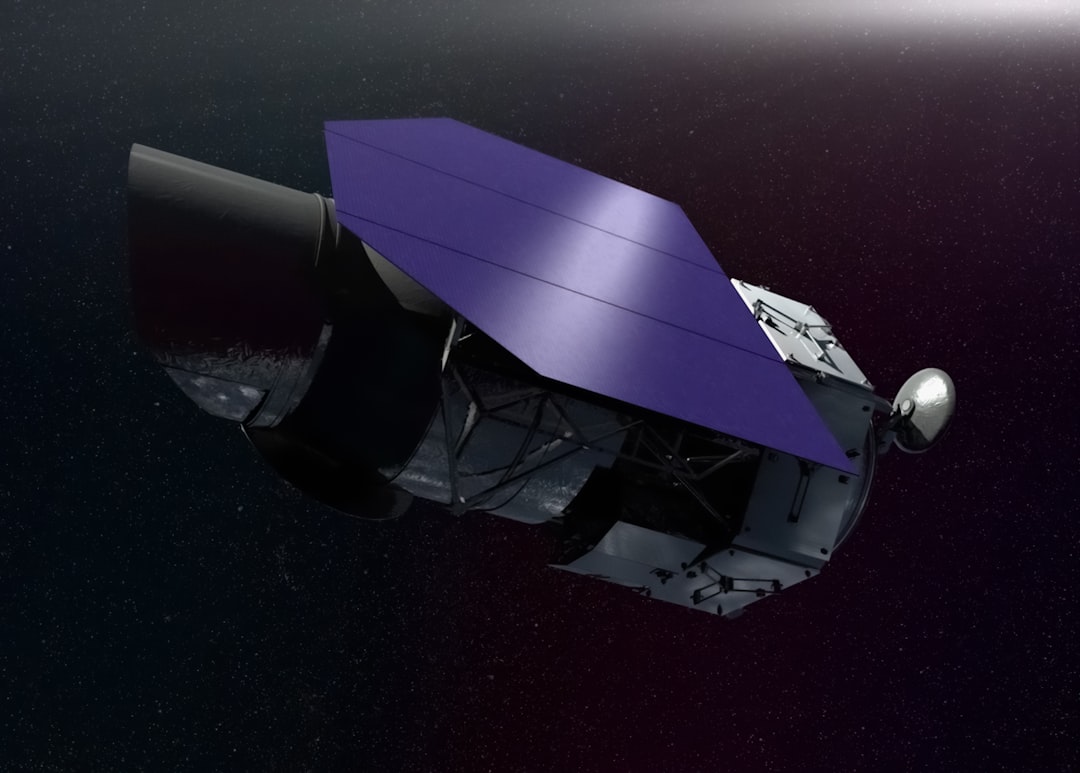
In a development almost unheard of in aerospace engineering, NASA's Nancy Grace Roman Space Telescope has completed assembly and testing eight months ahead of schedule and under its allocated budget—a feat that represents a dramatic departure from the industry's troubled track record of delays and cost overruns.
The observatory, now ready for launch, achieves this rare success through an unconventional path: repurposing declassified spy satellite hardware donated by the National Reconnaissance Office. The telescope's mirror system, originally designed for Earth surveillance, will instead scan the universe in infrared wavelengths, providing a field of view 100 times larger than the Hubble Space Telescope.
"This is project management excellence combined with smart asset reuse," explained mission officials familiar with Roman's development. The donated optics—already manufactured to exacting specifications—eliminated years of mirror fabrication and testing, allowing NASA to focus resources on instrumentation and spacecraft systems.
The telescope's primary science objectives include mapping dark energy, hunting for exoplanets through gravitational microlensing, and conducting wide-field infrared surveys. Unlike the James Webb Space Telescope, which observes individual targets in extraordinary detail, Roman will excel at surveying vast swaths of sky—complementary capabilities that together transform our observational capacity.
Roman's ahead-of-schedule completion stands in stark contrast to Webb's development, which experienced multiple delays and significant budget overruns before its successful 2021 launch. The difference illustrates how leveraging existing hardware—even from classified programs—can fundamentally alter project economics and timelines.
In space exploration, as across technological frontiers, engineering constraints meet human ambition—and occasionally, we achieve the impossible. The Roman Telescope's success demonstrates that NASA can deliver flagship-class missions efficiently when project structures align with available resources.
The observatory's infrared capabilities will enable observations impossible from ground-based telescopes, which must contend with Earth's atmospheric interference. Roman's position at the —the same orbit occupied by Webb—provides thermal stability and uninterrupted viewing essential for sensitive infrared astronomy.