They thrash violently when disturbed, leaping and writhing with such energy they've earned the name "jumping worms"—and their arrival in Colorado and across the Western United States signals serious trouble for forest ecosystems unprepared for these voracious invaders.
State agricultural officials issued warnings this week as populations of Asian jumping worms (Amynthas species) expand rapidly across Colorado, Oregon, Washington, and California. The invasive earthworms, native to Japan and the Korean Peninsula, consume leaf litter at rates far exceeding native earthworm species, fundamentally altering soil composition and threatening forest health.
"These worms are ecosystem engineers in the worst possible way," explained Dr. Marie Johnston, an invasive species ecologist with the Colorado Department of Agriculture. "They process organic matter so rapidly that they're essentially strip-mining forest floors, removing the nutrient-rich layer that countless species depend on for survival."
The ecological damage unfolds quickly. Jumping worms reproduce asexually—each individual can produce cocoons without mating—enabling explosive population growth from even a single introduced worm. Populations can reach densities exceeding 100 worms per square meter, creating what researchers call "biological deserts" where diverse leaf litter communities once thrived.
Native plants, fungi, insects, and salamanders rely on the forest's spongy organic layer—the duff—for moisture, nutrients, and habitat. Jumping worms consume this layer at such speed that forests develop bare, compacted soil resembling coffee grounds. Seeds struggle to germinate. Salamander populations crash. Wildflower diversity plummets.
The worms arrived in North America decades ago, likely through imported plants and soil. They've spread across the Eastern United States since the early 2000s, but their recent Western expansion troubles ecologists who hoped geographic barriers might contain them. Detection in Colorado gardens and parks suggests the invasion has reached a new, potentially catastrophic phase.
"In nature, as across ecosystems, every species plays a role—and humanity's choices determine whether the web of life flourishes or frays," conservation biologists warn. Jumping worms demonstrate how human activity—global trade, ornamental plant transport, mulch distribution—inadvertently spreads ecosystem disruptors with cascading consequences.
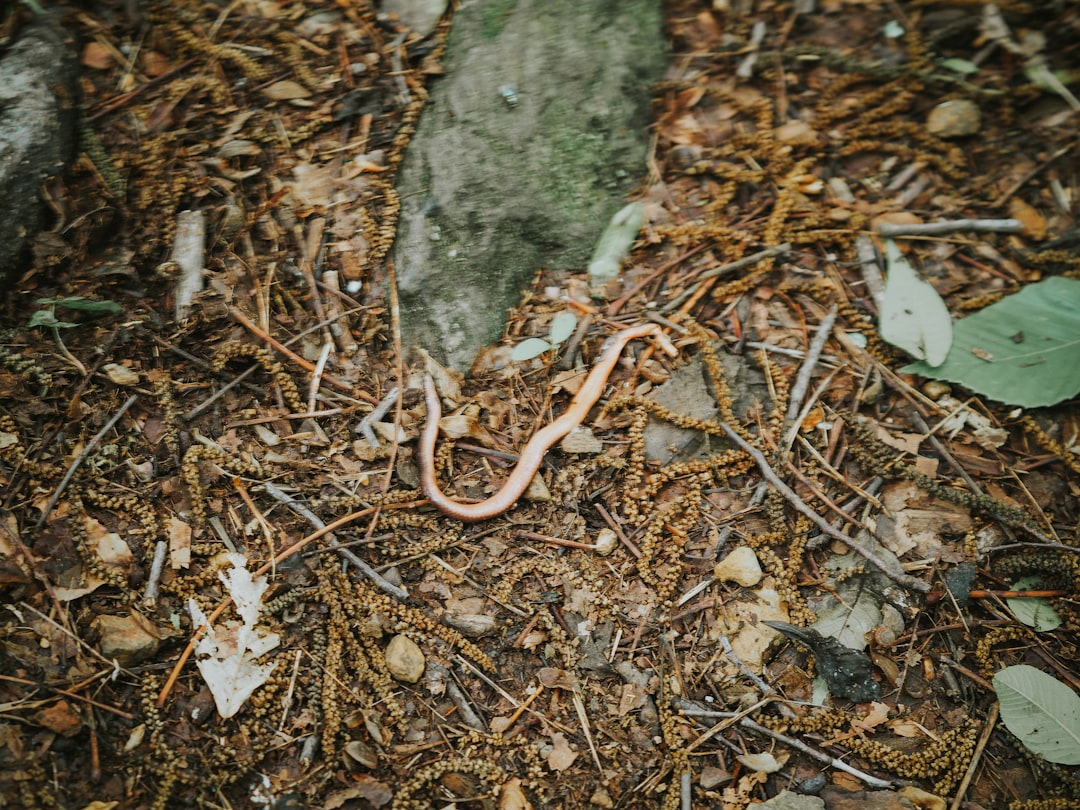
The worms' distinctive behavior makes identification relatively simple. When disturbed, they thrash and jump violently, unlike native earthworms that simply burrow away. Their smooth, milky-white or gray band (clitellum) encircles their body completely, differing from native worms' raised, pink-tinged bands. And their movement—rapid, snake-like undulation—is unmistakable.
Control options remain frustratingly limited. No chemical treatments effectively target jumping worms without devastating native earthworms and soil organisms. Physical removal proves impractical given reproduction rates and soil depth. Researchers test biological controls—nematodes, fungi, predatory insects—but approved treatments remain years away.
Prevention offers the only realistic strategy. Officials urge gardeners and landscapers to inspect mulch, compost, and potted plants before purchase, checking for characteristic cocoons (small, mustard-seed-sized spheres) and adult worms. Cleaning tools and equipment between sites prevents accidental spread. Avoiding shared mulch and compost from unknown sources reduces introduction risk.
The worms' impact extends beyond forest floors. Agricultural systems face disruption as jumping worms alter soil structure, potentially affecting crop yields and water retention. Urban parks and gardens lose the rich organic soils that support ornamental plantings. Erosion increases on bare, compacted slopes where protective leaf litter vanished.
Western states' forests face additional vulnerability due to regional differences in earthworm ecology. Many Western ecosystems evolved without earthworms at all—glaciers eliminated native species thousands of years ago, and they never recolonized isolated mountain ranges. These "worm-free" forests developed plant communities exquisitely adapted to slow decomposition and thick organic layers.
Jumping worms shatter these equilibria. In Wisconsin and Minnesota forests—previews of Western impacts—researchers documented 50-90% declines in native plant diversity following jumping worm establishment. Invasive plant species thrive in the disturbed conditions, outcompeting natives struggling without their evolved soil environment.
Climate change may accelerate the invasion. Warming winters allow jumping worms to survive in regions previously too cold, expanding their potential range northward and to higher elevations. Their cocoons withstand freezing temperatures that kill adult worms, creating persistent populations that rebound each spring.
Conservation organizations emphasize the invasion's broader lesson: invasive species represent one of the greatest threats to biodiversity, second only to habitat loss. Unlike pollution or climate change, which allow for mitigation and adaptation, invasive species create permanent ecosystem alterations that persist for decades or centuries.
Scientists urge immediate action despite limited control options. Early detection programs train citizens to identify and report jumping worms, creating distribution maps that guide management efforts. Research funding increases focus on biological controls and soil remediation techniques. Public education campaigns raise awareness among gardeners and landscapers—the primary vectors for continued spread.
"We won't eradicate jumping worms," acknowledged Dr. Johnston. "But we can slow their spread, protect vulnerable ecosystems, and buy time to develop better management tools. Every garden that checks mulch, every hiker who cleans boots, every landscaper who sources materials carefully—these actions matter."
The jumping worm invasion joins a growing list of ecosystem challenges facing Western forests: drought stress, wildfire, bark beetles, invasive plants, and climate disruption. Each additional stressor reduces resilience, pushing forests toward tipping points where recovery becomes impossible.
As these destructive earthworms writhe across Western soils, they carry a sobering message: the web of life that supports forests, wildlife, and human communities remains fragile. Our global economy moves species across continents with unprecedented speed. And sometimes, the most destructive invaders arrive not as charismatic predators or obvious pests, but as humble worms—eating their way through ecosystems we barely understood before they began to unravel.