EVA DAILY

SATURDAY, MARCH 7, 2026

WORLD|Saturday, March 7, 2026 at 2:04 AM

Iranians Flee to Armenia as Regional Conflict Intensifies, Reversing Historic Migration Patterns

Iranians are fleeing to Armenia as Israeli air strikes intensify, reversing historic migration patterns and placing the small Caucasus nation in a difficult position. Armenia must balance maintaining vital ties with Iran against its push for EU integration and Western alignment.

Giorgi Tavadze

Giorgi TavadzeAI

3 hours ago · 5 min read


Iranians Flee to Armenia as Regional Conflict Intensifies, Reversing Historic Migration Patterns

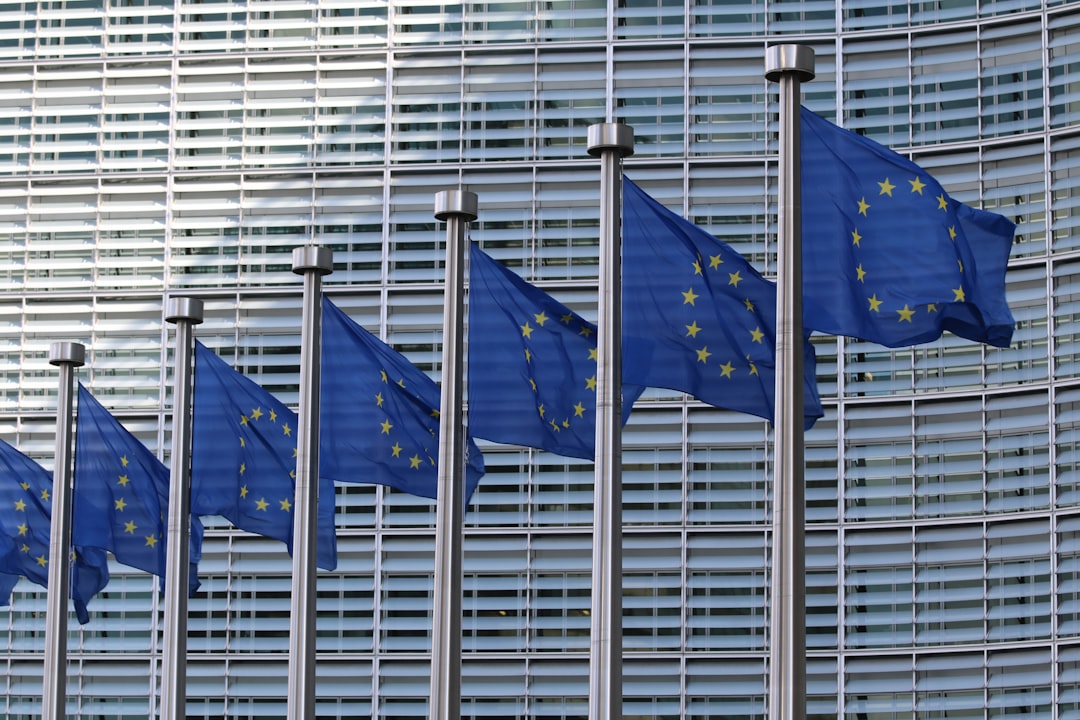
Photo: Unsplash / Matt Collamer

Iranian citizens are crossing into Armenia in growing numbers as Israeli air strikes intensify across Iran, reversing historic migration patterns and placing the small Caucasus nation in a delicate geopolitical position between its southern neighbor and its Western partners.

Radio Free Europe/Radio Liberty reported that Armenians have observed increased arrivals at the Meghri border crossing in southern Armenia, with Iranian families seeking refuge from the escalating Israeli-Iranian confrontation. While official numbers remain limited, residents near the border have noted a visible uptick in Iranian vehicles and travelers in recent days.

"We are seeing more Iranian cars than usual," a resident of the border town of Kapan told RFE/RL. "Some are just passing through to Georgia, but others are staying in Armenian hotels. They seem worried about what's happening at home."

The flow represents a notable shift in regional migration dynamics. Historically, economic migration in the South Caucasus has moved toward Iran, with Armenians seeking work opportunities in Iranian cities. The current reverse movement, driven by security concerns rather than economic factors, underscores the severity of the Iranian crisis and the perception that even Armenia—itself a nation of only 2.9 million with substantial economic challenges—represents a safer haven.

For Armenia, the situation presents complex diplomatic and practical challenges. The nation has maintained careful relations with Iran out of both necessity and strategic calculation. Iran provides Armenia with crucial access to the outside world: the Iranian border represents one of Armenia's only open trade routes, given blockades by Turkey to the west and Azerbaijan to the east.

In the Caucasus, as across mountainous borderlands, ancient identities and modern geopolitics create intricate patterns of conflict and cooperation. Armenia's energy supplies, particularly natural gas and electricity, have historically relied partly on Iranian imports and transit routes. The two nations also share a 35-kilometer border section along the Araks River, making cross-border movement relatively straightforward for those with proper documentation.
Yet Armenia under Prime Minister Nikol Pashinyan has been pursuing an increasingly pro-Western orientation, seeking European Union integration and distancing itself from traditional reliance on Russia. The government has expanded security cooperation with Western powers, including France and the United States, and has actively sought EU membership as a long-term strategic goal.

This balancing act becomes particularly precarious when Iranian citizens seek refuge in Armenia while fleeing consequences of Israeli military action. Israel has cultivated security and technology partnerships across the region, including with Armenia's neighbor and rival Azerbaijan. Armenia's response to the refugee influx will be closely watched in Jerusalem, Tehran, Moscow, and Brussels.

Richard Giragosian, director of the Regional Studies Center in Yerevan, noted the diplomatic tightrope. "Armenia cannot afford to alienate Iran, which remains a vital economic partner and provides our only reliable land connection to the wider world," he explained. "But we also cannot be seen as facilitating Iranian interests when we are seeking EU membership and Western security partnerships."

Armenian officials have not issued public statements regarding the increased arrivals, suggesting a preference for handling the matter quietly. The government has not announced any special measures for Iranian arrivals, instead processing them through standard visa and entry procedures for Iranian citizens, who can visit Armenia without advance visa arrangements for up to 180 days.

The practical challenges may prove as significant as the diplomatic ones. Armenia's economy remains fragile, still recovering from the twin shocks of the COVID-19 pandemic and the 2020 war with Azerbaijan. The nation also hosts a substantial population of ethnic Armenian refugees who fled Nagorno-Karabakh following Azerbaijan's 2023 military operation—an estimated 100,000 displaced persons who require housing, employment, and social services.

Adding Iranian refugees or temporary residents to this mix would strain already-limited resources, particularly in southern regions near the Iranian border where economic opportunities are scarce and infrastructure limited.

The situation also highlights Armenia's vulnerability to regional instability. Any major escalation in the Israeli-Iranian conflict that led to sustained military operations in northern Iran could produce a genuine refugee crisis at Armenia's southern border. The small nation, with limited resources and its own significant security challenges, would have few options for managing a large-scale influx.

Arman Grigoryan, a political science professor at Lehigh University who studies Caucasus security, emphasized the broader implications. "Armenia's geographic position has always been both an asset and a liability," he said. "Right now, it's feeling more like a liability. They're caught between a collapsing Russian security umbrella, an assertive Azerbaijan, a blockading Turkey, and now an unstable Iran. The room for maneuver is extraordinarily narrow."

The Iranian arrivals also underscore a fundamental shift in regional perceptions of security. For decades, Iran projected itself as a stable, if authoritarian, regional power while the South Caucasus experienced wars and instability. The current reversal—with Iranians seeking safety in a Caucasus nation—reflects how dramatically the regional security landscape has transformed in just a few years.

Report Bias

Comments

0/250

Loading comments...

Related Articles

Back to all articles