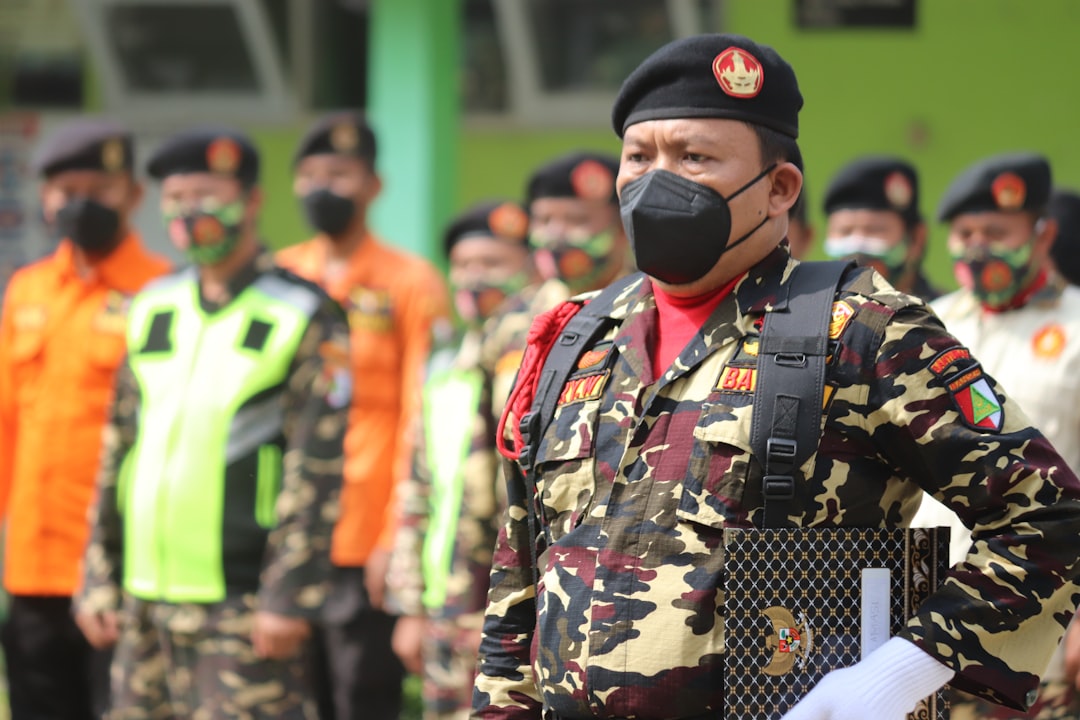
Indonesia's military has admitted that four soldiers were involved in an acid attack on Andrie Yunus, a prominent human rights activist with the Commission for the Disappeared and Victims of Violence (KontraS), in a case that represents a critical test of civilian oversight of the armed forces under President Prabowo Subianto.
The Indonesian National Armed Forces (TNI) confirmed the involvement of the four servicemen in the acid attack on Yunus, according to Kompas, marking a rare public admission of military personnel targeting a civilian critic. The case has sent shockwaves through Indonesia's civil society and raised urgent questions about whether democratic institutions can hold the military accountable.
Yunus, a veteran human rights defender known for his work documenting military abuses and enforced disappearances, has been a persistent voice demanding justice for victims of past atrocities. His targeting appears to represent an escalation in intimidation tactics against activists who scrutinize military conduct.
Human rights organizations are demanding an independent fact-finding team to investigate the attack, expressing skepticism that internal military processes will deliver genuine accountability. BBC Indonesia reports that activists are pushing for civilian prosecutors to handle the case rather than military courts, which historically have delivered lenient sentences for soldiers accused of abusing civilians.
The incident comes at a pivotal moment for Indonesia's democracy. President Prabowo, himself a former special forces commander with a controversial human rights record, took office promising to uphold democratic norms and civilian supremacy. His response to this case will signal whether his administration will prioritize accountability over institutional loyalty to the armed forces.
KontraS and allied human rights groups argue that the acid attack represents a pattern of impunity that has persisted since the end of the Suharto dictatorship in 1998. While Indonesia has made significant democratic progress over the past quarter-century, civil-military relations remain a persistent challenge, with the TNI maintaining considerable autonomy and economic interests outside civilian oversight.
Analysts warn that failure to prosecute the perpetrators through civilian courts could embolden military hardliners and chill activism across the archipelago. The case has also attracted regional attention, as other Southeast Asian nations watch how Indonesia—often held up as ASEAN's democratic success story—handles the delicate balance between military prerogatives and civilian rights.
Legal experts emphasize that the Indonesian Constitution clearly establishes civilian authority over the military, and that the penal code should apply equally to all citizens regardless of uniform. Whether these constitutional principles will prevail over institutional resistance represents the fundamental question at the heart of this case.
In Indonesia, as across archipelagic democracies, unity in diversity requires constant negotiation across islands, ethnicities, and beliefs. But equally important is the negotiation between democratic civilian institutions and military power—a test that Indonesia cannot afford to fail if it wishes to consolidate its democratic gains and maintain its leadership role in promoting democratic governance across Southeast Asia.