
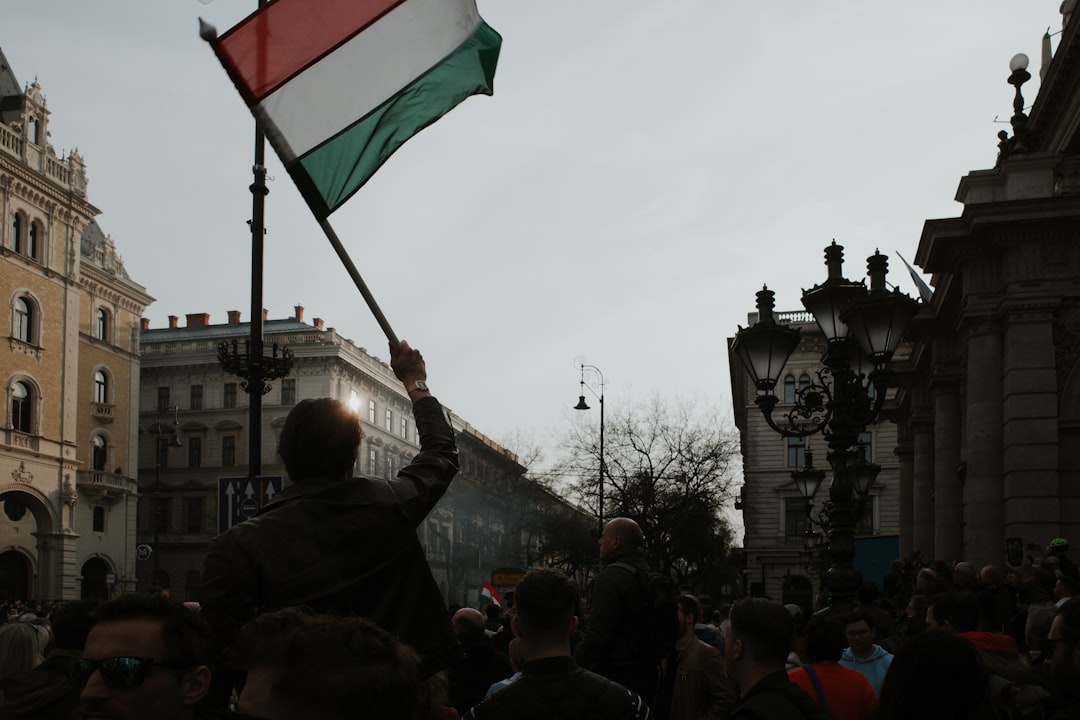
The Hungarian government has filed espionage charges against investigative journalist Panyi Szabolcs, who has been investigating alleged illicit communications between Hungary's Foreign Minister Péter Szijjártó and Russian Foreign Minister Sergei Lavrov, as well as suspected cash smuggling on government aircraft from Russia.The charges, filed just weeks before Hungary's parliamentary elections, represent one of the most dramatic confrontations between Prime Minister Viktor Orbán's government and independent journalism in the country's post-communist history. The move has drawn immediate comparisons to Russia's treatment of investigative reporters and intensified concerns about democratic backsliding within the European Union.<h2>The Investigation</h2>Panyi, an award-winning investigative journalist, has characterized his work as "counter-intelligence journalism," documenting what he describes as Russian infiltration of Hungarian politics at the highest levels. His reporting has focused on communication channels between senior Hungarian officials and their Russian counterparts that allegedly bypassed normal diplomatic protocols.According to the journalist's public statements, the investigation uncovered evidence of potential cash smuggling operations using Hungarian government aircraft flying to and from Russia. The alleged communications between Foreign Minister Szijjártó and his Russian counterpart Lavrov have raised questions about the transparency of Hungary's foreign policy decision-making, particularly regarding the country's notably warm relationship with Moscow despite EU sanctions.The timing of these investigations is particularly sensitive. While European Union member states have largely united in supporting sanctions against Russia following the invasion of Ukraine, Hungary has consistently emerged as the most reluctant participant, frequently threatening to veto sanctions packages and maintaining close economic and political ties with Moscow.<h2>Government Response</h2>The Orbán government has defended the espionage charges as necessary to protect national security interests. Government spokespersons have suggested that Panyi's investigative methods compromised sensitive state communications and potentially endangered Hungarian diplomatic operations.The government's legal strategy appears designed to reframe investigative journalism as a national security threat. By invoking espionage statutes traditionally reserved for foreign intelligence operatives, prosecutors have elevated the case beyond typical defamation or state secrets violations that governments sometimes pursue against journalists.Opposition parties and press freedom organizations have condemned the charges as politically motivated, arguing they represent an attempt to silence reporting that exposes potential corruption and foreign influence operations within the government itself.<h2>Broader Context</h2>The charges against Panyi come amid a years-long deterioration in press freedom across . Under Orbán's administration, which has governed since 2010, the media landscape has undergone dramatic consolidation. Pro-government oligarchs now control the vast majority of major media outlets, while independent journalists face increasing legal and economic pressure.In Hungary, as across the region, national sovereignty and European integration exist in constant tension. The Orbán government has skillfully mobilized nationalist sentiment by portraying EU criticism as an attack on Hungarian independence, while simultaneously benefiting from EU funding and membership.The espionage case against an investigative journalist investigating potential Russian influence represents a new escalation, however. Rather than merely pressuring media through economic means or favorable coverage allocation, the government is now deploying the criminal justice system against journalism that exposes potential foreign infiltration.<h2>International Implications</h2>The charges have profound implications for the European Union's ongoing struggles with rule of law enforcement among member states. has been subject to Article 7 proceedings—the EU's most serious disciplinary mechanism—since 2018 over concerns about democratic backsliding, judicial independence, and media freedom.The case also highlights the challenge European institutions face when member states potentially cooperate with foreign powers whose interests conflict with EU policy. If Panyi's reporting is accurate, it suggests that senior Hungarian officials may have maintained communication channels with that circumvented European coordination on sensitive foreign policy matters.Press freedom organizations across have expressed alarm at the precedent the charges could set. The use of espionage laws against journalists investigating potential foreign influence operations essentially criminalizes the very journalism that democratic societies rely upon to expose such threats.<h2>Electoral Context</h2>The timing of the charges, just weeks before national elections, has intensified speculation about political motivations. The Orbán government faces a united opposition coalition for the first time in years, making the upcoming vote potentially competitive despite the ruling party's systematic advantages in media access and electoral rules.Opposition leaders have seized on the case as evidence of authoritarian tendencies they argue have intensified during Orbán's tenure. They point to the charges as demonstrating that the government prioritizes protecting its relationship with over transparency and accountability to Hungarian voters.Government supporters, meanwhile, have framed the case as part of a broader Western attempt to interfere in Hungarian politics through media manipulation. This narrative resonates with portions of the electorate who view the Orbán government as defending Hungarian interests against foreign pressure.<h2>Legal Proceedings</h2>Panyi faces potential imprisonment if convicted under Hungary's espionage statutes, which carry severe penalties. The legal proceedings are expected to extend well beyond the election cycle, ensuring the case remains a focal point in Hungarian political discourse for months or years to come.International legal experts have questioned whether the charges can meet the threshold for espionage prosecution under European legal norms. Espionage typically requires evidence that a defendant acted on behalf of a foreign power, rather than pursuing journalistic investigations in the public interest.The case will test both Hungary's judicial independence and the European Union's ability to respond when member states use legal mechanisms to suppress journalism. As the proceedings unfold, they will provide a crucial indicator of how far Hungary's government is willing to go in constraining press freedom, and whether European institutions possess effective tools to prevent such actions.For Hungarian journalists and civil society organizations, the charges represent a chilling warning about the risks of investigating those in power. For the European Union, they crystallize the challenge of maintaining democratic standards when member states systematically undermine the freedoms that EU membership is supposed to guarantee.
|