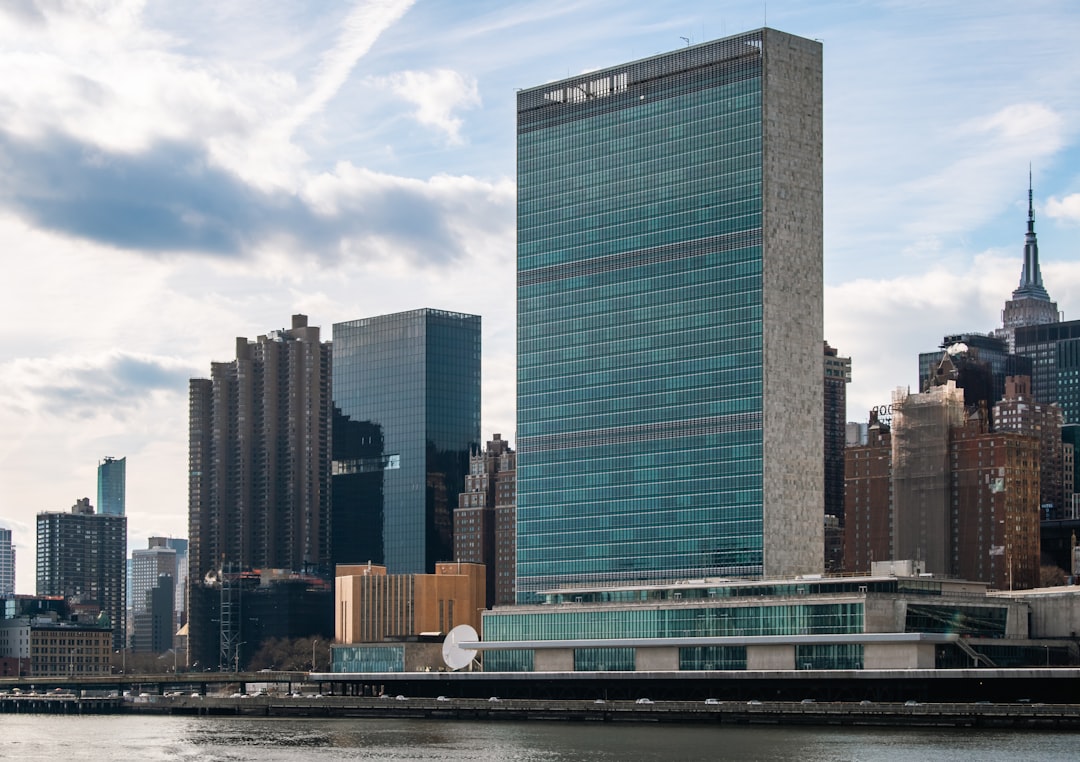
Brazil voted in favor of a landmark United Nations declaration recognizing the transatlantic slave trade as "the gravest crime against humanity," positioning itself as a regional leader on racial justice as the United States, Argentina, and Israel cast the only votes against the measure.
The declaration, approved by the UN Human Rights Council, defines the enslavement and trafficking of Africans as history's most serious crime due to its scale—an estimated 12.5 to 15 million people—its duration of more than 400 years, and its systematic nature. The measure explicitly calls on nations involved in the slave trade to pursue "reparatory justice," including formal apologies, restitution of cultural artifacts, and financial compensation.
Brazil's support reflects a significant assertion of leadership on racial issues within Latin America and the Global South. The country, which received more enslaved Africans than any other nation in the Americas and was the last in the Western Hemisphere to abolish slavery in 1888, has long grappled with the mythology of "racial democracy"—the notion that Brazil achieved harmonious race relations without the explicit segregation seen in the United States.
In Brazil, as across Latin America's giant, continental scale creates both opportunity and governance challenges. The country's Afro-Brazilian population faces persistent inequality in education, employment, healthcare, and criminal justice despite constitutional protections and affirmative action programs implemented over the past two decades.
The Brazilian vote stands in sharp contrast to neighboring Argentina, where President Javier Milei's government joined the United States and Israel in opposing the declaration. The divergence highlights deepening ideological divisions within Latin America, with Brazil under President Luiz Inácio Lula da Silva positioning itself alongside African, Asian, and Middle Eastern nations while Argentina aligns more closely with Washington on human rights votes.
European nations and the broader Global North largely abstained from voting, avoiding direct rejection while declining to endorse reparations language that could create legal or financial obligations. The abstentions reflect ongoing reluctance among former colonial powers to acknowledge full responsibility for historical injustices.
Brazilian civil society organizations praised the government's vote. Silvio Almeida, Minister of Human Rights and Citizenship, has emphasized that addressing the legacy of slavery requires confronting structural racism in Brazilian institutions, from police violence disproportionately affecting Black communities to vast wealth disparities that mirror historical patterns of exclusion.
The declaration's call for reparatory justice goes beyond symbolic gestures, explicitly mentioning financial compensation. However, implementation mechanisms remain unclear, and enforcement would depend on voluntary compliance by nations involved in the slave trade.
For Brazil, the vote reinforces its role within the BRICS bloc and as a voice for the Global South on issues of historical justice and decolonization. The Lula administration has sought to rebuild Brazil's international standing after years of diplomatic retrenchment, using forums like the UN to champion causes that resonate with African and developing nations.
Domestic reaction in Brazil has been mixed. While racial justice advocates celebrate the government's position, conservative critics argue the focus on historical grievances distracts from contemporary economic challenges facing all Brazilians, particularly in favela communities where poverty affects people of all backgrounds.
The vote also underscores Brazil's complex relationship with its own history. Recent years have seen growing awareness of slavery's enduring impact, with museums, educational curricula, and public monuments increasingly acknowledging Afro-Brazilian contributions and suffering. Yet resistance to reparations remains strong among segments of Brazilian society who view such measures as divisive or economically unfeasible.
As the UN declaration moves forward, Brazil's support signals a willingness to engage with uncomfortable historical truths at the international level, even as the country continues to struggle with implementing racial equity at home. The gap between diplomatic positioning and domestic reality reflects the broader challenge facing Latin America's largest democracy: translating progressive rhetoric into meaningful change across a nation of continental dimensions and deep-rooted inequalities.