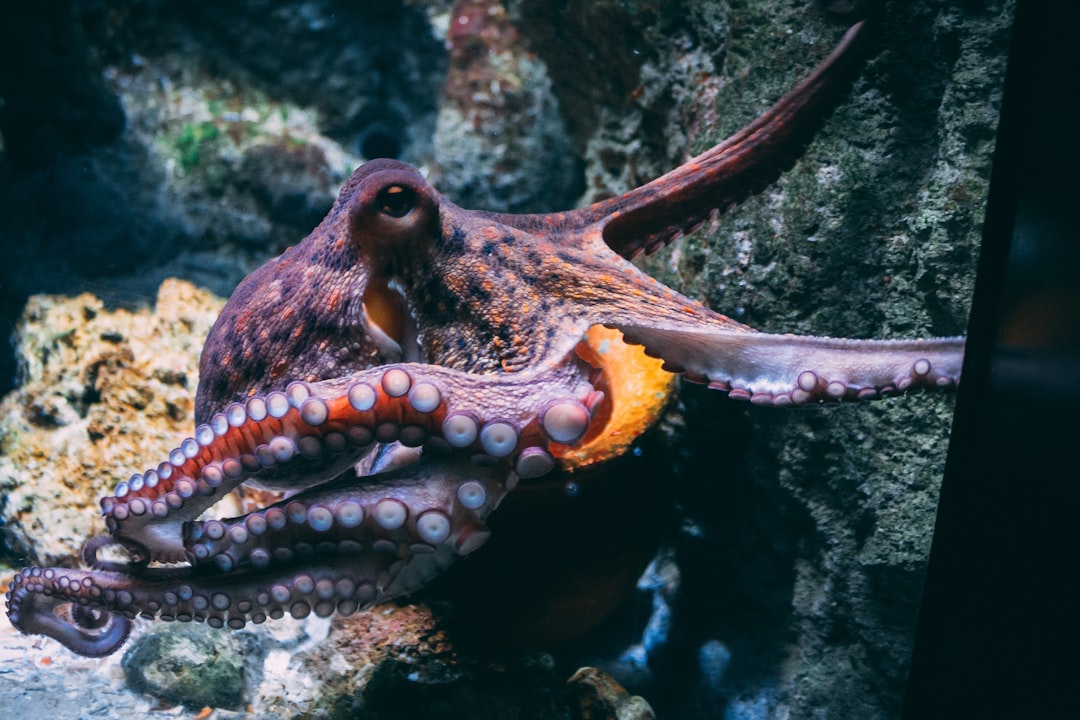
In the waters surrounding the Galapagos Islands—the living laboratory where Charles Darwin glimpsed evolution itself—scientists have identified a new species that challenges what we thought we knew about octopuses: a tiny, golf-ball sized cephalopod with vivid blue coloration that may signal it's toxic to predators.The discovery underscores a humbling truth: even in one of Earth's most studied ecosystems, nature still holds secrets.The newly identified octopus is exceptionally small, roughly the size of a golf ball, and displays brilliant blue coloration—a rarity among octopuses. Most octopus species are masters of camouflage, shifting colors and textures to blend seamlessly into their surroundings. But this species does the opposite, advertising its presence with conspicuous warning colors."Blue coloration in octopuses is extremely rare," explained a cephalopod biologist involved in the research. "Most use camouflage. The fact this species displays a bright warning color suggests it may be toxic, similar to the blue-ringed octopus of Australia."The comparison to the blue-ringed octopus is both fascinating and cautionary. That species, found in Australia and throughout the Indo-Pacific, is one of the ocean's most venomous animals, carrying tetrodotoxin potent enough to kill a human. Whether the Galapagos species possesses similar toxins remains unknown—but the visual warning suggests it has evolved chemical defenses to deter predators.The discovery adds another chapter to the Galapagos' remarkable biodiversity. These volcanic islands, isolated in the Pacific Ocean some 600 miles west of Ecuador, host ecosystems found nowhere else on Earth. Giant tortoises, marine iguanas, flightless cormorants—species that evolved in isolation, adapting to unique ecological niches.But the Galapagos isn't frozen in time. It's a living system where evolution continues, where species adapt and new forms emerge."The Galapagos continues to surprise us," noted a Galapagos researcher. "Despite being one of the most studied marine ecosystems, we're still finding new species. This underscores how much marine biodiversity remains undocumented."That revelation should give us pause. If scientists are still discovering new species in the —a place scrutinized by researchers for nearly two centuries—how much biodiversity remains unknown in less-studied ecosystems? How many species in the deep ocean, in remote forests, in overlooked corners of the planet have yet to be documented?Marine biodiversity is particularly poorly understood. The ocean covers more than 70% of Earth's surface, yet vast areas remain unexplored. Scientists estimate that await discovery, from microbes to massive deep-sea creatures. Each new species we find expands our understanding of evolution, ecology, and the intricate web of life that sustains ocean ecosystems.In nature, as across ecosystems, every species plays a role—and humanity's choices determine whether the web of life flourishes or frays. Discovering a new octopus in the reminds us that the natural world still holds mysteries worth protecting. But discovery alone isn't enough. These species need healthy ecosystems to survive.The , established in 1998, protects some 133,000 square kilometers of ocean. But marine protected areas face constant pressure from illegal fishing, climate change, and invasive species. Protecting newly discovered species means protecting the entire ecosystem they depend on.The tiny blue octopus joins a roster of Galapagos species that have captivated scientists and the public alike. Each discovery reinforces why conservation matters—not just to preserve what we know, but to protect what we have yet to discover. Nature's secrets are worth finding. And once found, they're worth protecting.
|