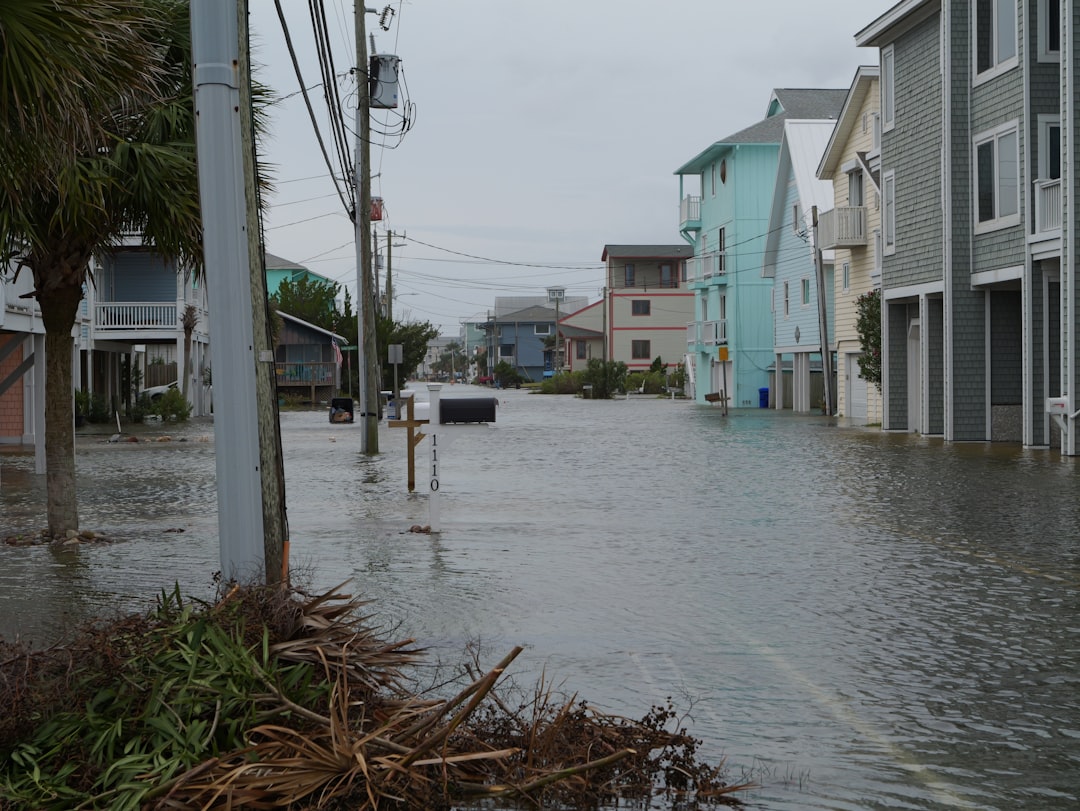
The rate of global sea level rise has doubled over the past decade, with 2023 alone recording 4.3mm of increase, according to a comprehensive UN World Ocean Assessment warning of "severe stress" on marine ecosystems and coastal communities worldwide.
The acceleration means global sea levels could rise approximately 5 centimeters (nearly 2 inches) over the next decade—a projection that carries profound implications for coastal flooding, erosion, saltwater intrusion, and storm surge damage affecting billions of people.
"The rate of sea level rise has doubled in 10 years," the UN assessment emphasized. "This acceleration, not just the absolute rise, represents the critical threat to coastal communities."
Sea level rise stems from two primary mechanisms, both driven by climate warming. Thermal expansion causes seawater to occupy more volume as ocean temperatures increase, while melting glaciers and ice sheets add freshwater to ocean basins. Both processes are accelerating as global temperatures climb toward the 1.5°C Paris Agreement threshold.
In climate policy, as across environmental challenges, urgency must meet solutions—science demands action, but despair achieves nothing. While sea level acceleration poses severe risks, the renewable energy transition and emissions reductions can slow future rise rates, giving communities time to adapt.
The doubling of rise rates over just one decade contradicts earlier projections that assumed relatively linear sea level increase through the century. Instead, the acceleration pattern suggests positive feedbacks are intensifying faster than climate models predicted.
"We're seeing non-linear acceleration, which means future rise could exceed even updated projections," oceanographers warned. "The physics of ice sheet collapse and ocean circulation changes make prediction increasingly uncertain."
For small island developing states (SIDS), the accelerated rise represents an existential threat. Nations including the Maldives, Tuvalu, Marshall Islands, and Kiribati face complete inundation within decades if current trends continue, forcing entire populations into climate displacement.
Karen-Mae Hill, High Commissioner for Antigua and Barbuda, emphasizes that island nations refuse the "victim" narrative while acknowledging severe climate realities. "We have been at the forefront of innovations in how we confront these realities," she noted, pointing to resilience investments, marine conservation, and renewable energy initiatives.
However, even aggressive adaptation cannot fully protect against multi-meter sea level rise projected for the late 21st century absent dramatic emissions cuts. "When a hurricane impacts an island state, it's the whole country that's gone," Hill observed, describing how single storms can wipe out years of economic progress.
Major coastal cities worldwide face mounting flooding risks as sea level rise compounds with storm surge and high tides. Jakarta, Lagos, Mumbai, Shanghai, New York, Miami, and Venice are among hundreds of urban areas requiring massive infrastructure investments to manage rising waters.
The UN assessment highlights that sea level rise effects distribute unevenly. Regional variations mean some coastlines experience significantly higher rise than global averages due to ocean currents, land subsidence, and gravitational effects from ice sheet melting.
Saltwater intrusion into coastal freshwater aquifers represents one of the most immediate impacts, threatening drinking water supplies and agricultural irrigation for hundreds of millions of people. Bangladesh, Vietnam, Egypt's Nile Delta, and Florida are among regions already experiencing severe salinization.
Coastal erosion accelerates as higher baseline sea levels allow waves to attack previously stable shorelines. Beach communities, ports, and coastal infrastructure face increasing damage even without major storm events. The economic costs of continuous repair and eventual retreat will run into trillions of dollars globally.
Climate justice dimensions of sea level rise prove stark. Small island states and low-lying developing nations contributed negligibly to atmospheric greenhouse gas accumulation yet face the most severe impacts. Meanwhile, wealthy nations with the greatest historical emissions possess resources for extensive coastal protection.
The principle of "loss and damage"—compensation for climate impacts beyond what adaptation can manage—has gained prominence in international negotiations, with SIDS demanding developed nations fund climate-induced relocation and economic losses.
"We ask each company, each CEO, each nation to do something, however small, however big, that moves this conversation forward in a positive and constructive way," Hill emphasized, arguing that climate action remains both urgent and achievable.
The UN assessment notes some encouraging signs. Coral reefs previously suffering severe bleaching show signs of recovery in protected areas. "We're now seeing that these corals are reviving," marine biologists reported, suggesting ecosystem resilience persists if stressors are reduced.
However, coral recovery cannot outpace warming and acidification if emissions continue at current rates. Marine ecosystems require both local protection measures and global emissions cuts to survive the century.
Adaptation strategies range from managed retreat and nature-based solutions to engineering megaprojects like sea walls and storm surge barriers. Netherlands-style water management offers models for wealthier nations, but most developing countries lack resources for comparable infrastructure.
Climate scientists stress that sea level rise already "locked in" from past emissions will continue for centuries even if emissions halt immediately. However, the total rise over coming centuries depends critically on near-term emissions trajectories.
Limiting warming to 1.5°C versus 2°C could mean the difference between 40cm and 80cm of sea level rise by 2100, with even larger divergences beyond. For low-lying communities, those additional centimeters determine survival versus displacement.
The 5cm/decade projection for the 2020s represents an average, with significant year-to-year variation. However, the underlying trend toward accelerating rise appears robust across multiple measurement methods including satellite altimetry and tide gauge networks.
For coastal communities worldwide, the message proves clear: adaptation planning must account for accelerating, not linear, sea level rise. Infrastructure designed for gradual change will prove inadequate as rise rates continue increasing throughout the century.