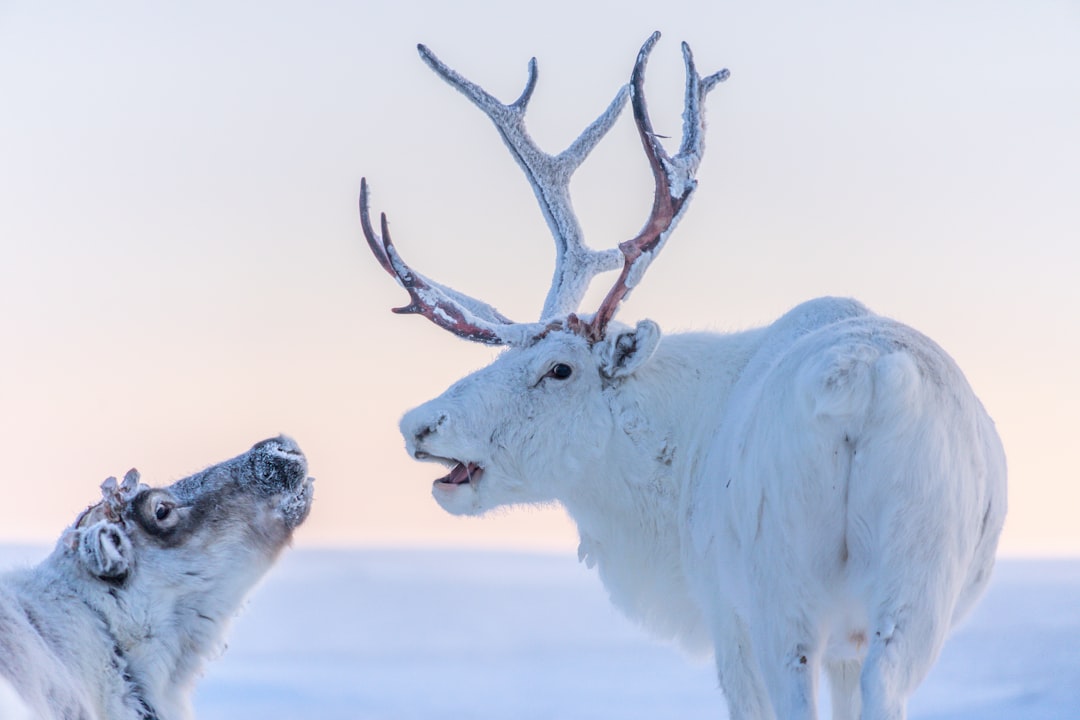
In one of the planet's most remote wildernesses, where Svalbard's reindeer graze on Arctic tundra thousands of miles from industrial centers, scientists have discovered a sobering truth: PFAS concentrations in these animals have surged more than 900% in just a decade, reaching levels among the highest ever measured in Arctic wildlife.
The finding, reported by researchers at the Norwegian University of Science and Technology, marks a disturbing milestone in understanding how synthetic chemicals pervade even Earth's most isolated ecosystems. From roughly 0.6 nanograms per gram a decade ago, PFAS levels in Svalbard reindeer liver tissue have climbed to 5.48 nanograms per gram—a concentration that prompted health advisories limiting consumption to just 11.5 grams of liver per week.
Malin Andersson Stavridis, who spent four years analyzing samples from 68 female reindeer for her Ph.D. research, uncovered biological consequences that extend beyond simple contamination numbers. Gene screening revealed that lipid metabolism genes were downregulated as PFAS exposure increased—a troubling development for animals whose survival depends on efficiently building and utilizing fat reserves through brutal Arctic winters.
"Building fat and using fat is very important for these animals," Stavridis noted, highlighting how these synthetic chemicals may be undermining fundamental biological processes honed over millennia of Arctic adaptation.
The contamination pathway itself remains partially mysterious. Chemical fingerprints suggest historical sources included firefighting training exercises in the settlement of Longyearbyen, but recent measurements show a different profile. "Even if they have a different diet, the levels shouldn't change that much in 10 years," Stavridis explained, indicating that current PFAS sources remain unidentified—and possibly ongoing.
The implications extend far beyond Svalbard. For indigenous communities across the Arctic who depend on reindeer and caribou for sustenance and cultural continuity, PFAS bioaccumulation represents a threat to both food security and traditional ways of life. The Sámi people of northern , Inuit communities across and , and indigenous peoples throughout the circumpolar north rely on these animals for nutrition, yet increasingly face the reality that wildlife carries industrial contamination.