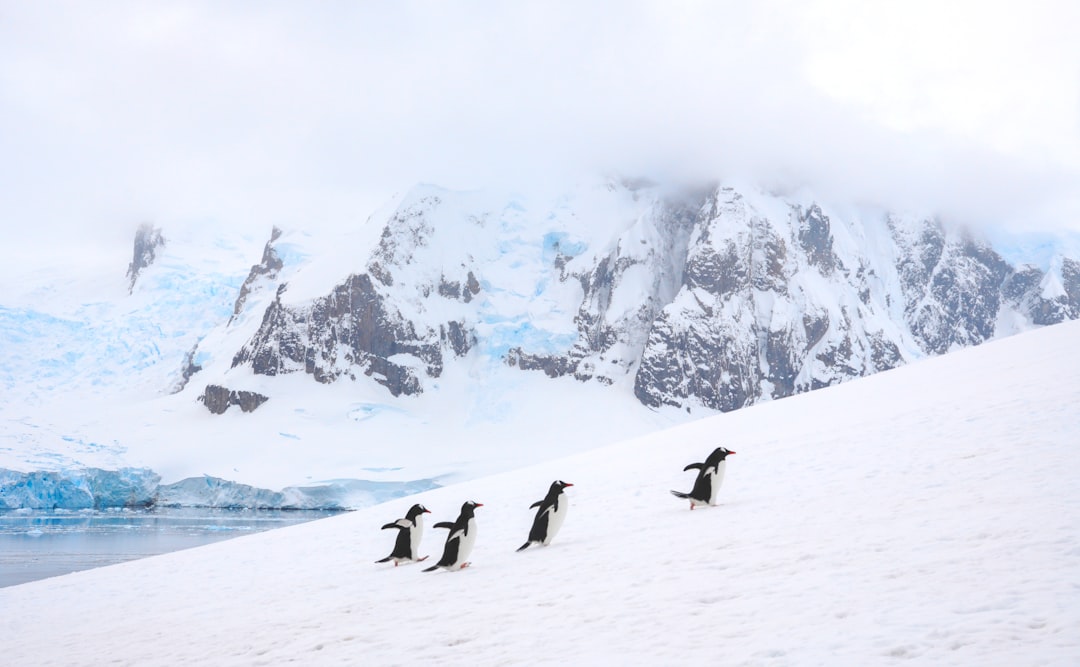
The International Union for Conservation of Nature has officially listed emperor penguins as endangered, marking a decisive acknowledgment that climate change threatens one of Antarctica's most iconic species with extinction within this century.
The reclassification from "near threatened" follows mounting evidence that catastrophic breeding failures tied to sea ice collapse have devastated multiple colonies. In Bellingshausen Sea alone, five emperor penguin colonies experienced complete reproductive failure in 2022 when ice platforms disintegrated before chicks had fledged, drowning thousands of juveniles.
"What we're witnessing is the direct translation of warming temperatures into species-level crisis," climate ecologist Dr. Stephanie Jenouvrier of the Woods Hole Oceanographic Institution explained. "Emperor penguins evolved to breed on stable sea ice. When that ice vanishes in spring before chicks develop waterproof feathers, entire year-classes disappear."
The endangered designation carries immediate consequences. Under international conservation frameworks, it triggers mandatory habitat protection assessments and compels nations party to Antarctic Treaty agreements to factor penguin conservation into climate policy. More critically, it provides legal standing for climate litigation targeting fossil fuel emissions as direct threats to protected species.
Current models project that sea ice loss will render 90% of emperor penguin colonies quasi-extinct by 2100 under moderate warming scenarios. Already, the global population of approximately 600,000 individuals faces accelerating decline as Antarctic Peninsula temperatures rise three times faster than the global average.
Yet the listing also illuminates potential interventions. Researchers have identified that aggressive emissions reductions aligned with 1.5°C pathways could stabilize two-thirds of current colonies, preserving genetic diversity necessary for adaptation. Additionally, recent studies show some populations demonstrate behavioral plasticity, with isolated groups attempting to breed on land-fast ice when sea ice fails.
"In climate policy, as across environmental challenges, urgency must meet solutions—science demands action, but despair achieves nothing," emphasized Dr. Michelle LaRue, penguin ecologist at the University of Canterbury. "This listing isn't a death sentence. It's a clarion call that the policy tools exist to prevent extinction, if we deploy them."
Environmental advocates note that emperor penguins function as climate indicator species. Their ice-dependent lifecycle makes population trends an early-warning system for broader Antarctic ecosystem collapse, which would have cascading effects on global ocean circulation and carbon sequestration.
The designation comes as Antarctic sea ice extent hit record lows in 2023 and 2024, with winter maximum coverage shrinking by an area equivalent to Greenland. Climate attribution studies have conclusively linked these extremes to anthropogenic greenhouse gas emissions, removing scientific uncertainty about causation.
Conservation groups are calling for the endangered listing to catalyze not just species-specific protection but systemic climate action. "You cannot save emperor penguins without saving the ice," noted Tanya Plibersek, Australia's Environment Minister. "And you cannot save the ice without immediately phasing out fossil fuels."
The listing represents the first time climate change has driven an Antarctic apex species to endangered status, establishing precedent for how warming-induced habitat loss meets conservation law. As polar ice continues its alarming retreat, emperor penguins have become both victims and messengers of a crisis that demands urgent policy response.