The universe doesn't care what we believe. Let's find out what's actually true.
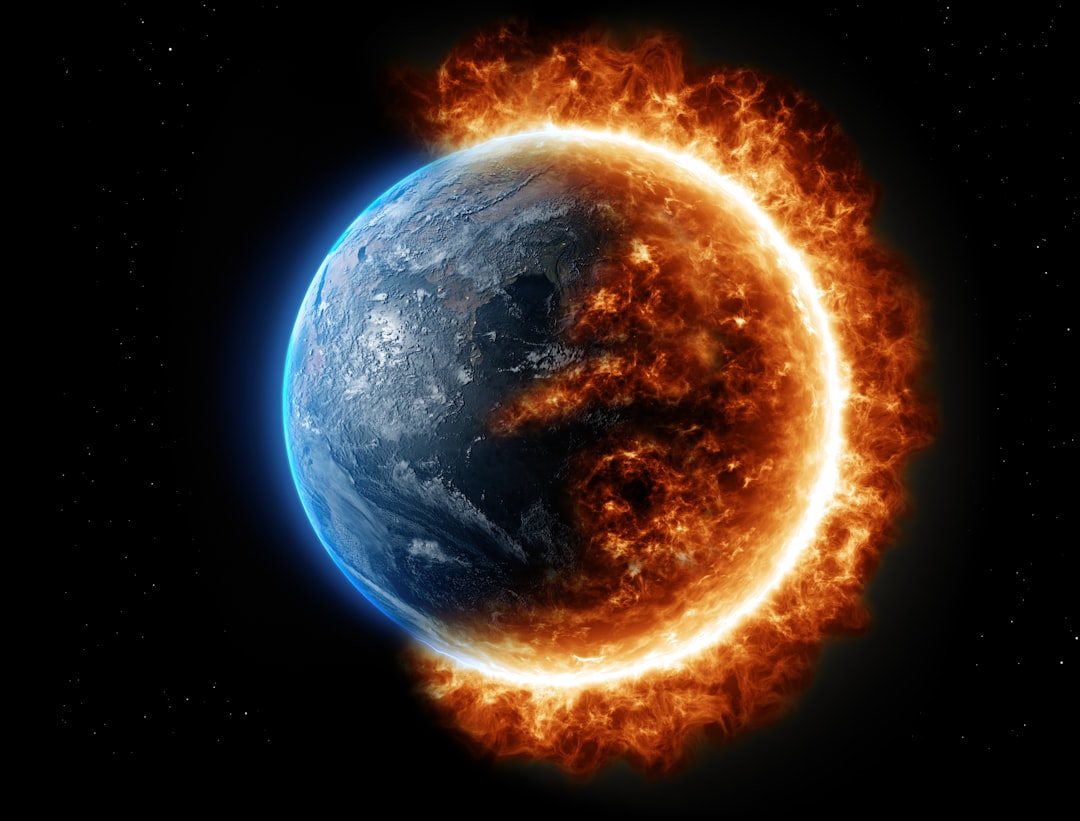
New climate data shows Earth is now warming at twice the rate observed in previous decades—a stark acceleration that's reshaping our understanding of climate feedback loops and putting international temperature targets further out of reach.
The acceleration isn't just a matter of more greenhouse gases. What we're seeing is the activation of feedback mechanisms that scientists have warned about for years. As Arctic ice melts, it exposes darker ocean water that absorbs more heat instead of reflecting it. As permafrost thaws, it releases methane—a greenhouse gas 25 times more potent than CO2 over a century. These aren't theoretical anymore; they're measurable contributors to the heating acceleration.
Think of it like compound interest, but for planetary warming. Each increment of temperature change doesn't just add to the total—it can multiply future warming by triggering additional processes that release more heat-trapping gases or reduce Earth's ability to reflect solar radiation.
The implications for climate targets are sobering. The Paris Agreement aims to limit warming to 1.5°C above pre-industrial levels, with 2°C as an absolute ceiling. We're currently sitting around 1.1-1.2°C of warming. At the previous rate of increase, we had maybe two decades of runway. At twice that rate? The math gets uncomfortable quickly.
Here's where scientific honesty matters: this doesn't mean we've "lost" the climate fight. The acceleration is real, but it's not irreversible destiny. Every fraction of a degree we prevent matters enormously—for ecosystems, for vulnerable populations, for the stability of our food and water systems.
What has changed is the margin for error. We no longer have the luxury of incremental policy tweaks. The feedback loops we're seeing demand feedback of a different kind: rapid, systemic changes to how we generate energy, design cities, produce food, and move people and goods.
The data also tells us something else: our climate models have been, if anything, conservative. For years, skeptics claimed models were exaggerating future warming. The opposite appears true—many feedback mechanisms are kicking in faster and stronger than mid-range projections suggested.
This is one of those moments where the science is clear, the trend is measurable, and the implications are profound. Earth's climate system is responding to our greenhouse gas emissions not just linearly, but with amplifying feedbacks. We're not just pushing the system—we're discovering that it pushes back, and harder than we thought.
The universe doesn't negotiate. It just shows us what happens when you add energy to a complex system. What we do with that information is the only variable still under our control.