China successfully launched its Shenzhou-23 crewed mission early Sunday morning, placing three astronauts into orbit aboard the Tiangong space station—including Li Jiaying, the first Hong Kong resident to participate in a Chinese space mission.
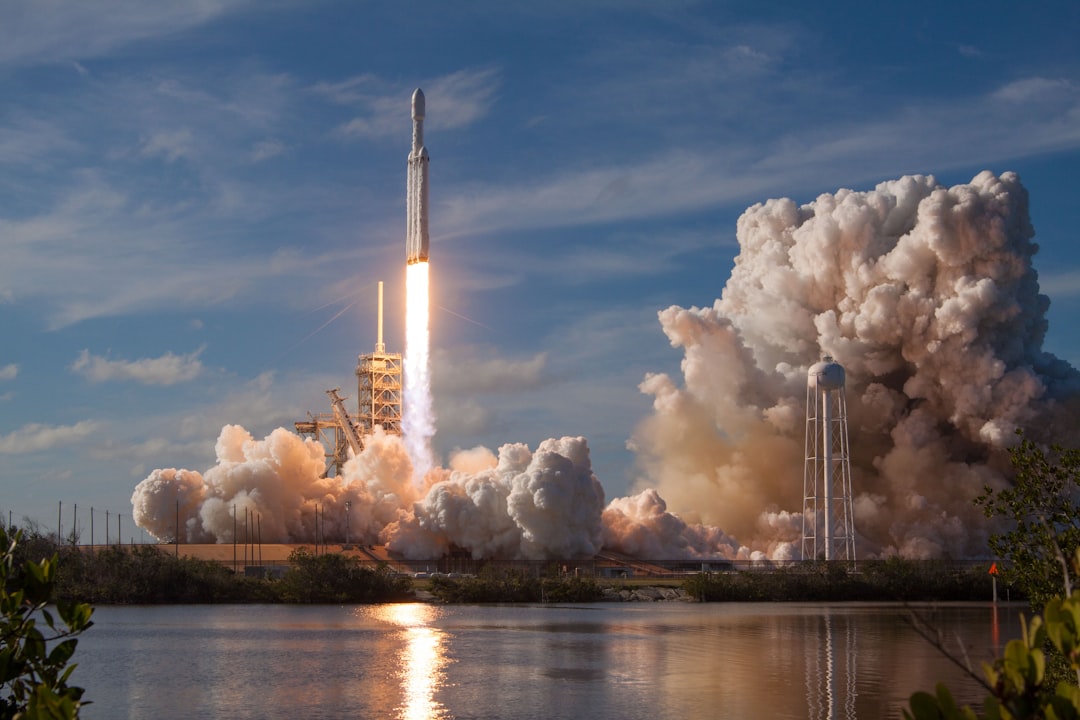
The Long March 2-F rocket lifted off from the Jiuquan Satellite Launch Center in the Gobi Desert at approximately 10:44 AM local time, with the crew capsule separating successfully ten minutes after launch. The mission represents both a technical milestone and a politically symbolic moment as China advances its lunar ambitions.
Li, 43, joined space engineer Zhu Yangzhu and former air force pilot Zhang Zhiyuan on what will be China's first year-long spaceflight. While previous Tiangong missions have lasted approximately six months, one crew member will remain in orbit for twelve months to study the physiological impacts of prolonged microgravity exposure—muscle atrophy, bone density reduction, radiation effects, and psychological resilience under extended isolation.
The inclusion of a Hong Kong astronaut carries significance beyond technical achievement. Li, a former law enforcement officer, represents the integration of Hong Kong's talent into mainland China's national space program following the territory's political realignment in recent years. The symbolism is unmistakable: China's space program now draws from across all territories under Beijing's control.
The Shenzhou-23 mission directly supports China's broader objective to land astronauts on the Moon before 2030, positioning the country in direct competition with NASA's Artemis program. The crew will conduct experiments in life sciences, materials science, fluid physics, and medicine—research critical to understanding how humans can survive deep-space missions to the lunar surface and beyond.
In space exploration, as across technological frontiers, engineering constraints meet human ambition—and occasionally, we achieve the impossible. China has systematically built capability through incremental steps: the Tiangong station, extended-duration missions, and now year-long flights that mirror the endurance testing NASA and Roscosmos conducted aboard the International Space Station.
The mission timeline aligns with China's development of next-generation spacecraft systems. The Mengzhou crew vehicle—designed specifically for lunar missions—is scheduled for orbital testing later in 2026. Unlike the Shenzhou capsule, which evolved from Soviet-era Soyuz designs, Mengzhou represents indigenous engineering optimized for deep-space operations.
China has also committed to establishing the International Lunar Research Station's first phase by 2035, a lunar surface outpost developed in partnership with Russia and other nations excluded from or declining participation in the U.S.-led Artemis Accords framework. The parallel lunar programs reflect geopolitical divisions extending into cislunar space.
The technical requirements for year-long missions are substantial. Life support systems must reliably recycle air and water with minimal resupply. Psychological support protocols become critical when crew members cannot simply return home during emergencies. Radiation shielding within Tiangong remains limited compared to Earth's magnetosphere, requiring careful monitoring of cumulative exposure.
While NASA's Artemis program has faced repeated delays and cost overruns, China's methodical approach has delivered consistent progress. The contrast highlights different development philosophies: NASA's reliance on commercial partners like SpaceX introduces innovation but also schedule uncertainty, while China's state-directed program maintains tighter control over timelines at the cost of slower iteration.
The Shenzhou-23 crew will conduct experiments that inform spacecraft design, habitat construction, and operational procedures for lunar surface missions. Understanding how the human body responds to extended microgravity helps engineers design countermeasures—exercise regimens, pharmaceutical interventions, artificial gravity systems—that will be essential for missions lasting months or years beyond low Earth orbit.
For Li Jiaying, the mission represents personal achievement and political significance in equal measure. As the first Hong Kong astronaut, Li carries the expectations of a territory navigating complex identity questions while contributing to one of humanity's most ambitious scientific endeavors. In orbit, 400 kilometers above geopolitical boundaries, the engineering challenges remain universal.