
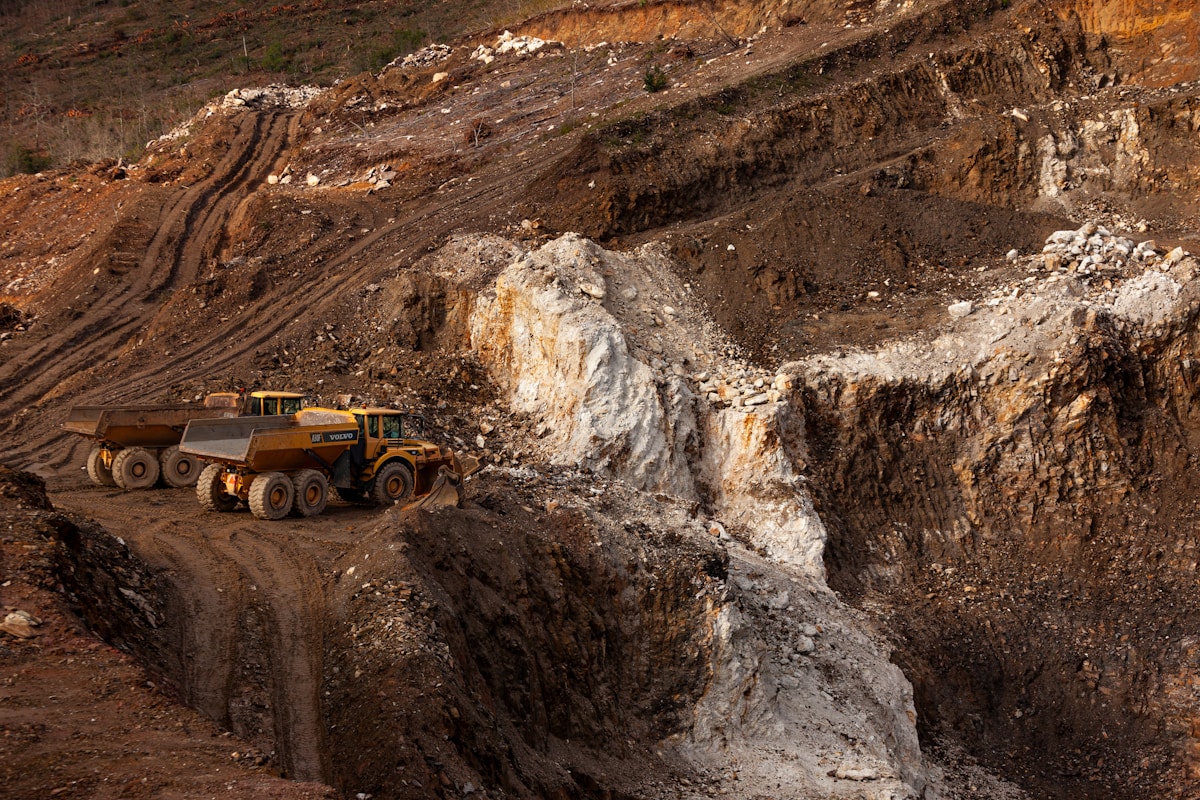
Chinese state-linked entities assumed control of a strategic rare earth mine in Malawi without required government oversight, according to an investigation by the International Consortium of Investigative Journalists, exposing governance gaps in African mining sectors and raising concerns about opaque Chinese investment practices.
The Mawei Mining Company Ltd. holds a heavy mineral sands concession near Makanjira on Lake Malawi's shores, believed to contain over 350 million tonnes of ore including zircon, titanium, and monazite—a rare earth element source critical for advanced electronics and defense applications.
Hidden Ownership Changes
The ownership of parent company Xinjin International Company Ltd. changed hands twice between 2023 and 2025, ultimately placing majority control with two Chinese state entities—Shandong Zhaojin Ruining Mining Industries Co. and Hainan International Resources. Malawian officials acknowledged being unaware of these transactions, according to the ICIJ investigation.
Under Malawian law, mining companies must notify and obtain Ministry of Mining approval before any beneficial ownership changes. This regulatory requirement was violated, effectively transferring control of a strategic national resource to foreign state-linked entities without government knowledge or consent.
Community Impact and Unfulfilled Promises
The ICIJ investigation found that community leaders reported no tangible benefits since the 2017 license grant, with promised development projects failing to materialize. This pattern—foreign mining interests securing valuable concessions while delivering minimal local economic benefit—has become disturbingly familiar across resource-rich African nations.
To understand today's headlines, we must look at yesterday's decisions. The case must be viewed within the broader context of China's Belt and Road Initiative, which has financed massive infrastructure and resource extraction projects across Africa. While these investments have built roads, ports, and power plants, they have also generated controversy over debt sustainability, environmental standards, and whether host nations truly benefit.
Mineral Extraction Without Oversight
Civil society groups warn the episode exposes critical governance gaps in Malawi's mining sector. As one expert characterized it: "This is mineral extraction without oversight." The warning applies beyond Malawi—weak regulatory capacity and opaque ownership structures enable foreign interests to gain control of national resources across the African continent.
Rare earth elements have become strategically critical in the competition between China and Western powers. Beijing currently dominates global rare earth processing, creating supply chain vulnerabilities for countries dependent on these materials for everything from smartphones to missile guidance systems. Control of additional rare earth deposits in Africa extends that dominance.
Implications for Chinese Investment in Africa
The Malawi case illustrates a troubling pattern in Chinese resource investments across Africa. Complex corporate structures obscure ultimate ownership and control. Regulatory requirements designed to protect national sovereignty are circumvented or ignored. Host governments lack the technical capacity or political will to enforce compliance. And local communities see little benefit despite the extraction of valuable resources from their territory.
Not all Chinese investment in Africa follows this pattern. Many projects involve legitimate partnerships that deliver genuine development benefits. However, the opacity and regulatory violations revealed in the Malawi investigation reinforce concerns that some Chinese resource investments prioritize extraction over partnership.
Call for Stronger Governance
The ICIJ investigation highlights the urgent need for stronger governance frameworks in African mining sectors. Beneficial ownership registries that clearly identify ultimate controllers of mining concessions would prevent hidden ownership transfers. Robust regulatory enforcement would ensure compliance with notification and approval requirements. And transparent revenue flows would allow citizens to verify that resource extraction benefits national development rather than merely enriching foreign interests and local elites.
Whether Malawi can recover effective oversight of the mine remains uncertain. The government could theoretically revoke the license for regulatory violations, but doing so might trigger diplomatic friction with Beijing and potential lawsuits from the Chinese entities now in control.
The case serves as a cautionary tale for other African nations: without vigilant oversight and robust regulatory enforcement, strategic national resources can slip into foreign control through corporate maneuvering that leaves host governments blindsided and communities empty-handed.