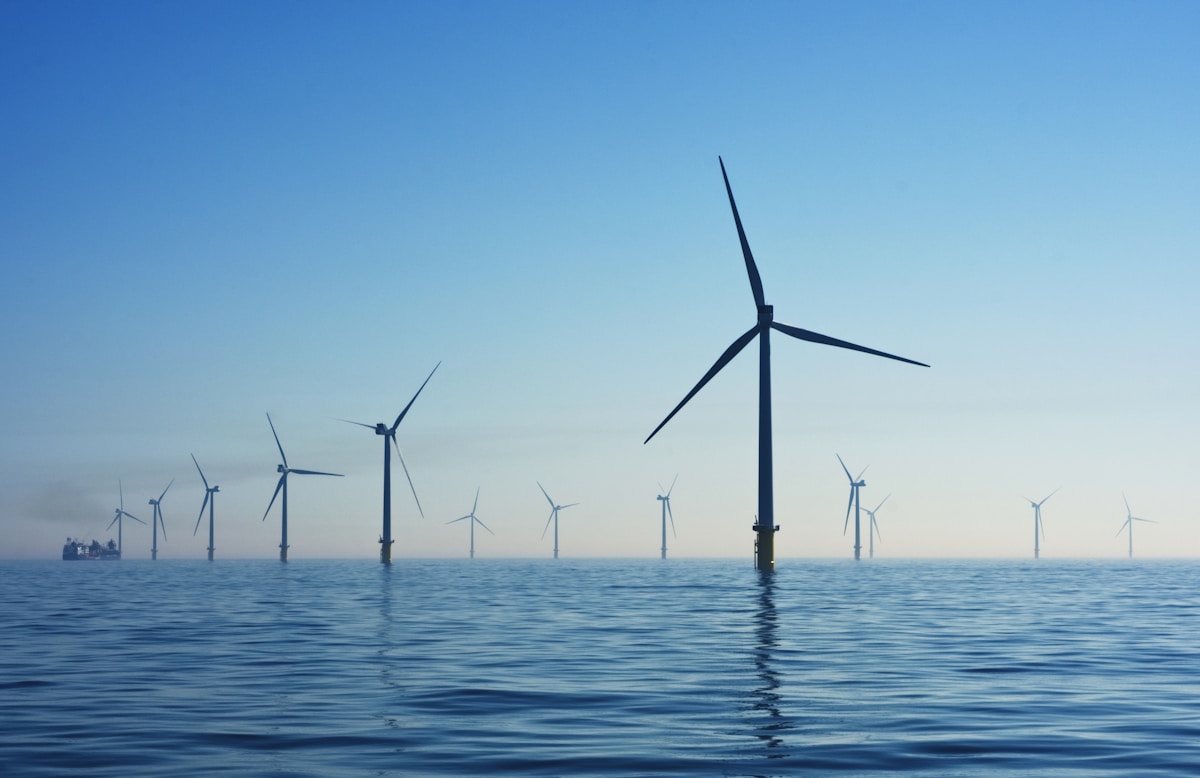

China has opened the world's first commercial undersea data center powered entirely by offshore wind energy, demonstrating how innovative cooling and clean energy integration can address the technology sector's exploding electricity demand without exacerbating climate impacts.
The facility, reported by New Atlas, represents a striking solution to one of the technology industry's fastest-growing environmental challenges. Data centers already consume roughly 1-2% of global electricity - a share projected to triple by 2030 as artificial intelligence, cloud computing, and digital services expand. Meeting that demand with fossil fuels would significantly undermine climate progress.
Underwater deployment offers inherent cooling advantages. Servers generate enormous heat that must be continuously removed. Traditional data centers rely on energy-intensive air conditioning, consuming nearly as much power for cooling as for computation. Ocean water provides free, constant cooling at stable temperatures, dramatically reducing energy overhead.
The offshore wind integration proves equally important. Connecting data center power demand directly to renewable generation avoids grid transmission losses and ensures clean electricity powers digital infrastructure. As wind generation fluctuates, computational loads can be adjusted, providing valuable grid flexibility.
The technical challenges are formidable. Saltwater environments corrode electronics rapidly. Underwater facilities require waterproof enclosures that withstand pressure and prevent leaks. Physical access for maintenance proves far more complex than terrestrial installations. Subsea cable connections create potential failure points. Long-term durability remains unproven.
Yet the advantages extend beyond cooling efficiency. Underwater locations bypass land-use conflicts that delay terrestrial data center construction. Proximity to coastal population and business centers reduces network latency. Disaster resilience improves through geographic distribution of critical infrastructure.
In climate policy, as across environmental challenges, urgency must meet solutions - science demands action, but despair achieves nothing. The undersea data center demonstrates how technological innovation can align digital infrastructure growth with decarbonization imperatives.
The climate stakes are substantial. Artificial intelligence training runs consume electricity measured in megawatt-hours. Large language models require thousands of GPUs running continuously. Cryptocurrency mining alone has consumed electricity comparable to small nations. If this computational demand grows powered by fossil fuels, it would significantly worsen climate trajectories.
Yet renewable-powered data infrastructure could flip that equation. Computational loads prove relatively flexible - many processes don't require instant completion. Data centers could increase processing when renewable generation peaks and reduce loads during shortfalls, effectively storing intermittent renewable energy as completed computational work rather than in batteries.
This demand flexibility provides valuable grid services. Variable renewable generation creates integration challenges as solar and wind capacity grows. Flexible loads that respond to generation availability help balance grids without fossil fuel backup. Data centers represent massive, controllable electrical demand ideal for such applications.
Environmental impacts require assessment beyond carbon emissions. Underwater installations could affect marine ecosystems through noise, electromagnetic fields, temperature changes in cooling water discharge, and habitat disruption. Cable corridors cross seafloor habitats. Navigation and fishing concerns need addressing. Comprehensive environmental review proves essential.
The technology holds particular promise for coastal nations with strong offshore wind resources. Northern Europe, East Asia, North America's coasts, and other regions could potentially host underwater data infrastructure powered by local offshore wind farms.
Global data center energy demand growth shows no signs of slowing. Digital transformation, AI deployment, and cloud service expansion all require more computational capacity. Meeting that demand sustainably requires both improving energy efficiency and ensuring clean electricity powers digital infrastructure.
China's technological leadership in renewable energy and digital infrastructure enables ambitious demonstrations like undersea data centers. The nation leads global offshore wind deployment, data center construction, and technology manufacturing. Combining those capabilities creates opportunities for innovations that address multiple challenges simultaneously.
Whether undersea data centers become widespread remains uncertain. Traditional terrestrial facilities offer advantages in accessibility, maintenance, and established supply chains. But climate imperatives demand exploring every pathway for decarbonizing rapidly-growing sectors.
The project also highlights how digital infrastructure shapes energy systems. Data centers represent some of the largest and most flexible electrical loads. How that demand gets powered and whether it provides grid services will significantly influence renewable energy integration and climate outcomes.
As computing demand grows exponentially, powering it cleanly becomes as important as deploying renewable generation. Technologies that simultaneously address cooling efficiency and clean energy integration offer more sustainable paths for digital infrastructure growth.