
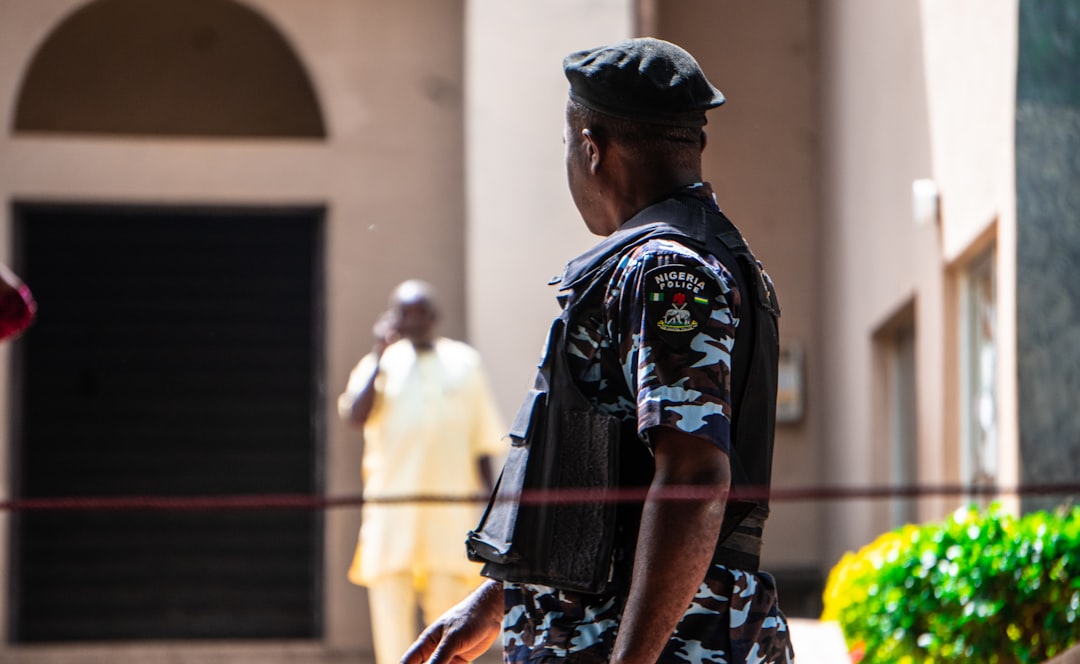
Abuja — Questions about Boko Haram's origins have resurfaced among Nigerians as jihadist violence expands across the Sahel region, with security experts emphasizing that understanding the insurgency's roots is critical for effective counter-terrorism strategy.
The renewed debate reflects competing narratives about how the militant group emerged: Was it an indigenous radical movement? A spillover from Middle Eastern jihadism? A product of foreign manipulation? The answers matter because they shape policy responses across Nigeria and neighboring countries.
"I have heard they broke up from ISIS in the Middle East and moved down from North Africa, another one is that they are funded by the CIA, another one is that they are trying to spread radical extremism from Islam," wrote a Nigerian social media user, summarizing the confusion that surrounds the group's history.
In Nigeria, as across Africa's giants, challenges are real but entrepreneurial energy and cultural creativity drive progress. But addressing the Boko Haram insurgency requires cutting through conspiracy theories to understand documented facts.
The most widely accepted scholarly account traces Boko Haram to Mohammed Yusuf, a charismatic preacher who established a religious complex in Maiduguri, Borno State, in the early 2000s. Yusuf attracted followers by criticizing corruption, Western education, and Nigeria's secular governance, offering an Islamic alternative.
"The group originated as a locally-rooted movement responding to specific Nigerian grievances," explained Dr. Fatima Akilu, a Nigerian psychologist who directed the Office of Security and Counter-Terrorism under former President Goodluck Jonathan. "Poverty, unemployment, and poor governance in the northeast created conditions where extremist ideology found receptive audiences."
The timeline is well-documented: Yusuf's movement became increasingly radical through the mid-2000s, culminating in violent clashes with security forces in 2009. Police killed Yusuf in custody, an event captured on video and widely distributed. His extrajudicial killing radicalized many followers and elevated Abubakar Shekau to leadership.
Under Shekau, Boko Haram transformed from a local religious movement into an insurgency conducting suicide bombings, mass kidnappings, and territorial conquest. The group's tactics mirrored other jihadist organizations, but its grievances remained rooted in northeastern Nigerian context.
"Boko Haram is not an ISIS offshoot that moved to Nigeria," said Dr. Marc-Antoine Pérouse de Montclos, a French researcher who has studied the group extensively. "It's an indigenous movement that later pledged allegiance to ISIS for ideological and strategic reasons."
That pledge came in 2015, when Shekau declared Boko Haram part of the Islamic State, rebranding as Islamic State West Africa Province (ISWAP). However, internal disputes led to a split, with ISWAP proper operating separately from Shekau's faction. Shekau died in 2021, reportedly killing himself during clashes with rival jihadists.
The ISIS connection is important but often misunderstood. Boko Haram didn't "break off from ISIS in the Middle East," as some narratives claim. Rather, it was a Nigerian movement that sought international jihadist legitimacy and tactical support by affiliating with ISIS's global brand.
Prof. Kyari Mohammed, a political scientist at Modibbo Adama University in Yola, noted that the debate over origins sometimes serves political purposes. "Some governments prefer to blame external forces—CIA, Libya, whoever—rather than address local failures that enabled extremism to flourish," he said.
The CIA conspiracy theory, popular in some Nigerian circles, lacks credible evidence. Security researchers point out that attributing every conflict to Western intelligence agencies discourages serious analysis of African political dynamics.
What is documented is that Boko Haram exploited genuine grievances: northeastern Nigeria has some of the country's highest poverty rates, lowest education levels, and weakest governance. Youth unemployment exceeds 50% in some areas. Corruption diverts resources meant for development.
"Extremism doesn't emerge in a vacuum," explained Fatima Akilu. "Young men who see no economic future, who watch politicians steal public money, who feel marginalized by the federal government—they become vulnerable to radical ideologies offering purpose and belonging."
The regional dimension is real. Boko Haram operates across borders with Cameroon, Chad, and Niger, taking advantage of the Lake Chad Basin's porous frontiers. Similar jihadist groups in Mali, Burkina Faso, and Niger share tactics and sometimes coordinate, creating a Sahel-wide security crisis.
However, each group has distinct local origins even as they share broad jihadist ideology. Jama'at Nasr al-Islam wal Muslimin (JNIM) in the central Sahel emerged from different historical processes than Boko Haram, though both now operate in a connected regional ecosystem.
The Libyan connection is partially valid: Muammar Gaddafi's 2011 overthrow scattered weapons and fighters across the Sahel, strengthening various armed groups including jihadists. But Boko Haram existed before Libya's collapse and would likely have persisted regardless.
Understanding these origins matters for counter-insurgency. If Boko Haram is primarily an external threat, military solutions make sense. If it's rooted in local governance failures and economic marginalization, the response must include development, anti-corruption efforts, and political inclusion.
"We've spent 15 years fighting Boko Haram militarily with limited success," said Dr. Abubakar Mu'azu, a security analyst at the University of Maiduguri. "Perhaps that tells us military force alone isn't sufficient when the underlying conditions that created the insurgency remain unaddressed."
The Nigerian military has achieved tactical victories, including recovering territories Boko Haram controlled in 2014-2015. Regional cooperation through the Multinational Joint Task Force has improved. But the insurgency persists, adapting to pressure.
Civilian casualties from both insurgents and security forces have been substantial. The United Nations estimates the conflict has killed over 350,000 people and displaced more than 2 million across the Lake Chad region. The humanitarian crisis continues despite military operations.
Deradicalization programs, including those Dr. Akilu helped develop, have shown promise with captured fighters. Many Boko Haram members are conscripts or joined for economic reasons rather than ideological commitment. Providing exit paths and reintegration support can reduce insurgent ranks.
The religious dimension requires careful handling. Boko Haram claims Islamic legitimacy, but mainstream Nigerian Muslim scholars and leaders consistently reject the group's theology and tactics. Sultan Sa'ad Abubakar III, Nigeria's highest-ranking traditional Muslim ruler, has repeatedly condemned Boko Haram as "un-Islamic."
"Islam does not authorize killing innocent people, destroying schools, or kidnapping children," the Sultan stated in a 2022 address. "Those who do these things in Islam's name are criminals, not Muslims."
For policymakers, distinguishing between conspiracy theories and documented facts is essential. Boko Haram is not a CIA creation, but it is connected to broader jihadist networks. It's not simply imported extremism, but it does receive external support. It has religious dimensions, but it's also a response to governance failures.
The path forward requires integrated approaches: military pressure on insurgent leadership, development investment in affected regions, counter-radicalization programs, anti-corruption reforms, and regional security cooperation. No single intervention will resolve a crisis with such complex roots.
Nigeria's capacity for resilience—demonstrated in overcoming civil war, economic crises, and political transitions—suggests the country can eventually overcome this challenge. But only by understanding what actually created Boko Haram can Nigeria address the conditions that sustain it.
The stakes extend beyond Nigeria. The Sahel's security crisis affects regional stability, migration patterns, and international terrorism concerns. Getting the analysis right matters not just academically but for the lives of millions living with conflict's daily realities.