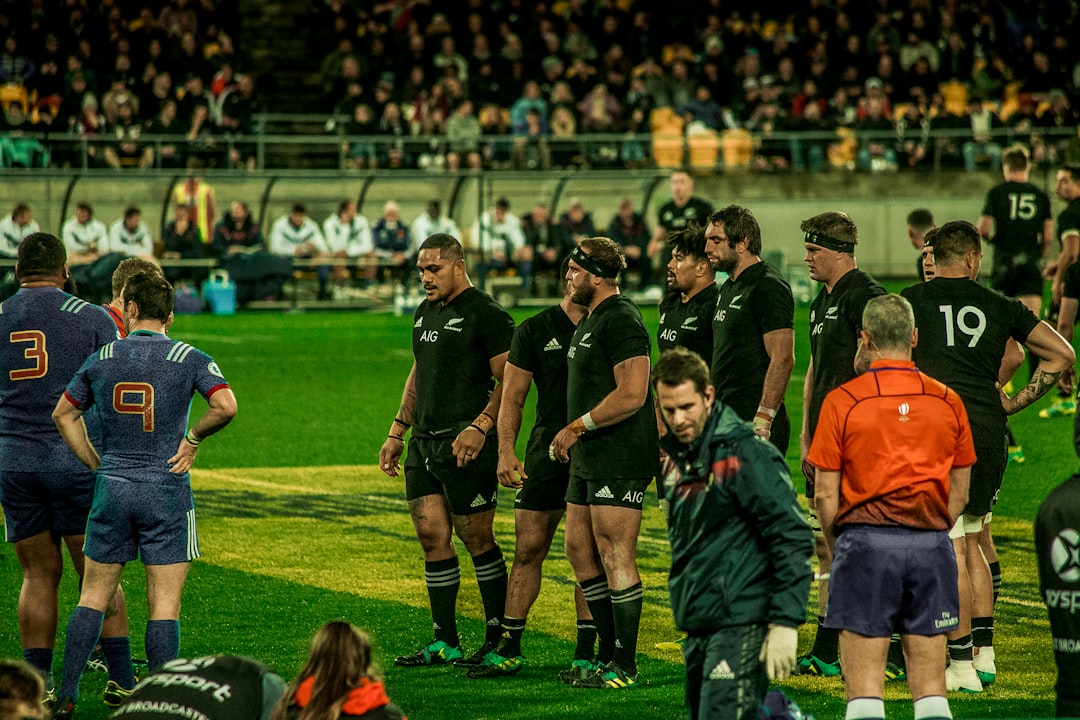
Former All Black captain Taine Randell will stand for NZ First in Hawke's Bay, according to the NZ Herald, bringing celebrity sports credibility to Winston Peters' party as the region recovers from Cyclone Vaianu.
NZ First recruiting rugby royalty shows how populist parties leverage sports figures for political gain. Worth examining Peters' strategy and what it says about New Zealand politics—especially as the country faces real challenges that can't be solved with rugby credentials.
Randell, who captained the All Blacks in the late 1990s and early 2000s, is a recognizable name in New Zealand sport. He brings instant name recognition to NZ First's campaign in Hawke's Bay, a region still recovering from the devastation of recent cyclones and dealing with infrastructure damage, economic disruption, and community trauma.
For Winston Peters, this is classic political strategy: recruit a high-profile candidate with strong local connections and national recognition, then campaign on being the voice for a region that feels neglected by Wellington. NZ First has long positioned itself as the champion of provincial New Zealand against urban elites and bureaucratic indifference.
But mate, here's the question: what are Randell's policies? What's his position on cyclone recovery funding, climate adaptation, infrastructure investment, agricultural support, or any of the actual issues facing Hawke's Bay? Celebrity candidacies often substitute fame for policy depth, and voters deserve better.
Hawke's Bay has faced extraordinary challenges recently. Cyclone Gabrielle in 2023 caused catastrophic damage, and the region is still rebuilding. Infrastructure remains damaged, businesses are still recovering, and communities are grappling with insurance battles and climate anxiety about future storms. These are complex problems requiring serious policy solutions, not just charismatic candidates.
NZ First's appeal in provincial regions has historically been built on grievance politics: the sense that rural and regional New Zealand is ignored by Wellington policymakers more focused on Auckland and other urban centers. Peters has made a career of channeling that frustration into political support. Adding an All Black captain to the ticket reinforces the message that NZ First represents "real" New Zealanders, not Wellington insiders.
There's also the Pacific dimension. Randell has Māori heritage and has been involved in various community and business ventures since retiring from rugby. His candidacy could help NZ First appeal to Māori voters in the region, though the party's relationship with Māori political movements has been complicated historically.
The timing is significant too. With Cyclone Vaianu having recently hit the region again, recovery and resilience are front of mind for Hawke's Bay voters. NZ First will likely campaign on demanding more government support, faster recovery funding, and better infrastructure investment—all traditional Peters themes.
But the challenge for Randell and NZ First is turning sentiment into votes. Hawke's Bay has typically leaned toward National or Labour, depending on the electoral cycle. Unseating an incumbent or winning a close race requires more than name recognition—it requires convincing voters that NZ First offers better solutions than the major parties.
The broader pattern here is worth noting: political parties increasingly recruit celebrities, sports figures, and media personalities as candidates, banking on their public recognition to cut through voter apathy and media noise. Sometimes it works—look at Peters' own career leveraging charisma into political longevity. Sometimes it doesn't—plenty of celebrity candidates have failed to translate fame into electoral success.
For New Zealand politics, Randell's candidacy is another data point in the ongoing debate about what makes an effective representative. Is political experience necessary, or can a successful career in another field provide transferable skills? Does name recognition matter more than policy expertise? Should voters prioritize local connections or party platform?
Hawke's Bay voters will answer those questions at the ballot box. In the meantime, expect to see Randell campaigning heavily on local issues, regional identity, and the message that Hawke's Bay deserves a stronger voice in Wellington. Whether that translates into an NZ First win depends on whether voters think an All Black captain can tackle the region's very real, very complex challenges—or whether they need someone with a different kind of credentials.