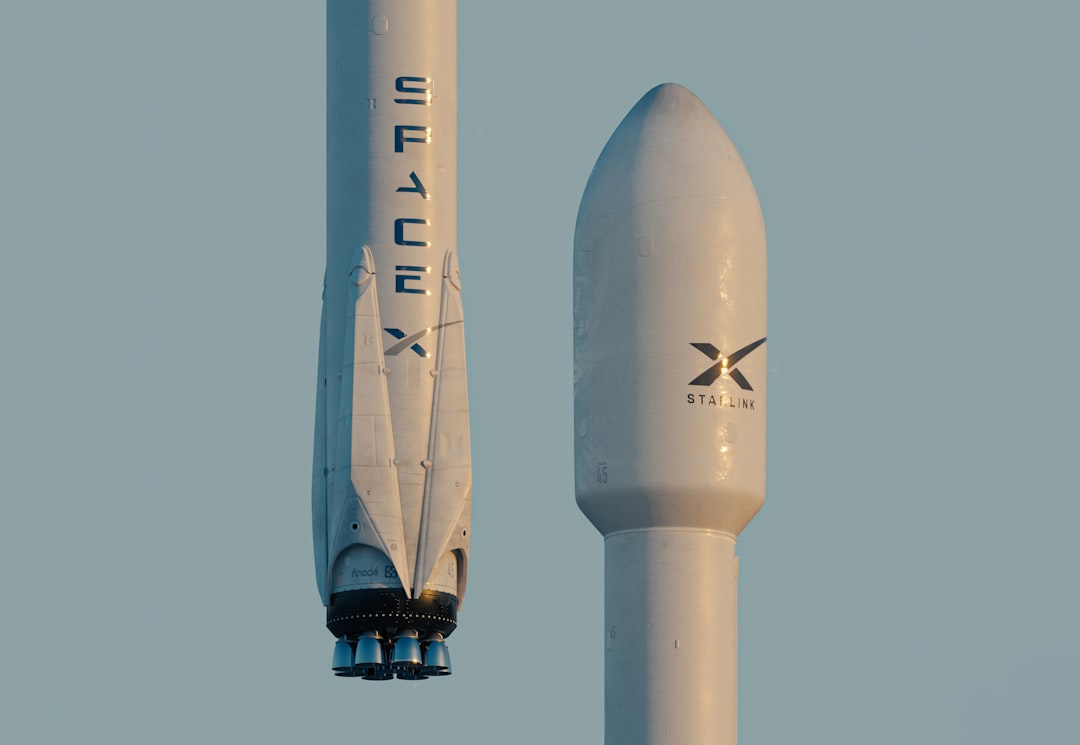

If you want to understand where the money really goes in the AI boom, look past the flashy product demos and check who's writing the checks for compute power. Anthropic - the company behind Claude - just committed to paying $45 billion to SpaceX over the next three years. That's $1.25 billion per month until May 2029.
Let that number settle for a second. Forty-five billion dollars. Not for acquiring a company or building new technology, but for renting computing capacity to keep Claude running.
This is what infrastructure costs look like when AI actually scales. And it tells you something important about who holds the power in this industry: it's not necessarily the companies building the models.
What You're Actually Paying For
Anthropic initially contracted for over 300 megawatts of capacity at SpaceX's Colossus 1 data center in Memphis, then expanded to include the Colossus II facility. For context, 300 megawatts could power roughly 200,000 homes. That's the scale of electricity needed just to keep one AI model operational.
Tom Brown, Anthropic's co-founder and chief compute officer, confirmed the expansion publicly, though the company declined to comment beyond that. The deal runs through 2029, with either party able to exit with 90 days' notice - which is about the only flexibility Anthropic has here.
SpaceX, which merged with xAI earlier this year, isn't just leasing capacity to Anthropic. According to the filing, the company is planning similar agreements with other AI firms. Translation: SpaceX has built a business model around being the landlord to the AI industry.
The Math That Should Worry AI Investors
Here's where things get interesting - and uncomfortable if you're betting on AI profit margins.
Anthropic is projecting Q2 revenue of more than $10.9 billion, up from $4.8 billion previously. That sounds impressive until you realize they're spending $15 billion per year just on this one SpaceX contract. Add in everything else - salaries, other infrastructure, R&D - and suddenly those "first quarterly operating profit" projections of $559 million start looking optimistic.
This is the hidden reality of AI economics. The companies building the models need massive ongoing infrastructure spending just to keep the lights on. Revenue has to scale exponentially just to cover compute costs, let alone turn a real profit.
And that's before we talk about competition. Anthropic just signed a separate $1.8 billion deal with Akamai Technologies for additional cloud capacity earlier this month. When you're spending this much on infrastructure, you can't afford to have a single point of failure - which means even more ongoing costs.
Who Actually Wins Here?
The uncomfortable truth is that SpaceX - not Anthropic - may have the better side of this deal. They own the infrastructure. They have pricing power. They can lease to multiple AI companies and play them off each other. Meanwhile, Anthropic and its competitors are locked into spending tens of billions annually with limited alternatives.
This isn't unique to Anthropic. OpenAI, Google, Meta - they're all burning cash on compute at rates that would have been unthinkable a few years ago. The difference is that some of them have profitable core businesses to subsidize the AI spending. Anthropic doesn't have that cushion.
For retail investors, the lesson here is simple: AI margins aren't magic. Every time you hear about an AI company's revenue growth, ask yourself how much they're spending on infrastructure. Because unlike software-as-a-service companies that benefited from declining cloud costs over the past decade, AI companies are facing the opposite trend - compute costs that keep climbing as models get bigger and usage scales.
The Real Power Play
If you're looking for where the durable profits are in AI, this deal gives you a pretty clear map. It's not necessarily in the model builders. It's in the infrastructure providers, the chip makers, the power companies, and the data center operators who can charge $15 billion a year and know their customers have nowhere else to go.
Anthropic's $45 billion commitment isn't just a business deal. It's an admission about who has leverage in this market. And right now, that leverage belongs to whoever controls the compute.
If they can't explain it simply, they're probably hiding something. In this case, the explanation is pretty simple: AI companies need to spend billions to make millions. That's not a business model problem they'll solve with better algorithms. It's structural economics, and it's not going away.