Imagine an octopus the length of a bowling lane. Now imagine it hunting mosasaurs - the apex marine predators of the Cretaceous seas.
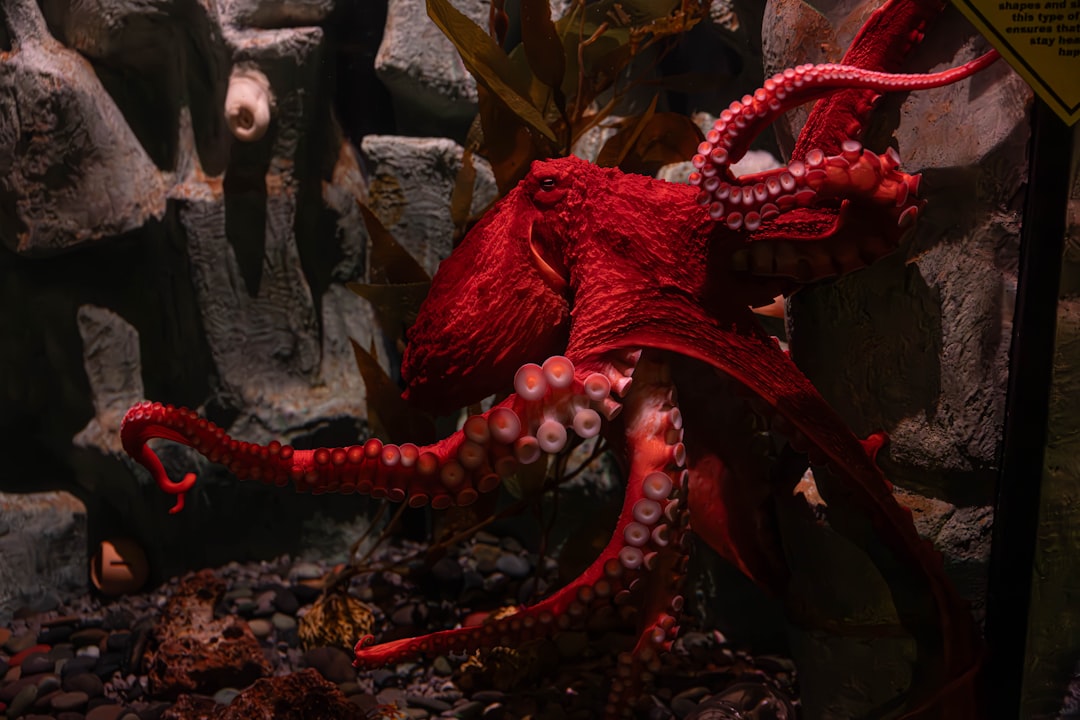
That's the picture emerging from new research published in Science, which reveals that the earliest octopuses were giant top predators reaching up to 19 meters (62 feet) in length. To put that in perspective, modern giant Pacific octopuses max out at around 5 meters arm-tip to arm-tip.
The real breakthrough here isn't just the size - it's the forensic detective work. Researchers analyzed wear patterns on fossilized octopus jaws and discovered something remarkable: these ancient cephalopods were feeding on marine reptiles like mosasaurs and plesiosaurs, creatures that dominated the Cretaceous oceans alongside dinosaurs on land.
Think about that ecological relationship. Mosasaurs are often described as the great white sharks of their era - massive, powerful predators. And octopuses were hunting them.
The jaw wear patterns tell the story. When octopuses eat hard-shelled prey today, their beaks develop characteristic wear marks. The fossil evidence shows similar patterns consistent with processing large vertebrate prey with tough skin and bones. This is functional morphology at its finest - reconstructing ancient behavior from microscopic clues preserved in stone.
Now, before we get carried away imagining tentacled krakens terrorizing the Mesozoic seas, some important context. We're talking about animals that lived roughly 66 to 100 million years ago. The fossil record for soft-bodied cephalopods is notoriously sparse - we're lucky to have these jaw fossils at all. Octopuses don't preserve well, being mostly muscle and lacking shells.
What makes this discovery revolutionary for our understanding of cephalopod evolution is the timeline. This pushes back the origin of octopuses and demonstrates they were already sophisticated predators much earlier than previously thought. Modern octopuses are famous for their intelligence, camouflage abilities, and problem-solving skills. This research suggests their ancestors were equally impressive, just on a much larger scale.
The ecological implications are fascinating too. These giant octopuses would have competed with other apex predators in Cretaceous seas - not just as scavengers, but as active hunters capable of taking down the largest marine animals of their time.
One question the research raises: why did octopuses get smaller? Modern octopuses are remarkably successful, but none approach the size of their ancient relatives. Was it competition? Environmental changes after the mass extinction that killed the dinosaurs? Changes in ocean chemistry or temperature?
We don't have answers yet. But finding the right question is often half the battle in science.
The universe doesn't care what we believe. Let's find out what's actually true - and in this case, what was actually true 80 million years ago turns out to be far stranger and more wonderful than we imagined.