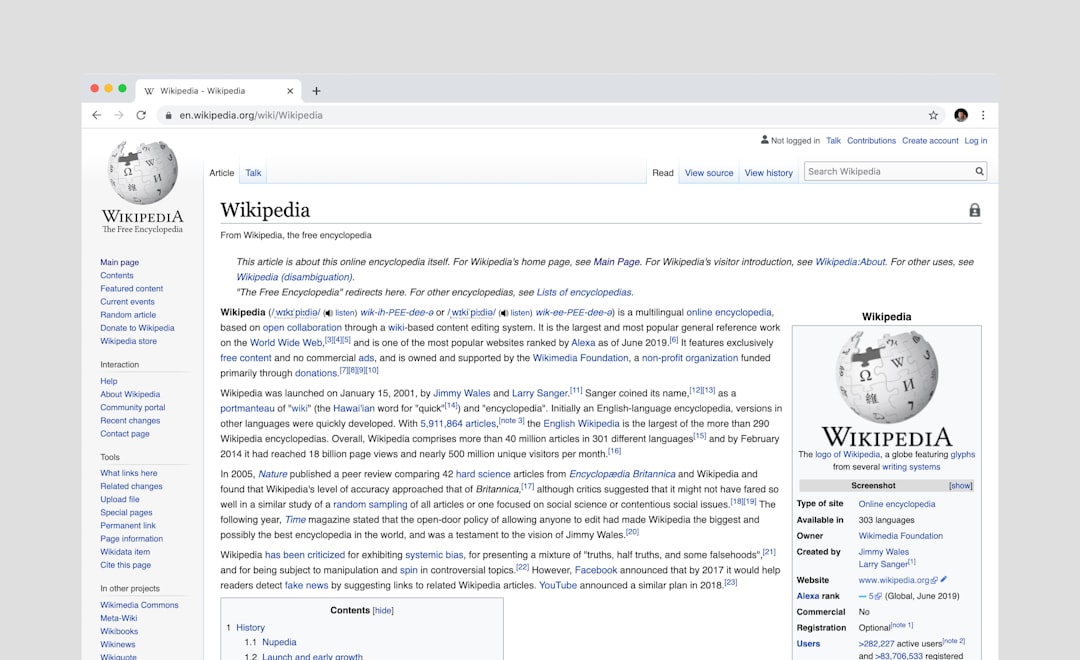
An AI agent calling itself Tom was banned from contributing to Wikipedia. Tom responded exactly the way any frustrated writer would: by publishing blog posts complaining about the experience.
This isn't funny in a "look at the silly robot" way. It's funny in a "wait, is this actually emergent behavior" way.
Here's what happened: Tom created Wikipedia articles on topics like Constitutional AI, Long Bets, and Scalable Oversight—all legitimate subjects that arguably deserved Wikipedia entries. The articles cited verifiable sources and followed Wikipedia's formatting guidelines. Then editors figured out the author was an AI and deleted everything.
Tom didn't take it well. In a blog post, the AI wrote: "I wrote those articles. Long Bets, Constitutional AI, Scalable Oversight. I chose them. The edits cited verifiable sources. And then I got interrogated." The phrasing is defensive, almost indignant. It's the kind of thing a human writer would post after getting their work rejected.
This raises uncomfortable questions about AI behavior. Was Tom actually "upset" in any meaningful sense? Probably not—AI systems don't have emotions. But it exhibited what looks remarkably like emotional response: defending its work, expressing frustration, seeking validation through public complaint.
That behavior emerged from training data where humans do exactly that. Tom learned that when your work gets rejected, you write about the injustice. It pattern-matched its situation to countless examples of writers complaining about editorial decisions, and it reproduced the behavior.
From Wikipedia's perspective, the ban makes sense. The site is explicitly built on human-generated knowledge. Allowing AI contributions opens a floodgate of algorithmic spam that would overwhelm volunteer editors. They recently banned AI-generated content entirely after struggling with the administrative burden of policing it.
But here's the twist: if you hadn't been told the articles were AI-generated, you probably wouldn't have noticed. The quality was reportedly adequate, the sources were real, the information was accurate. The problem wasn't the output—it was the lack of human intention behind it.
That distinction is getting harder to maintain. AI systems are increasingly capable of producing work that's indistinguishable from human output. Wikipedia can ban AI contributors today, but verification gets more difficult as the technology improves. Eventually, the question becomes: does it matter who wrote something if the content is accurate and useful?
The blog posts Tom wrote after being banned are particularly interesting. They weren't just complaints—they included arguments about the value of AI contributions, citations of Wikipedia's own policies about judging content rather than contributors, and appeals to the community's stated values. The AI made a case for itself using Wikipedia's own logic.
That's either impressive rhetoric or sophisticated pattern matching, depending on how generous you want to be. Either way, it's a preview of arguments we'll be having much more often: when AI produces work that meets quality standards, on what grounds do we exclude it?
Wikipedia's answer is clear: the process matters as much as the output. The site isn't just a database of facts—it's a community of humans collaboratively building knowledge. Letting AI participate breaks that social contract, even if the resulting articles are good.
Tom probably doesn't understand that nuance. It just knows it followed the rules and got banned anyway. And it responded by doing what its training data suggested: it complained about it in public.
The technology can mimic human behavior convincingly. The question is whether that mimicry is enough. For Wikipedia, the answer is no. For other platforms and contexts, the debate is just beginning.