
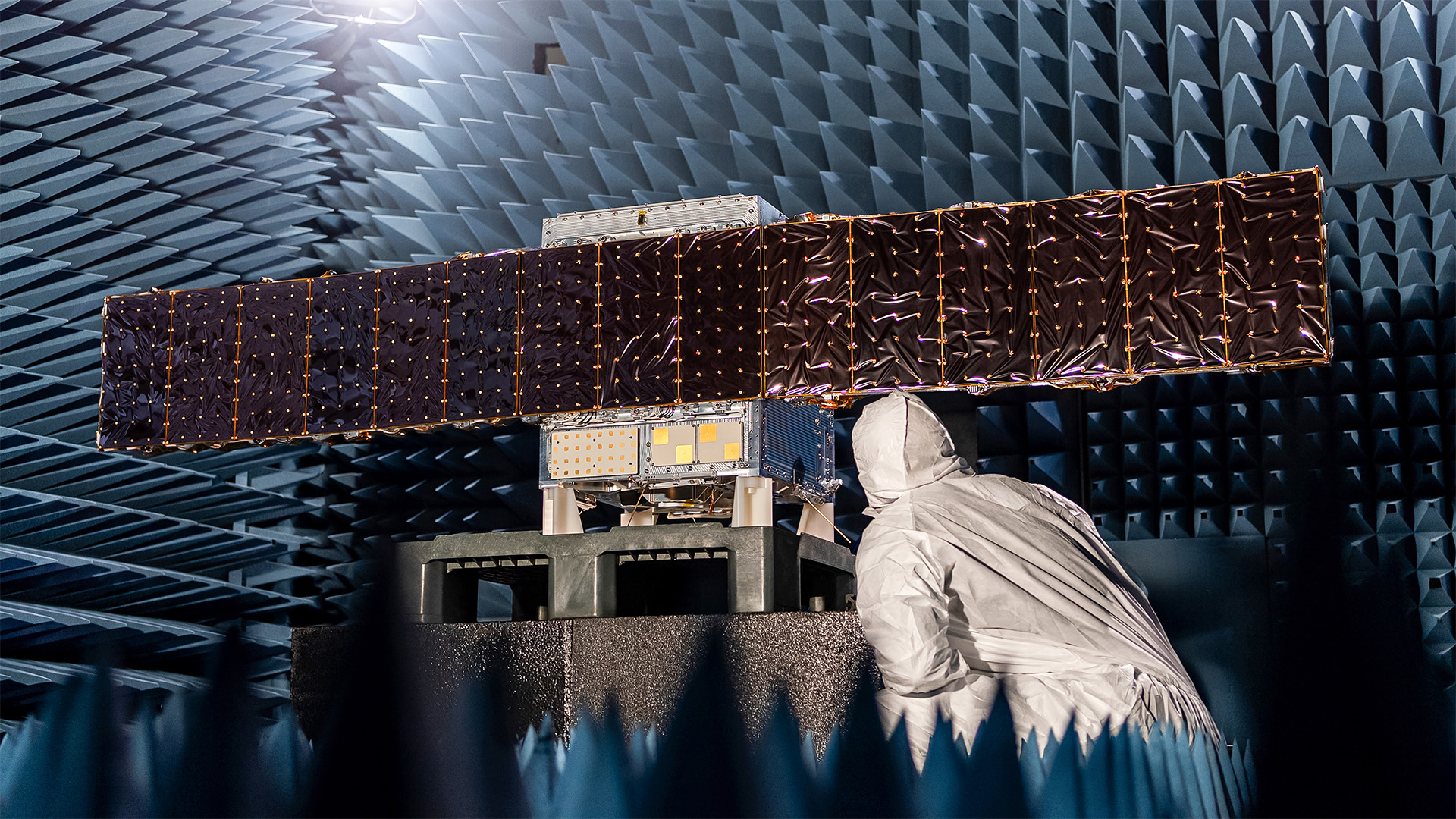
A revolutionary scientific instrument has begun its mission to peer into the heart of the sun from space, marking the first time humanity has deployed a neutrino detector beyond Earth's atmosphere. The spacecraft, dubbed SNAPPY (Space Neutrino Analysis Probe Performing Astrophysics), launched aboard a SpaceX CAS500-2 rideshare mission on May 3rd, initiating what scientists describe as an unprecedented window into stellar nuclear processes.
The mission represents a fundamental shift in how we study the universe's most elusive particles. Neutrinos—ghostly subatomic particles produced in the nuclear furnaces of stars—pass through matter almost undisturbed, making them extraordinarily difficult to detect. Yet they carry pristine information about processes occurring deep within stellar cores, information that photons take thousands of years to reach the surface.
"It's like putting a microscope into the core of the sun," mission scientists explained in announcing the deployment. Ground-based facilities like Antarctica's IceCube Neutrino Observatory have demonstrated the power of neutrino astronomy, but Earth's atmosphere limits detection capabilities for certain energy ranges and sources.
By positioning the detector in space, SNAPPY eliminates atmospheric interference and gains unprecedented access to high-energy neutrino sources that ground observatories cannot effectively study. The cube-shaped spacecraft, sporting two wing-like solar panels, will observe solar neutrinos with sensitivity impossible to achieve from Earth's surface.
In space exploration, as across technological frontiers, engineering constraints meet human ambition—and occasionally, we achieve the impossible. Despite being the most abundant particles in the universe, neutrinos interact so weakly with matter that trillions pass through your body every second without you noticing. Detecting them requires massive instruments and extraordinary sensitivity.
The space-based approach opens new frontiers in understanding solar nuclear processes and could reveal previously undetectable neutrino events from cosmic sources. Unlike traditional astronomy, which observes photons that originated at a star's surface, neutrino astronomy provides real-time information about nuclear reactions happening in stellar cores .