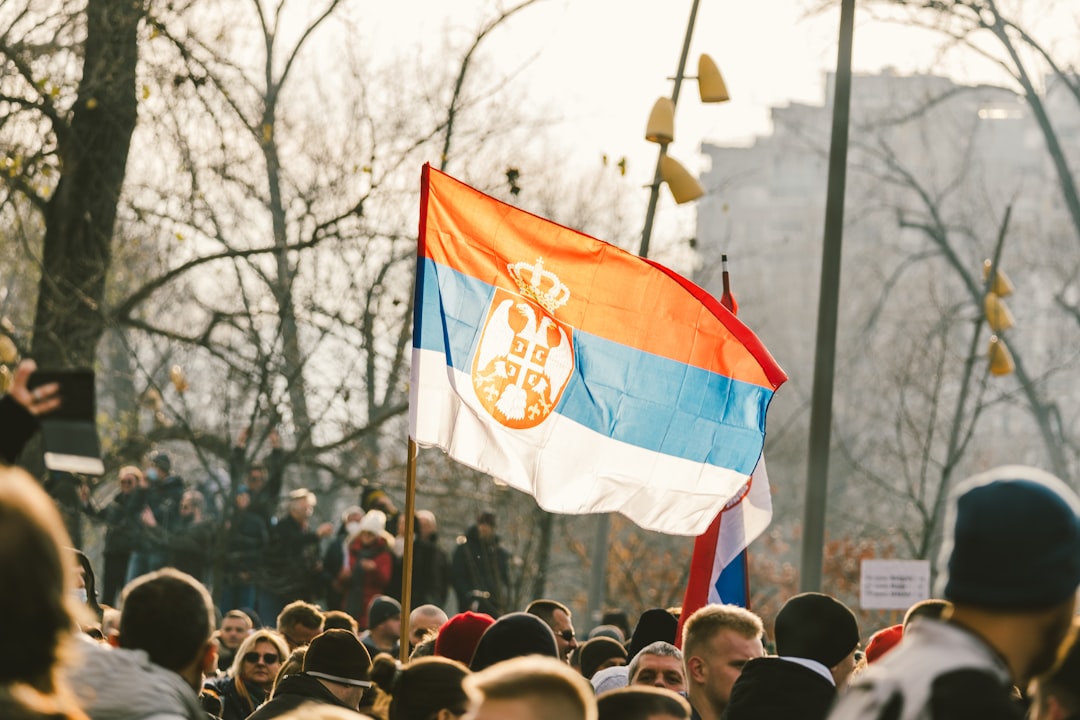
Local elections in ten Serbian municipalities descended into violence on Saturday as opposition observers and journalists faced coordinated attacks across multiple voting locations, raising urgent questions about democratic backsliding in the EU candidate nation.
In Bor, attackers wielding axes assaulted a team of journalists and student election observers near polling station 34, sending several to hospital with head injuries requiring stitches. Witnesses reported the assailants fled in a black Audi bearing Pančevo license plates. Separately, journalist Lazar Dinić was beaten and had his phone stolen, while activist Ivan Bjelić was detained by police under circumstances opposition groups described as pretextual.
The violence extended to Bajina Bašta, where six vehicles belonging to election observers had their tires punctured overnight—a tactic clearly designed to limit monitoring capacity. Journalist Darko Gligorijevć was attacked by multiple assailants in black clothing, with an armed individual brandishing a pistol appearing at the scene yet evading arrest.
"This represents systematic intimidation designed to create no-go zones for independent observation," said representatives from student monitoring groups, who maintained mobile teams despite the attacks. According to N1 reporting, observers documented parallel voter registries, organized voter transportation, and widespread ballot photographing across the ten municipalities holding elections.
In Aranđelovac, opposition monitors detected and disrupted what they termed a "Bulgarian train"—organized groups voting multiple times—and identified suspected call centers coordinating the effort from the bus station. Three observers from the Kreni-Promeni movement were arrested on disputed charges.
The electoral irregularities extended beyond violence. In Kula, more than 1,200 voters requested home voting—an unusually high number that raised suspicions about manipulation of elderly and vulnerable voters. Opposition groups reported vote-buying operations in Knjaževac and systematic ballot photography in Smederevska Palanka, with voters instructed to document their choices for payment verification.
The elections carry significant weight beyond municipal governance. Serbia's EU accession negotiations hinge partly on demonstrated progress in rule of law and democratic standards. Saturday's violence and fraud allegations provide fresh ammunition for skeptics within the European Parliament who question whether Belgrade meets membership criteria.
In the Balkans, as across post-conflict regions, the path forward requires acknowledging the past without being imprisoned by it. Yet Saturday's events suggest Serbia faces deeper challenges—not historical grievances but present-day erosion of democratic norms that transcends ethnic or regional divides.
The ruling Serbian Progressive Party (SNS) has not directly addressed the violence allegations. State-aligned media outlets framed the incidents through political narratives that opposition groups and independent journalists characterized as employing "hate speech elements" while downplaying the scale of intimidation.
Election monitoring organizations CRTA and the student movement Blokade maintained observers at polling stations throughout the day despite the attacks, documenting irregularities for potential legal challenges. Results from the ten municipalities—including Bor, Bajina Bašta, Aranđelovac, Kula, Knjaževac, and Smederevska Palanka—are expected in coming days.
For Brussels, the violence presents a difficult calculation. Serbia remains a key partner for regional stability, with influence over Kosovo normalization and Western Balkans integration. Yet systematic electoral violence undermines the credibility of EU engagement with governments that fail to meet democratic standards.
The incidents also reflect broader patterns across the region, where ruling parties in several Balkans states have faced accusations of democratic backsliding. The challenge for international observers lies in distinguishing between isolated incidents and systematic intimidation designed to secure electoral outcomes through fear rather than persuasion.
Opposition leaders pledged to pursue legal challenges to results in municipalities where violence and irregularities were documented, though Serbia's judiciary faces its own questions about independence from political pressure. The true test may come not in vote counting but in whether authorities investigate and prosecute those responsible for the attacks—or whether impunity reinforces the message that electoral violence carries no consequences.