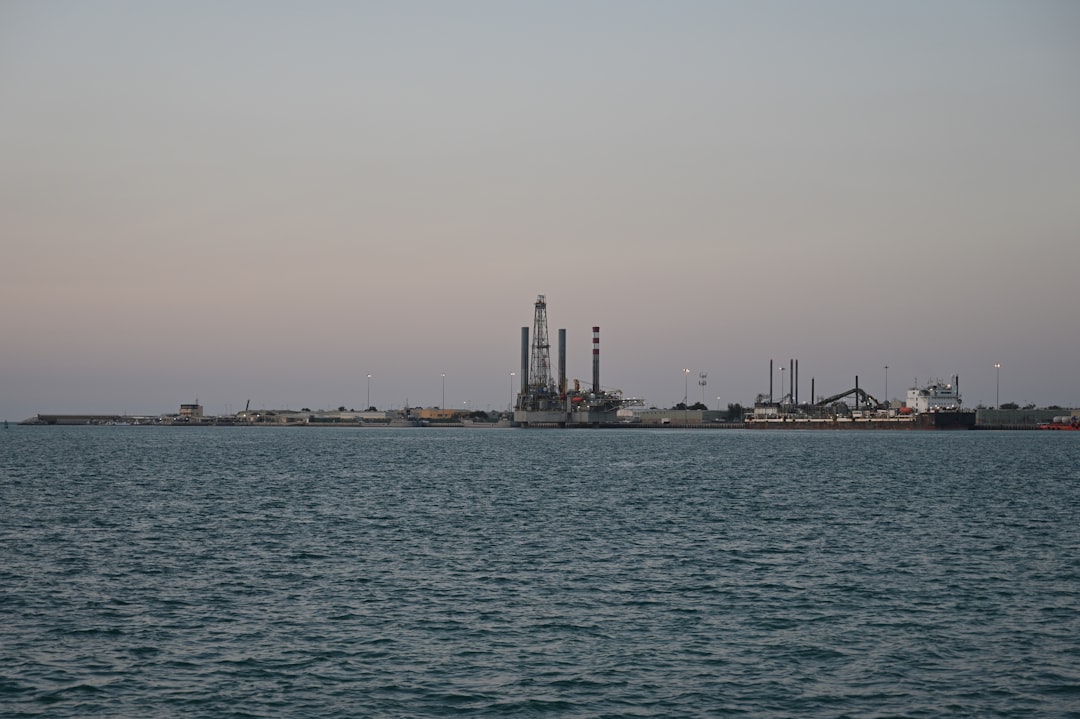
Romania is poised to transform from a natural gas consumer into the European Union's largest producer when the Neptun Deep offshore project begins operations in 2027, marking a significant shift in the Black Sea region's energy landscape.
The project, located in Romania's Black Sea exclusive economic zone, will produce approximately 8 billion cubic meters of natural gas annually, according to Alfred Stern, CEO of OMV Petrom, one of the two partners developing the field alongside Romania's state-owned Romgaz.
"Some initial contracts with strong partners have already been signed," Stern told Romanian financial outlet Ziarul Financiar, though he declined to name specific buyers. Reuters has previously reported that Germany's Uniper is among potential customers—a development that would directly link Romanian production to Central European energy security.
The infrastructure required to export the gas is already in place, with pipeline connections to Hungary, Bulgaria, and Moldova operational. For Romania, a country that joined the EU in 2007 but has long struggled with energy dependence, the transformation into a net exporter represents both economic opportunity and geopolitical significance.
The two partners have committed up to €4 billion in total investment, split equally between them, with over 90% of the budget already allocated. Drilling platforms arrived in Romanian waters in 2024, and initial wells were completed successfully in 2025, keeping the project on schedule for its 2027 launch.
Over the project's lifetime, Romanian government officials estimate it could contribute approximately €20 billion to the state budget through taxes and royalties—funds that could address persistent infrastructure gaps across the country.
In Romania, as across Eastern Europe, energy security remains inseparable from geopolitical strategy. The Black Sea has emerged as a critical frontier in European energy diversification efforts following Russia's full-scale invasion of Ukraine in 2022. While Romania maintained relatively low dependence on Russian gas compared to neighbors like Hungary and Bulgaria, the Neptun Deep project positions Bucharest as a potential supplier rather than simply a transit route.
The field contains an estimated 100 billion cubic meters of recoverable reserves, enough to supply Romania's domestic consumption for decades while simultaneously exporting to regional partners. This dual role—securing domestic supply while strengthening regional energy independence—has drawn support across Romania's fractious political spectrum.
Yet the project has not been without delays. Originally announced in 2012, Neptun Deep faced years of regulatory uncertainty and disputes over taxation frameworks before the Romanian parliament approved enabling legislation in 2022. The Offshore Law, as it became known domestically, established royalty rates and profit-sharing mechanisms that satisfied both the companies and Bucharest's demand for state revenue.
Environmental assessments indicate the project's CO₂ emissions will be eight times lower than comparable offshore developments, according to OMV Petrom, though environmental groups have raised concerns about potential impacts on Black Sea marine ecosystems.
For Romania's neighbors, particularly Moldova and Bulgaria, access to Romanian gas offers an alternative to historical dependence on Russian supplies. Moldova, which has faced repeated energy crises as Russia weaponized gas deliveries, has already indicated interest in long-term supply agreements.
The broader Black Sea energy picture remains complex. Turkey has developed its own offshore fields in recent years, while tensions over maritime boundaries between Romania, Ukraine, and Turkey have periodically flared. The 2009 International Court of Justice ruling that awarded Romania the majority of the disputed waters opened the path for Neptun Deep's development.
In Romania, as across Eastern Europe, the transition is not over—it's ongoing. The Neptun Deep project represents a concrete step in that evolution, transforming the country from a post-communist energy importer into a producer with regional influence. Whether that influence translates into broader economic modernization or remains confined to the energy sector will depend on how Bucharest manages the windfall.