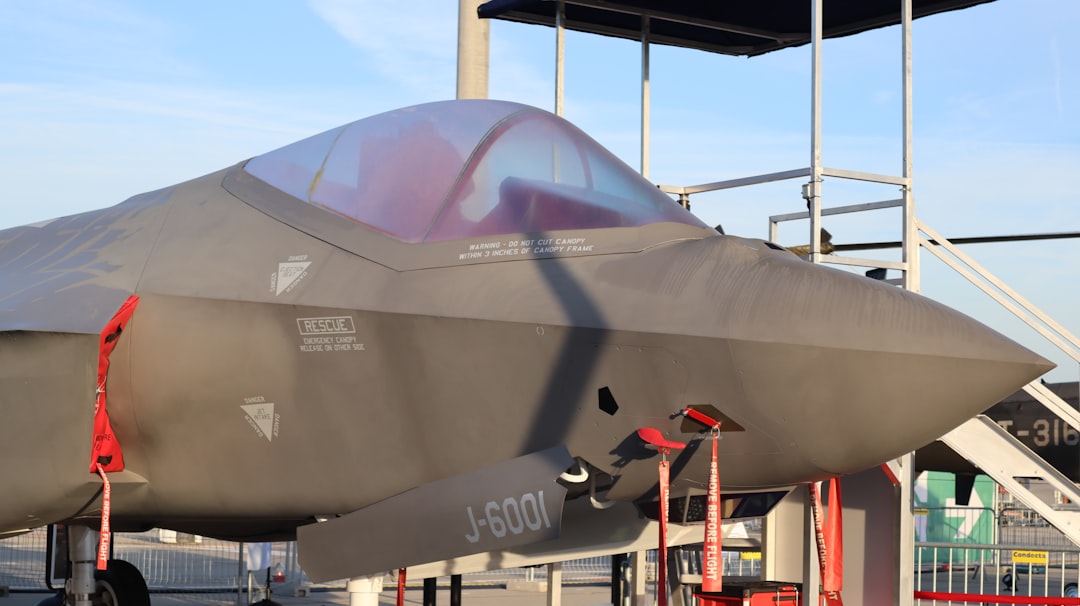
An American F-35 fighter jet was struck during operations over Iran, marking the first confirmed damage to the advanced stealth aircraft in combat—a development that raises questions about the vulnerability of Washington's most sophisticated warplane and the effectiveness of Iranian air defenses.
According to The Independent, the F-35 Lightning II sustained damage during a strike mission but was able to return safely to its base. US military officials confirmed the incident but declined to provide specific details about the nature or extent of the damage, citing operational security concerns.
The F-35 represents the most expensive weapons program in history, with total costs exceeding $1.7 trillion when including development, production, and decades of planned operation. The single-engine, fifth-generation fighter is designed to evade radar detection through advanced stealth technology, giving it the ability to penetrate heavily defended airspace that would be dangerous or impossible for conventional aircraft.
To understand today's headlines, we must look at yesterday's decisions. The F-35 program has been controversial throughout its development, with critics citing cost overruns, technical problems, and questions about whether its capabilities justify the extraordinary expense. Supporters argue that the aircraft's stealth, sensor fusion, and networking capabilities make it essential for maintaining air superiority against advanced adversaries. The incident over Iran provides the first real-world test of these competing claims.
The fact that the aircraft was hit at all suggests that Iranian air defenses performed better than some analysts expected. Iran operates a mix of older Russian-supplied systems and domestically produced radar and missile defenses. While these systems are generally considered less capable than the latest Russian or Chinese technology, the incident demonstrates they pose genuine threats even to stealth aircraft.
Stealth technology does not make aircraft invisible—it reduces their radar cross-section, making detection more difficult but not impossible. Advanced radar systems, particularly those operating at lower frequencies, can sometimes track stealth aircraft. Additionally, infrared sensors, visual observation, and other detection methods can compromise stealth advantages under certain conditions.