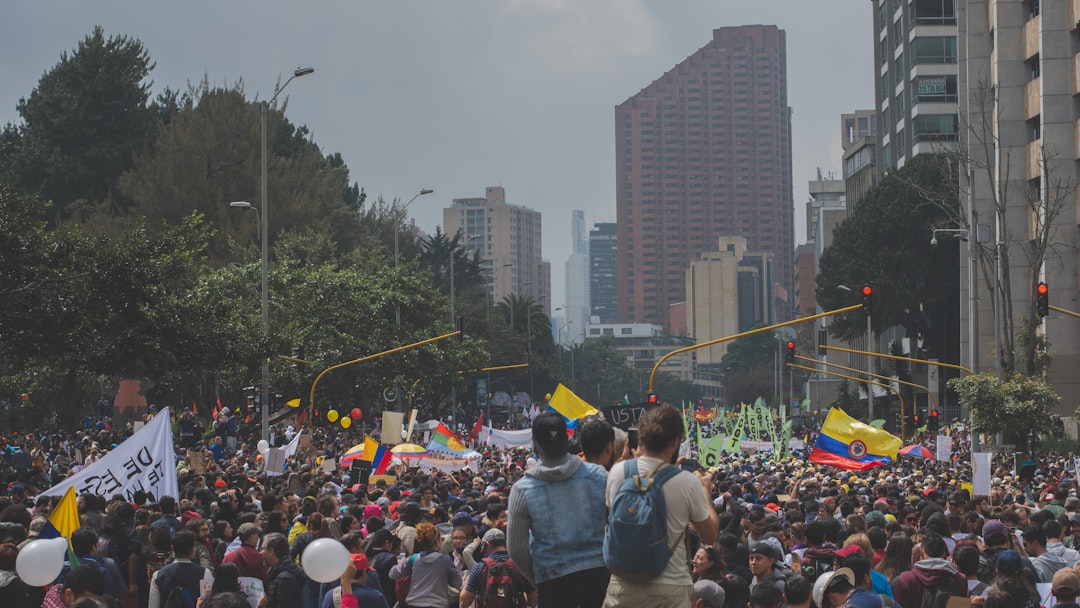
Bogotá's Universidad Nacional declared an orange alert and evacuated its main campus Tuesday after masked individuals claiming affiliation with FARC dissidents threatened to "arm and activate explosives" in the Humanities building—just days before Colombia's presidential election.
The incident, <link url='https://www.infobae.com/colombia/2026/05/27/universidad-nacional-declara-alerta-naranja-y-evacua-la-sede-bogota-por-amenaza-de-explosivos-de-encapuchados-con-insignias-de-las-disidencias-de-las-farc/'>reported by Infobae</link>, saw individuals identifying as members of "Unión Clandestina Popular" and "Movimiento Bolivariano FARC-EP" enter Building 212 on the afternoon of May 27, distributing pamphlets and painting walls while demanding immediate evacuation.
Security Incident at Symbolic Target
Vice-Rector Lorena Chaparro Díaz activated emergency protocols, mobilizing security teams and urging the university community to follow official communication channels only. Students surrounded the masked individuals, demanding they leave peacefully and accusing them of involvement in the recent killing of student Mateo Pérez at the Medellín campus.
The Universidad Nacional—historically a left-leaning institution and frequent site of political activism—represents a symbolically charged target. That armed groups would threaten violence there highlights the continued challenges to state authority even in the capital, despite years of peace negotiations.
In Colombia, as across post-conflict societies, peace is not an event but a process—requiring patience, investment, and political will. The 2016 FARC peace agreement demobilized the main guerrilla force, but dissident factions rejecting the accord have continued armed activities, particularly in rural areas.
Election Timing Raises Questions
The threat's proximity to Sunday's presidential election—termed by The Economist as potentially the world's most polarizing—intensifies concerns about electoral security and armed groups' attempts to influence political outcomes.
Councilman Juan Quintero characterized the incident as part of "a systematic plan to instrumentalize students and citizens to provoke social unrest" before voting. Defense Minister Pedro Sánchez sought to reassure voters, stating: "May 31 will not be social upheaval, but an electoral celebration."
The incident underscores the fragility of Colombia's peace implementation. While the 2016 agreement brought most FARC fighters into civilian life, factions that refused demobilization have expanded operations, sometimes coordinating with drug trafficking organizations and other criminal groups.
Peace Process Challenges
The current government's "Paz Total" initiative—attempting simultaneous negotiations with all armed groups—has struggled to prevent such incidents. FARC dissidents, the ELN guerrilla group, and criminal bands continue operating in peripheral regions, occasionally projecting power into major cities.
Bogotá has largely remained insulated from the violence affecting rural Colombia, making Tuesday's threat particularly notable. It demonstrates that armed groups retain the capacity to challenge state authority at symbolic locations, even as the country prepares for democratic elections.
No explosives were found following the evacuation, and classes resumed Wednesday morning with enhanced security measures. University officials emphasized their commitment to maintaining the campus as a space for democratic debate and learning, refusing to be intimidated by threats.
The incident reflects the ongoing tension between Colombia's democratic institutions and the remnants of armed conflict. While peace with FARC's main body created opportunities for political participation, groups rejecting that path continue pursuing influence through violence.
Voters head to polls Sunday facing questions not just about candidates' economic and social policies, but about fundamental approaches to security, peace implementation, and the state's capacity to guarantee safety across Colombian territory—including its most prestigious educational institutions.