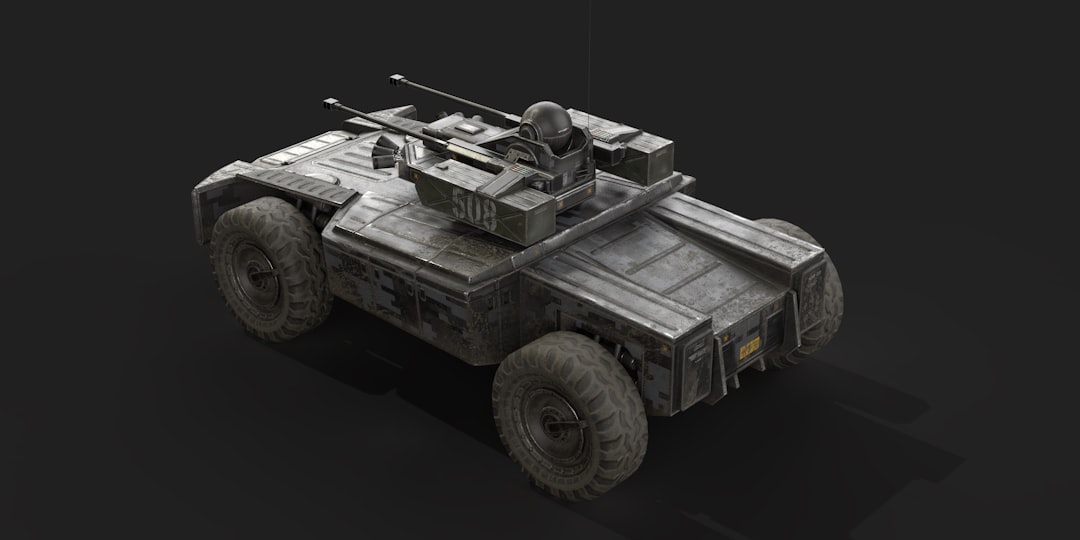
Ukraine plans to field 25,000 ground robots for battlefield logistics, aiming to remove soldiers from high-risk supply runs. The deployment represents one of the largest military robotics programs in active combat and will test whether autonomous systems can handle real war zones.
This isn't a drone experiment—it's a massive shift in how wars are fought. If it works, Ukraine is proving that robots can take over the deadliest jobs on the battlefield. If it fails, we learn the hard limits of automation in combat.
The robots are designed to transport ammunition, food, water, and medical supplies to frontline positions without risking human drivers. Getting supplies to troops under fire is one of the most dangerous jobs in modern warfare—vehicles are prime targets for artillery, drones, and anti-tank weapons. Every supply run risks not just the cargo but the soldiers driving.
Ukraine's plan is to replace those human drivers with autonomous and remote-controlled ground vehicles. Some will be fully autonomous, following pre-programmed routes. Others will be remotely operated from safe positions behind the lines. All will be cheaper and more expendable than armored vehicles with crew.
Twenty-five thousand robots is an enormous number. For context, that's comparable to the number of logistics vehicles in some national militaries. If Ukraine can actually field that many functional robots, it represents a genuine revolution in military logistics.
But there's a gap between announcement and deployment. Ukraine has been creative and aggressive in adopting new technology—everything from commercial drones to Starlink terminals to AI-assisted targeting. But ground robots are harder than aerial drones. They have to navigate terrain, avoid obstacles, keep working when jammed, and survive artillery strikes that would destroy a consumer quadcopter.
The announcement came from Ukraine's defense ministry, which said the robots would be a mix of domestic production and foreign supply. Some will be adapted from commercial platforms, others purpose-built for military use. The timeline is ambitious—fielding 25,000 units within months would be unprecedented.
What makes this credible is Ukraine's track record. They've deployed thousands of FPV drones (first-person view racing drones converted into kamikaze weapons), integrated Starlink into their entire military communications network, and used AI for target recognition at scale. If any military can pull off mass robot deployment, it's Ukraine's, driven by necessity and unencumbered by peacetime procurement bureaucracy.
The tactical advantages are real. Robots don't get tired, don't panic under fire, and don't need medevac if they're destroyed. They can make supply runs at night or in conditions too dangerous for human drivers. And if a robot gets destroyed by artillery, it's a financial loss, not a human one.
The limitations are also real. Autonomous navigation in combat is hard. GPS gets jammed. Visual systems fail in smoke, fog, or darkness. Dirt roads turn to mud. Obstacles appear that weren't in the pre-programmed route. A human driver can adapt to all of this. Whether robots can is the test.
Remote control solves some problems but creates others. A remote operator can handle obstacles and changing conditions, but they need reliable connectivity. If communications are jammed—which they often are in modern combat—the robot is useless. Some Ukrainian drones already operate with partial autonomy to handle jamming, but full autonomous navigation is harder for ground vehicles than aerial ones.
If this works, it changes warfare fundamentally. Logistics is the foundation everything else sits on. Armies run on ammunition, fuel, food, and medical supplies. If you can deliver all of that without risking soldiers, you can sustain operations that would otherwise be impossible due to casualty rates.
It also changes the economics. A logistics robot might cost $10,000 to $50,000 depending on capabilities. A trained soldier costs years of training and equipment, plus the immeasurable cost of casualties. Even with high robot attrition rates, the math works if the robots can actually do the job.
Other militaries are watching closely. The U.S. Army has been experimenting with autonomous logistics vehicles for years, but deployment has been slow and cautious. If Ukraine proves the concept in actual combat, expect rapid adoption globally. If the robots prove too vulnerable or unreliable, expect a rethinking of how much autonomy is viable in combat environments.
The broader implication is that warfare is being de-humanized at an accelerating pace. Drones already remove pilots from the cockpit. Now robots are removing drivers from logistics vehicles. Each step makes war easier to wage because fewer of your own soldiers are at risk. That's tactically smart but strategically worrying—if war becomes less costly in human terms, does it become more likely?
I'm not sure Ukraine has the luxury of worrying about those second-order effects. They're fighting for survival against a larger adversary. If robots can save Ukrainian lives while maintaining military effectiveness, deploying them is an obvious choice. The philosophical questions about de-humanized warfare are problems for peacetime.
The technology is impressive. Whether it actually works at scale in combat conditions remains to be seen. But Ukraine betting 25,000 robots on it suggests they've seen enough in testing to believe it's viable. In 12 months, we'll know if this was a revolution or a very expensive experiment. Either way, the data will reshape how every military thinks about logistics in the drone age.