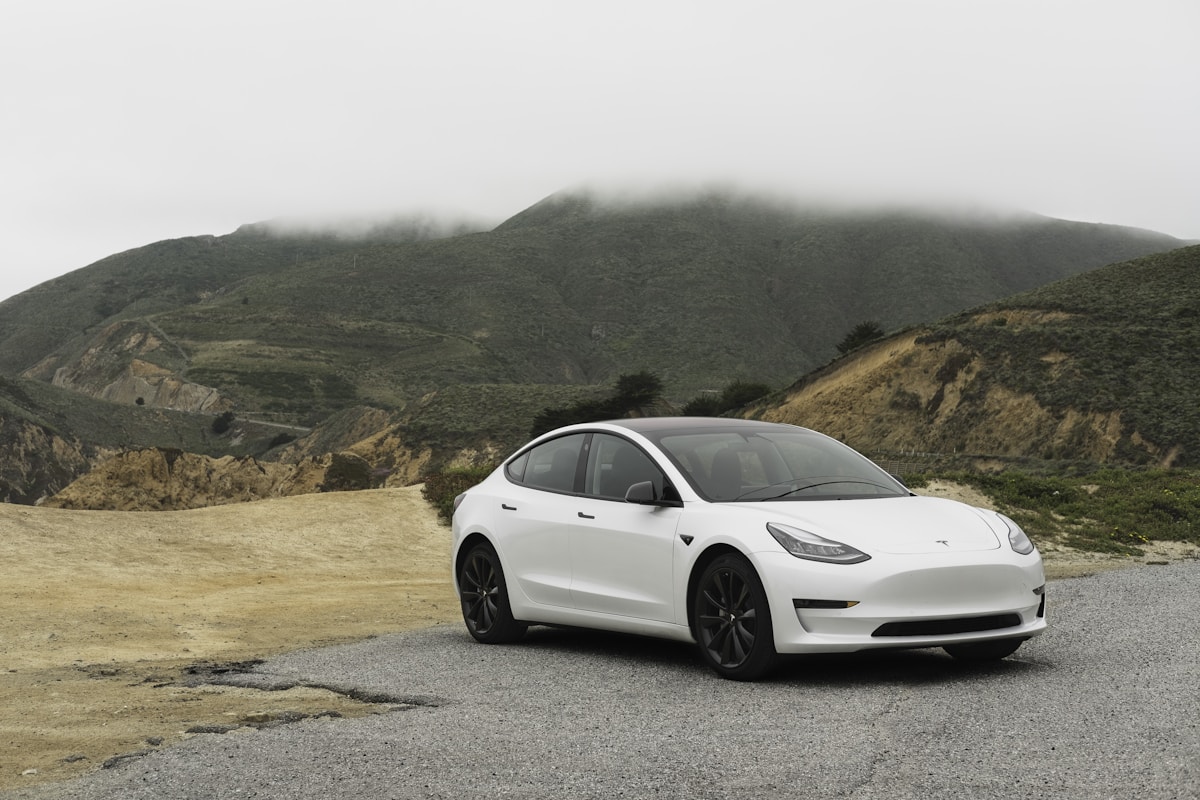
A prominent Tesla analyst who has maintained a bullish stance for years has flipped to a sell rating, projecting the stock could drop to $150 amid concerns about the company's AI promises versus automotive reality.
When bulls flip, it's worth paying attention. This isn't about one analyst's opinion—it's about the gap between Tesla's AI narrative and its car business fundamentals.
The market priced in the robotaxi future. What happens when that future keeps getting delayed?
According to Investing.com, the analyst—who previously had a buy rating and defended Tesla through various controversies—now sees significant downside risk. The $150 price target represents a steep decline from current levels and suggests the analyst believes Tesla is dramatically overvalued.
The core concern is that Tesla's stock price reflects expectations of revolutionary AI breakthroughs—full self-driving, robotaxis, humanoid robots—that haven't materialized. Meanwhile, the actual car business faces increasing competition, margin pressure, and slowing growth.
Tesla trades at a valuation multiple far higher than traditional automakers. Ford and GM trade at single-digit price-to-earnings ratios. Tesla trades at multiples more typical of high-growth tech companies. That premium is justified only if Tesla becomes something more than a car company.
Elon Musk has been promising that "something more" for years. Full Self-Driving has been "coming next year" since 2016. The Robotaxi unveiling keeps getting delayed. The Optimus robot, while impressive in demos, is nowhere near commercial viability.
Investors are starting to notice the pattern.
From a technical perspective, Tesla's self-driving technology is genuinely impressive. FSD Beta (now just called FSD Supervised) can handle complex driving scenarios that would have seemed impossible a few years ago. But "impressive" and "ready for unsupervised operation" are very different standards.
The gap between a system that works 99% of the time and one that works 99.9999% of the time—the reliability needed for robotaxis—is enormous. Every edge case, every weird traffic scenario, every unexpected obstacle requires careful engineering and testing.
Musk's timelines have consistently been optimistic to the point of fantasy. He predicted 1 million robotaxis on the road by 2020. In 2026, Tesla still hasn't deployed a single unsupervised autonomous vehicle.
Meanwhile, competitors like Waymo are actually running robotaxi services in multiple cities. They took longer and spent more money, but they're operating real commercial services while Tesla is still promising.
The automotive business itself is facing headwinds. Tesla's market share in EVs is declining as traditional automakers launch competitive electric vehicles. The Model 3 and Model Y are aging designs facing fresh competition from Hyundai, Kia, Ford, and Chinese manufacturers.
Gross margins have compressed as Tesla cut prices to maintain volume. The much-anticipated Cybertruck, while attracting attention, is not yet a high-volume product and has faced production challenges.
If you strip away the AI narrative and value Tesla purely as an automaker, the numbers don't support current stock prices. That's the analyst's core argument: the premium valuation is unjustified, and reality will eventually catch up.
The counterargument is that Tesla will eventually deliver on its AI promises, and early believers will be rewarded. Musk has defied skeptics before—Tesla could have gone bankrupt multiple times but survived and thrived.
But the longer the AI promises remain unfulfilled, the harder that argument becomes to sustain. At some point, "coming next year" stops being credible.
From an investment perspective, this analyst flip is significant because it represents a sentiment shift. Long-time bulls don't change their minds lightly. When they do, it often signals that the narrative is breaking down.
Tesla's stock has always been driven more by narrative than fundamentals. The story was that Tesla would revolutionize transportation, energy, and AI. If that story loses credibility, the stock has a long way to fall.
The technology is impressive. The question is whether the business will ever justify the valuation.