
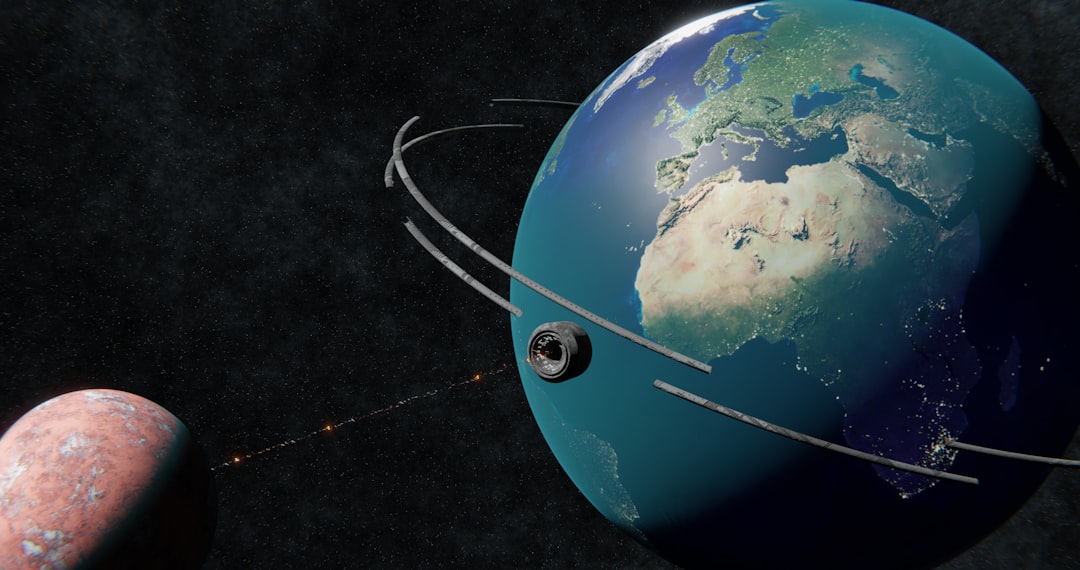
SpaceX has surpassed 10,000 active Starlink satellites in orbit, achieving a milestone that fundamentally reshapes humanity's presence in space and marks the arrival of the megaconstellation era.
The achievement, confirmed by Scientific American, means SpaceX now operates more satellites than all other entities in history combined. The company launches approximately 40-60 Starlink satellites every few days aboard Falcon 9 rockets, maintaining a deployment pace unprecedented in spaceflight history.
The constellation provides high-speed internet to remote and underserved regions worldwide, demonstrating that space-based telecommunications can compete with terrestrial fiber networks. Customers from Alaska to rural Australia now access broadband speeds previously unavailable in isolated locations.
However, the scale raises significant concerns among astronomers and space sustainability experts. Ground-based telescopes increasingly detect satellite streaks across observations, complicating deep-space imaging and astronomical research. Despite SpaceX's efforts to reduce satellite brightness through design modifications, the sheer number of objects continues to affect optical and radio astronomy.
In space exploration, as across technological frontiers, engineering constraints meet human ambition—and occasionally, we achieve the impossible. The Starlink program has demonstrated reusable rocket technology at industrial scale, with individual Falcon 9 boosters flying 15-20 missions to deploy hundreds of satellites.
The orbital environment has transformed dramatically. Low Earth orbit, once sparsely populated, now hosts thousands of active satellites concentrated in specific altitude bands. Space tracking networks monitor tens of thousands of objects, coordinating collision avoidance maneuvers as satellites autonomously adjust orbits to prevent impacts.
Competitors are emerging. Amazon's Project Kuiper plans to launch over 3,000 satellites, while China's state-backed programs aim for similar constellations. The European Space Agency and various national space agencies are developing their own satellite internet systems, suggesting that low Earth orbit will become increasingly crowded in coming years.
Space debris experts emphasize the importance of responsible satellite operations. Starlink satellites are designed to deorbit at end-of-life, burning up in Earth's atmosphere rather than becoming long-term orbital debris. The company reports a success rate exceeding 99% for controlled deorbits, though occasional failures do occur.
Regulatory frameworks struggle to keep pace with deployment speed. The Federal Communications Commission approves orbital shells containing thousands of satellites, but international coordination remains limited. Questions about orbital resource allocation, collision liability, and light pollution continue to evolve as the megaconstellation era unfolds.
The economic model has proven viable—Starlink generates billions in annual revenue, funding SpaceX's broader ambitions including the Starship program for Mars exploration. The company has demonstrated that commercial satellite operations can be profitable at scale, attracting investment and competition to space-based telecommunications.
As the constellation grows toward its planned 42,000 satellites, the balance between technological achievement and environmental stewardship will define the future of orbital space. The 10,000-satellite milestone represents not just a company achievement, but a transformation of humanity's relationship with near-Earth space.