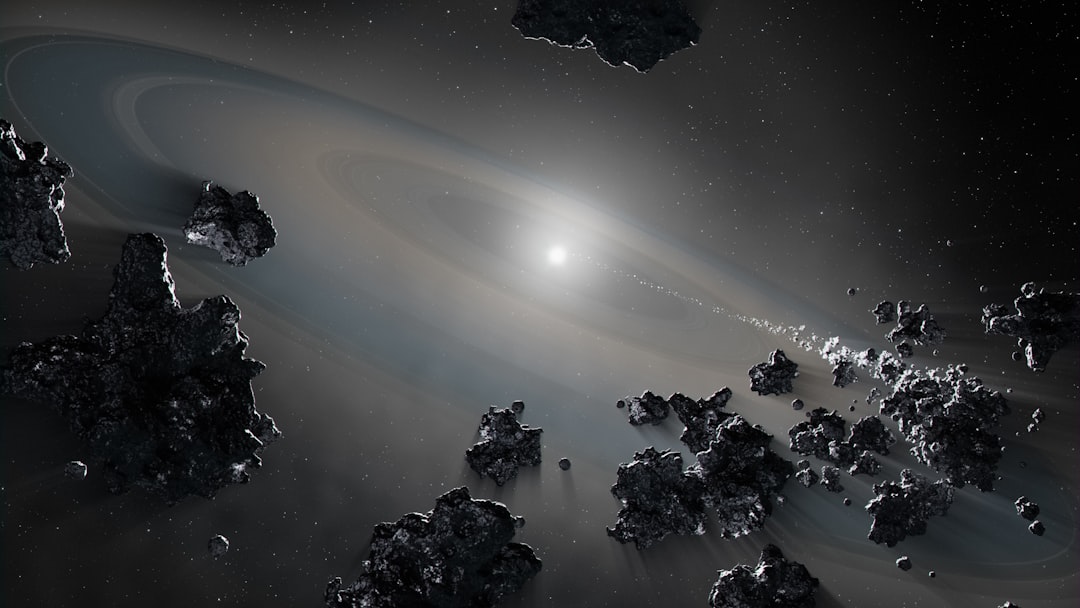
Samples returned from the asteroid Ryugu contain all five nucleobases that form the building blocks of DNA and RNA, representing the first time scientists have recovered a complete set of these crucial biomolecules from extraterrestrial material.
The discovery, published today in Nature Astronomy, provides the strongest evidence yet that the chemical precursors of life may have been delivered to early Earth via asteroid impacts—a hypothesis known as panspermia.
Japan's Hayabusa2 spacecraft collected pristine samples from Ryugu in 2019 and returned them to Earth in 2020, delivering material that had never been exposed to terrestrial contamination. Previous meteorite studies had identified some nucleobases, but the Ryugu samples mark the first discovery of all five—adenine, guanine, cytosine, thymine, and uracil—in material directly retrieved from space.
"This is astrobiology gold," said researchers analyzing the samples. The completeness of the discovery transforms our understanding of how life's fundamental chemistry may have originated. These nucleobases are essential components of genetic material, encoding information in every living organism on Earth.
In space exploration, as across technological frontiers, engineering constraints meet human ambition—and occasionally, we achieve the impossible. The Hayabusa2 mission demonstrated unprecedented sample-return capabilities, touching down on a moving asteroid millions of kilometers from Earth and preserving material in conditions that allowed scientists to detect delicate organic molecules.
The implications extend beyond the origin of life on Earth. If asteroids routinely carry the complete chemical toolkit for genetic material, similar processes could have seeded life elsewhere in the solar system or beyond. Mars, which experienced heavy asteroid bombardment during its early history, may have received similar organic deliveries.
The discovery also validates the asteroid sample-return approach pioneered by Japan's space agency JAXA. While meteorites have provided valuable information, samples collected directly from known asteroids offer uncontaminated material with precisely known origins. NASA's OSIRIS-REx mission, which returned samples from asteroid Bennu in 2023, is expected to yield similar insights.