Astronomers have identified an entirely new type of exoplanet that defies existing planetary classification systems, according to research published in Nature Astronomy. The discovery, located just 35 light-years from Earth, features a world with a permanent ocean of molten rock on its surface—a planetary configuration never before observed.
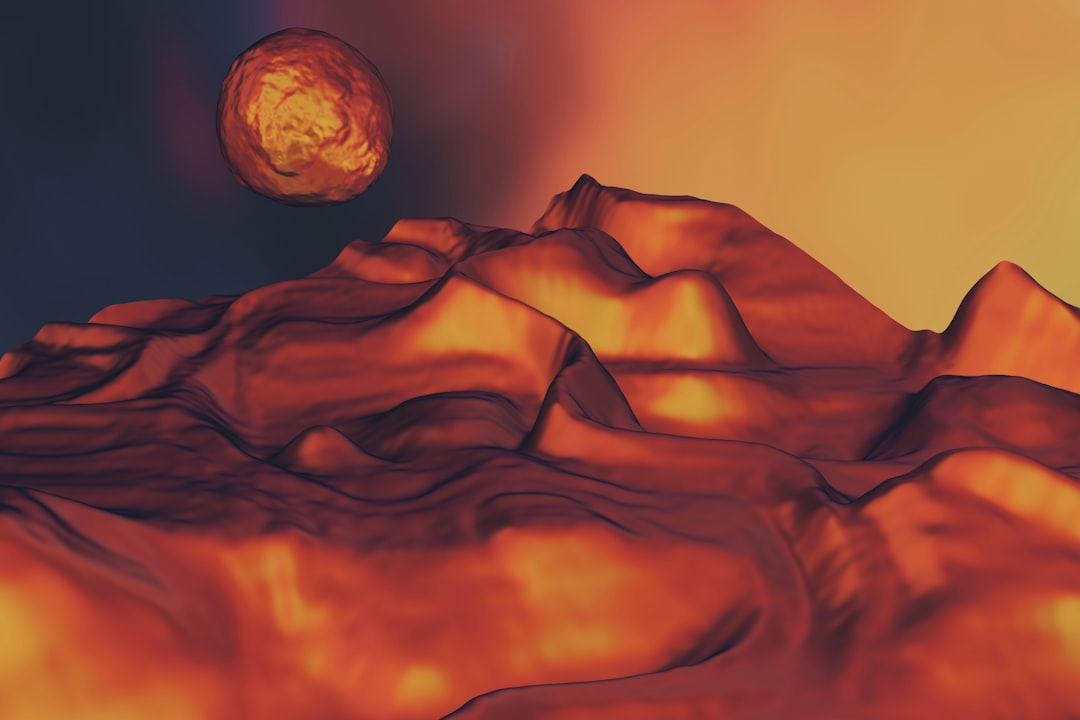
The planet, designated 55 Cancri e, orbits so close to its host star that its dayside reaches temperatures exceeding 2,400 degrees Celsius, hot enough to vaporize rock. What makes this world unprecedented isn't just its extreme heat, but rather the complex interplay between its molten surface, thick atmosphere, and unique thermal distribution that creates conditions matching neither traditional rocky planets nor gas giants.
Lead researcher Dr. Renyu Hu from NASA's Jet Propulsion Laboratory explained that the planet represents "a fundamentally different planetary state" that challenges current models of planetary formation and evolution. Unlike Venus-like worlds with solid surfaces beneath thick atmospheres, or Jupiter-like gas giants with no defined surface at all, this magma ocean planet maintains a stable liquid rock surface in thermal equilibrium with its atmosphere.
The discovery was made possible through spectroscopic observations from the James Webb Space Telescope, which detected the chemical signatures of vaporized rock species in the planet's atmosphere. The telescope's infrared capabilities allowed researchers to map temperature variations across the planet's surface, revealing circulation patterns in the molten ocean driven by extreme temperature gradients between day and night sides.
What makes the find particularly significant from a planetary science perspective is its proximity. At 35 light-years—essentially our cosmic neighborhood—the planet is close enough for detailed follow-up observations with current and near-future telescope technology. This proximity enables astronomers to study the planet's atmospheric chemistry, thermal evolution, and surface dynamics with unprecedented precision.
The research team identified several key characteristics that distinguish magma ocean planets as a separate class. These worlds maintain persistent surface magma oceans rather than temporary molten states during formation, possess thick atmospheres in chemical equilibrium with vaporized rock, and exhibit extreme temperature variations that drive vigorous atmospheric and surface circulation.
In space exploration, as across technological frontiers, engineering constraints meet human ambition—and occasionally, we achieve the impossible. The characterization of this exotic world demonstrates how advanced space telescopes are revolutionizing our understanding of planetary diversity beyond the solar system.
Dr. Sara Seager, a planetary scientist at MIT not involved in the research, noted that the discovery "opens entirely new questions about planetary formation pathways." She explained that understanding how such worlds form and evolve could provide insights into the early history of rocky planets, including Earth, which may have experienced temporary magma ocean phases during formation.
The findings have immediate implications for exoplanet characterization efforts. Several dozen known exoplanets share similar orbital characteristics to 55 Cancri e, suggesting that magma ocean worlds might be more common than previously suspected. Follow-up observations of these candidates could reveal whether this represents a distinct planetary population or a transient evolutionary stage.
Researchers are particularly interested in studying the atmospheric chemistry of these worlds, as the interaction between vaporized rock and atmospheric gases creates exotic chemical species not found in cooler planetary atmospheres. These observations could help refine models of atmospheric escape, chemical weathering, and the long-term evolution of close-orbiting planets.
The discovery also raises intriguing questions about the diversity of planetary outcomes. The research team suggests that small variations in planetary mass, composition, or orbital distance might determine whether a hot rocky planet develops into a magma ocean world, a Venus-like planet with a solid surface, or loses its atmosphere entirely to become a bare rock.
Future observations with the James Webb Space Telescope and upcoming extremely large ground-based telescopes will focus on mapping the three-dimensional structure of 55 Cancri e's atmosphere and characterizing the composition of its magma ocean. These studies could reveal whether the molten surface hosts convection currents similar to Earth's mantle, and how material cycles between the surface, atmosphere, and potentially even a deep rocky interior.