
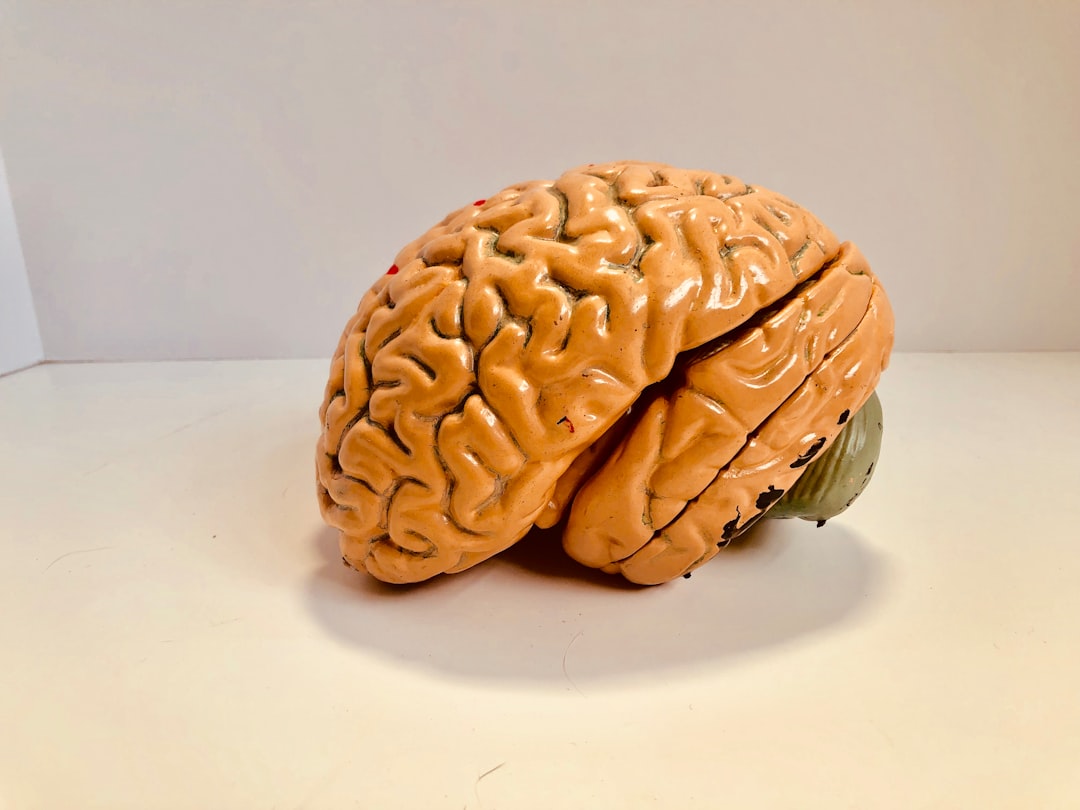
If you have ADHD, you know the feeling: you're trying to focus on something tedious, and suddenly it's like someone briefly unplugged your brain. You lose the thread, miss details, or find yourself staring blankly without quite realizing time passed. You're not alone—and now neuroscientists have measured what's actually happening inside your skull during those moments.
Researchers at Monash University in Australia have identified what they're calling "local sleep"—brief intrusions of slow-wave brain activity, normally associated with deep sleep, occurring in specific brain regions while you're ostensibly awake. Think of it as a few specific "neighborhoods" in your brain deciding to turn off their lights for a second.
The study, published in the Journal of Neuroscience this month, compared 32 adults with ADHD (medication-withdrawn for the study) to 31 neurotypical controls. Participants performed sustained attention tasks—precisely the kind of boring, repetitive work that's kryptonite for ADHD brains—while EEG monitored their neural activity.
The result: adults with ADHD exhibited significantly higher levels of these sleep-like slow waves during waking attention tasks. More strikingly, the amount of sleep-like activity directly correlated with performance problems—more commission errors, slower reaction times, greater variability, and higher subjective sleepiness ratings.
Lead researcher Elaine Pinggal describes the phenomenon as the brain's struggle to maintain consistent arousal during monotonous tasks. Parts of the ADHD brain effectively "micro-sleep" for split seconds, creating those subjective experiences of attention lapses, mind blanking, and feeling perpetually foggy during unstimulating activities.
Now, here's the interesting bit: this isn't just about "not trying hard enough"—a frustrating accusation many people with ADHD encounter. This is measurable, involuntary neurophysiology. The brain is literally flickering offline in ways the person can't consciously control.
The research has potential diagnostic implications. Current ADHD assessment relies heavily on self-reported symptoms and behavioral observations, which are subjective and variable. If sleep-like slow-wave intrusions during waking attention tasks prove to be a reliable biomarker, EEG-based testing could supplement clinical diagnosis—particularly in adults, where ADHD often goes unrecognized.
There may also be therapeutic applications. The researchers suggest that auditory stimulation during sleep—techniques that strengthen deep-sleep wave patterns—might reduce daytime "brain flickers." It's speculative, but the idea is to train the brain to keep sleep activity confined to, well, sleep. Non-medication interventions would be welcome additions to ADHD treatment, which currently relies heavily on stimulants.
A few caveats: the study sample was relatively small (63 participants total), and medication was withdrawn, so we don't know how these patterns change with treatment. Also, the specific tasks were designed to be boring—participants stared at streams of digits, watching for rare targets. Real-world attention demands are more complex and varied.
But the core finding is elegant: ADHD attention problems aren't merely psychological or motivational. They're neurophysiological—a brain struggling to maintain consistent wakefulness during monotonous tasks. Understanding the mechanism doesn't make the experience less frustrating, but it might make it less stigmatizing.
And for researchers, it provides a concrete target. If we can measure when and why the ADHD brain flickers offline, we can start designing interventions—behavioral, pharmacological, or otherwise—to keep the lights on.