
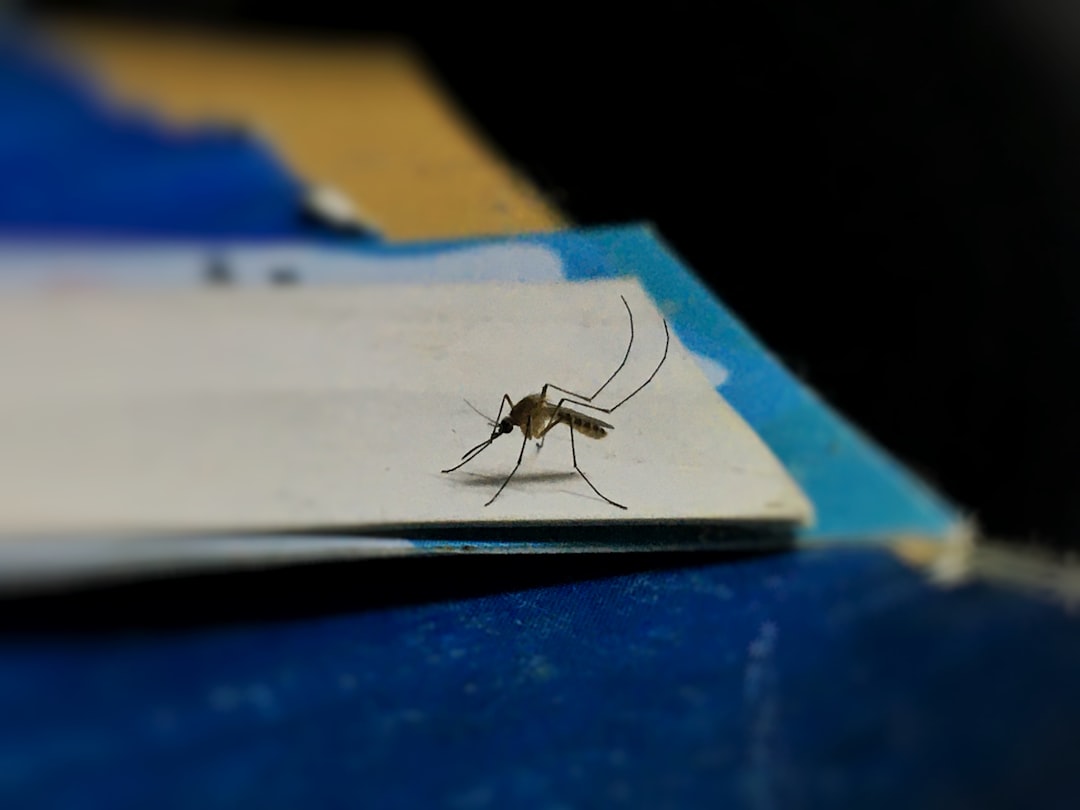
If you've ever wondered why that mosquito circling your head seems to have an uncanny ability to land exactly where you can't swat it, science now has an answer. Researchers have built mathematical models that predict mosquito flight behavior with startling accuracy—and the implications go far beyond annoying backyard barbecues.
The research, reported in Wired, uses Bayesian dynamical systems learning to decode the attack patterns of Aedes aegypti, the mosquito species responsible for transmitting dengue, Zika, and yellow fever. By tracking thousands of individual flight paths, researchers discovered that mosquitoes don't just randomly bumble toward targets—they follow predictable strategies.
Think of it as reverse-engineering the mosquito's flight computer. The researchers recorded high-speed video of mosquitoes approaching human subjects, extracted 3D flight trajectories, and then used Bayesian inference to figure out what decision-making rules could produce those patterns. Turns out, mosquitoes are using a combination of visual cues, carbon dioxide gradients, and thermal signatures to optimize their approach.
The math is elegant. Bayesian models are particularly good at handling uncertainty—which is exactly what a mosquito faces when navigating turbulent air currents while tracking a moving heat source. The model essentially asks: given what the mosquito can sense, what's the optimal flight path to reach blood?
What makes this more than a curiosity is the practical application. Malaria kills over 600,000 people annually. Dengue infects hundreds of millions. Vector control—reducing mosquito populations or preventing bites—remains one of the most effective public health interventions we have. But you can't effectively disrupt mosquito behavior if you don't understand it.
Armed with these models, researchers can now test countermeasures in silico before deploying them in the field. Want to know if a particular spatial repellent will work? Run the simulation. Curious whether a trap design will actually intercept mosquitoes or just irritate them? The model can tell you.
There's also a biomimicry angle here. Understanding how mosquitoes navigate in complex environments could inform the design of micro-drones or autonomous robots that need to track targets in turbulent, unpredictable conditions. Nature has spent millions of years optimizing these flight algorithms; we might as well learn from them.
Of course, mosquitoes are adaptable. They've evolved resistance to insecticides, behavioral shifts to avoid treated bed nets, and geographic range expansions driven by climate change. A mathematical model is only as good as its assumptions, and mosquito behavior evolves. But having a framework for understanding that behavior is still a significant advance.
The researchers focused on Aedes aegypti, but there are roughly 3,500 mosquito species, and many are disease vectors. The methodology could extend to other species—assuming someone is willing to film and analyze tens of thousands more flight trajectories. Science is often tedious that way.
What struck me about this research is how it connects fundamental biology, applied mathematics, and public health. The elegance of the Bayesian framework is satisfying on its own terms, but the real payoff is in dengue and malaria prevention. That's the kind of interdisciplinary work that saves lives.
The universe doesn't care what we believe. Let's find out what's actually true: mosquitoes aren't random. They're following optimized search algorithms honed by evolution. Now we've decoded them. The next step is figuring out how to exploit that knowledge to keep them away from us.